


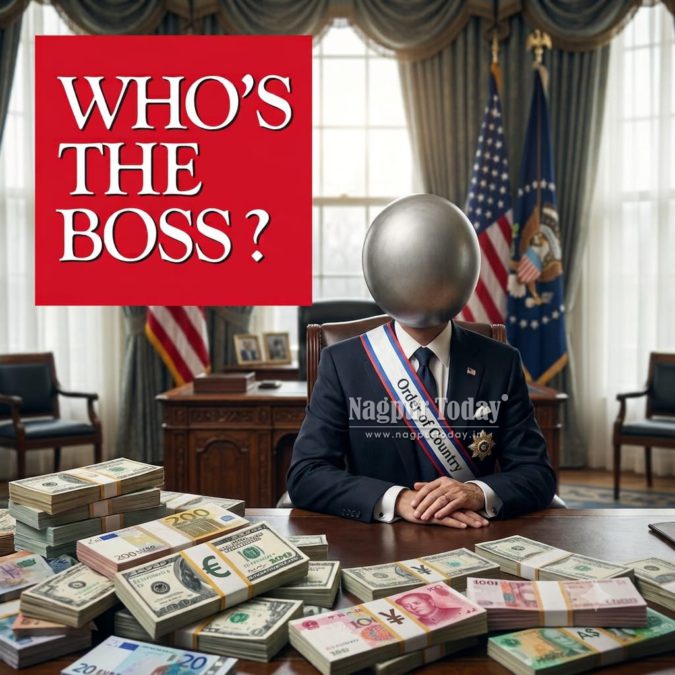
 We often see the world in two ways. On one side, we think our elected governments are all-powerful because they make the laws, run the police, and control the borders. On the other side, the internet is full of wild stories about mysterious billionaires secretly running the planet from dark rooms.
But if we look at how global money actually works today, a much bigger question pops up. Who is really the boss? Is it the Head of State we vote for, or the private financial giants shifting massive amounts of money across the globe? To understand the real game, we have to look behind the curtain of global capitalism.
Where the Power Started
The blueprint for modern financial power was drawn over 200 years ago in a crowded Jewish ghetto in Frankfurt, Germany. A man named Mayer Amschel Rothschild started a small business dealing in rare coins. Because of his sharp mind, he became the financial manager for a wealthy German Prince.
Mayer’s genius idea was his family plan. He sent his five sons to the five biggest financial hubs of Europe: London, Paris, Vienna, Naples, and Frankfurt. They created the world’s first international banking network.

During the Napoleonic Wars in the early 1800s, this network became unstoppable. Based in London, Nathan Mayer Rothschild single-handedly funded the British army by safely smuggling gold across war zones. Because the family had their own fast courier system, Nathan got the news of Napoleon’s defeat at the Battle of Waterloo a full day before the British government did.
This historic moment proved a simple rule that still runs the world. Governments always need money to survive, and the people who manage that money hold incredible power.
The Modern Money Game
Over the generations, the Rothschild empire changed. They stepped away from the public eye and took their banks completely private. Today, the family operates through two main independent institutions.
Rothschild & Co. manages around $51 billion. This historic Anglo-French arm acts as a top-tier advisor. When two global mega-corporations want to merge, they hire this firm to figure out the deal.
Edmond de Rothschild Group manages around $210 billion. This independent Swiss-based financial house manages the elite private wealth of institutional investors and entrepreneurs.
At the same time, massive new giants appeared that operate with total brute force, like the modern mega-funds. Blackstone manages around $1.3 trillion. This massive public company raises mountains of cash to buy entire businesses, real estate, infrastructure, and factories directly.
Together with a few other elite European wealth houses, such as Pictet Group which manages $690 billion, Lombard Odier which manages $340 billion, and Lazard which manages $260 billion, these institutions act as the ultimate financial navigators.
While internet rumors often mix these names up, firms like Rothschild and Blackstone are actually totally different. Blackstone uses brute force scale to buy up huge physical assets, while the Rothschilds use elite strategy, acting as conflict-free advisors to the boards of corporations that drive the economy.
Together, the financial institutions mentioned here directly manage a staggering collective valuation of over $2.85 trillion in capital. While they do not own the world, this massive concentration of wealth ensures they are the primary gatekeepers of global investments.
The Invisible Veto Over Governments
So, who is the boss?
Legally, governments rule. A private bank cannot pass a law, throw someone in jail, or command an army. Only the state can do that.
However, modern governments are almost always running on borrowed money. To pay for roads, hospitals, schools, and militaries, governments issue bonds, which are essentially giant promissory notes sold to investors.
This is where big funds hold an invisible veto power. If a government passes a policy that global investors dislike, such as reckless spending or sudden tax spikes, these funds don’t launch a protest. They simply sell that country’s bonds and take their money elsewhere.
When big money leaves, the country’s currency crashes, prices for everyday goods shoot up, and the economy stalls. Heads of State might be the bosses of the citizens, but global capital sets the strict boundaries within which those leaders are allowed to act.
Turning the Tap Off: The Reality for Borrowing Nations
When global funds decide to turn the tap off, it is rarely a loud, dramatic event. Instead, it is a quiet financial strangulation. By simply refusing to buy a country’s newly issued debt notes, or demanding higher interest rates to cover the risk, global investors can force a government’s hand within days. A country living beyond its means is suddenly faced with a brutal choice. It must either surrender its economic policies to international lenders, or watch its domestic markets collapse.
This money game is harshest on smaller, developing countries. For a less powerful nation, surviving financially is their foreign policy. When a small country is buried under billions in debt and cannot pay it back, they face total economic ruin. In desperation, they often have to hire sovereign advisory teams from firms like Rothschild or Lazard to help them negotiate with big international lenders like the International Monetary Fund.
To get new loans and save their economy, these countries have to agree to very tough conditions. They are often forced to cut public subsidies, which makes everyday items more expensive for citizens. They also have to privatize state-owned utilities, and open up their valuable natural resources, like lithium, copper, or oil, to foreign corporations. Furthermore, a small nation that relies on international money can rarely afford to upset major world powers in global forums like the United Nations. Doing so might cause their credit rating to drop, making it impossible for them to borrow money in the future. Their foreign policy is quietly shaped by the financial lifeline keeping them alive.
Even a massive, booming economy like India is not completely immune to the watchful eyes of global capital. According to the Reserve Bank of India, India’s total external debt—representing money owed to foreign lenders by both the government and private corporations—stands at $762.8 billion, which is roughly Rs 64 lakh crore. Meanwhile, the Central Government’s overall internal and external debt liabilities stand at around Rs 197 lakh crore. While India’s financial parameters remain stable with a well-managed fiscal deficit, the sheer scale of this total borrowing means the country must constantly maintain strict discipline to keep international markets happy. The moment a nation relies heavily on credit, its policy boundaries are quietly, but firmly, drawn by the global entities holding the purse strings.
The Final Verdict
Ultimately, the world is not run by a secret society, nor is it fully controlled by Heads of State, Prime Ministers, and Presidents.
The true boss is the relationship between debt and capital. Think of a government as the driver sitting at the steering wheel of a car. They choose the direction. But the elite financial institutions and mega-funds control the fuel line. By choosing to pump money in or quietly turn off the tap, they draw the ultimate boundaries of our modern world.