

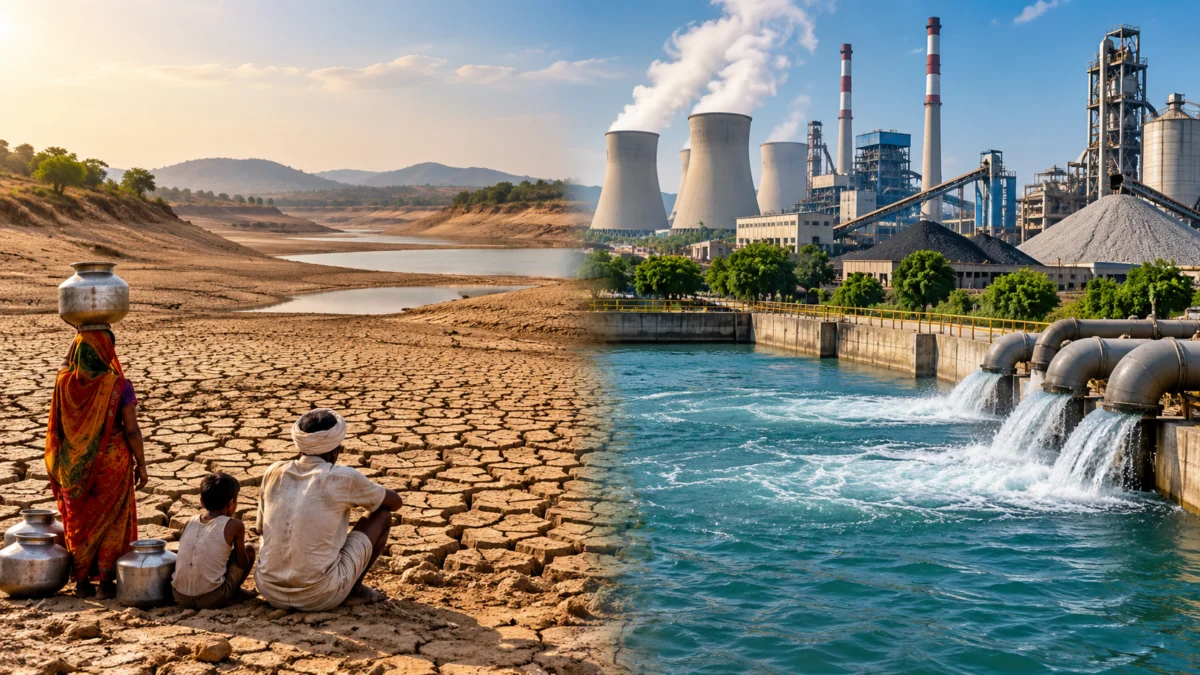
 Nagpur: Is Vidarbha following a double standard on water allocation, with ordinary citizens and farmers expected to endure water cuts while water-intensive industries continue to receive supplies? The question has gained importance amid concerns over water scarcity and the region’s growing industrial ambitions.
Vidarbha has emerged as an important industrial region, hosting defence manufacturing units, thermal power plants, cement factories, steel industries and mineral-processing facilities. The region is also seen as a potential destination for further industrial expansion.
The availability of water is a significant consideration for many of these industries, which require substantial quantities for manufacturing, cooling and other operational processes. However, concerns over water scarcity have raised questions about how this resource will be distributed when demand exceeds availability.
Water Scarcity: Will Citizens and Farmers Bear the Burden?
Water conservation becomes particularly important during periods of drought and declining water availability. Restrictions on urban water supply can disrupt household routines, while rural communities face concerns over drinking water and irrigation.
Farmers are especially vulnerable when water shortages affect agricultural operations and crop requirements.

Against this backdrop, a key question arises: If citizens and farmers are asked to reduce water consumption, will similar restrictions apply to large industrial users?
The answer depends on the government’s water-allocation policy, the severity of local shortages and the priority assigned to different categories of water use.
Will Water-Intensive Industries Face Water Cuts?
Defence manufacturing, thermal power generation, cement production, steelmaking and mineral processing all require water, although consumption varies significantly between facilities and technologies.
Thermal power plants use water for cooling and other processes, while cement, steel and mineral-processing units have their own operational requirements. A reduction in water allocation could affect production at facilities that lack adequate storage, recycling systems or alternative sources.
However, the impact would depend on the nature of the industry and its capacity to manage reduced supplies.
The central issue is whether the government has a transparent framework governing water allocation during shortages and whether industrial units are required to follow clearly defined conservation measures.
Industrial Expansion Raises Questions Over Long-Term Water Availability
Vidarbha continues to attract interest in sectors such as defence manufacturing, energy and cement production. Proposed industrial expansions will also need to account for long-term water availability, environmental clearances and competing demands from existing users.
Uncertainty over water supplies could affect investment decisions, particularly for projects that depend heavily on uninterrupted access to water.
At the same time, industrial development contributes to employment opportunities and regional economic activity. The challenge, therefore, is to ensure that industrial growth does not undermine drinking water security, agricultural needs or environmental sustainability.
A Test of Water Allocation Policy
The current debate raises several important questions for the government:
- Will water-intensive industries face restrictions during periods of scarcity?
- What priority will be given to drinking water, agriculture and industrial requirements?
- Will water-allocation data for major industrial units be made public?
- Are industries being encouraged or required to increase water recycling and reduce freshwater consumption?
- How will the water requirements of proposed projects be assessed before approvals are granted?
Clear answers to these questions would help establish whether water conservation measures are being implemented transparently and equitably.
Vidarbha’s challenge is not simply a choice between industries and agriculture. It is about finding a sustainable balance between industrial development, farmers’ livelihoods and citizens’ access to drinking water.
As water availability becomes an increasingly important consideration for the region’s future, the government’s approach to allocation and conservation will be crucial in determining how these competing needs are addressed.
By Rajiv Ranjan Kushwaha