

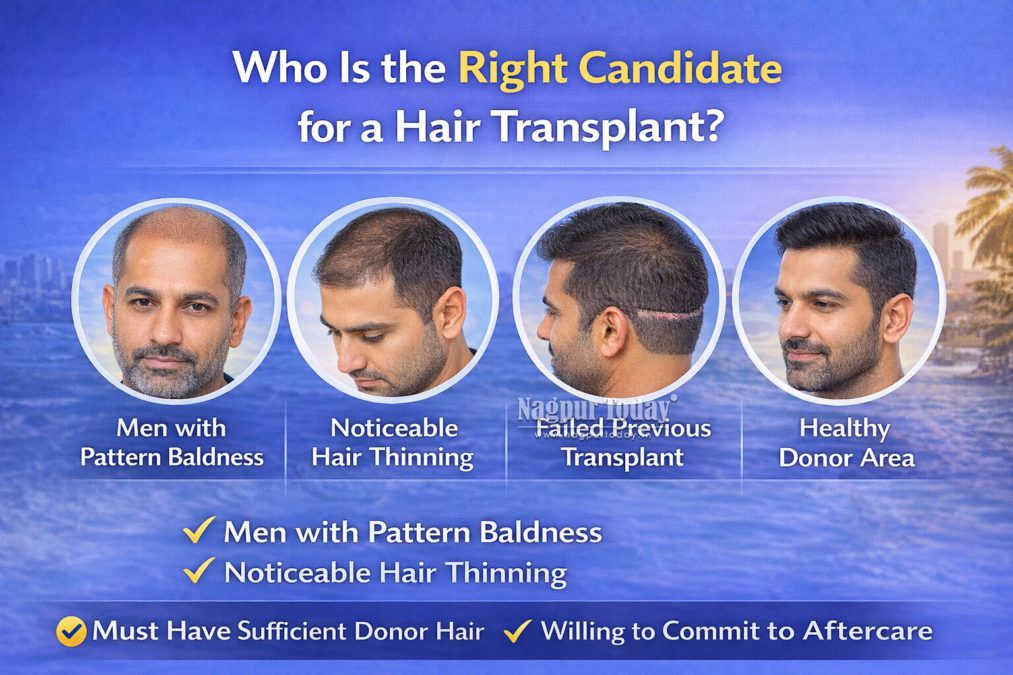
 Many people consider a hair transplant at some point during their hair loss journey. But one of the most common questions that comes up — often after months of trying other treatments — is simply: “Am I even a good candidate for this?” It is a fair question, and the answer is more layered than most people expect. Not everyone who experiences hair loss will benefit from a transplant, and understanding why can save a lot of time, money, and disappointment.
Understanding What a Hair Transplant Actually Does
A hair transplant is a surgical procedure that moves hair follicles from one area of the scalp — typically the back or sides, where hair tends to be more resistant to thinning — to areas where hair has been lost or has significantly thinned. This donor area, often called the “safe zone,” contains follicles that are genetically less likely to fall out over time.
Gold Rate
Mar 25,2026 - Time 11.05Hrs

The two most common techniques are FUT (Follicular Unit Transplantation) and FUE (Follicular Unit Extraction). Both involve harvesting follicles and implanting them into the recipient area. The transplanted hairs go through a natural shedding phase before growing back permanently, which typically begins around three to four months after the procedure.
Who Generally Makes a Good Candidate
Candidacy for a hair transplant depends on several factors working together. A person is often considered a suitable candidate when the following conditions are present:
- Stable hair loss — meaning the pattern has not changed significantly over the past year or more
- Sufficient donor hair density at the back and sides of the scalp
- Hair loss caused by androgenetic alopecia (male or female pattern baldness), which is the most predictable and well-studied form of hair loss
- Realistic expectations about outcomes, density, and recovery
- Overall good health with no conditions that may impair wound healing
Age also plays a role. Younger patients, particularly those under 25, are often advised to wait. At that stage, hair loss is still progressing, and performing a transplant too early can lead to results that look unnatural as the surrounding hair continues to thin over the years.
Who May Not Be a Suitable Candidate
This is just as important to understand. A hair transplant is not the right approach for everyone experiencing hair loss.
- People with diffuse hair loss across the entire scalp, including the donor area, may not have enough stable follicles to transplant
- Those with active autoimmune conditions such as alopecia areata, where hair loss is unpredictable and immune-driven, are generally not considered good candidates
- Individuals with certain medical conditions, active scalp infections, or on specific medications may need to address those issues first
- People expecting complete restoration to their original density should be aware that a transplant redistributes existing hair — it does not create new follicles
In these cases, other treatments such as PRP therapy, medications like minoxidil or finasteride, or low-level laser therapy may be more appropriate, either alone or in combination.
The Role of a Proper Scalp and Hair Assessment
Candidacy is never determined by appearance alone. A thorough evaluation typically includes a scalp examination, trichoscopy (a magnified analysis of the scalp and follicles), review of medical history, and an honest discussion about expectations and goals. Clinics like Kibo Clinics focus on evaluating the underlying cause of hair loss before recommending any treatment path, which helps ensure that patients are not moving toward a procedure that may not serve them well in the long term.
This kind of structured assessment matters because the same visible hair loss can have very different causes, and treatment outcomes depend heavily on what is driving the loss in the first place.
Realistic Expectations and Long-Term Planning
A transplant can produce natural, lasting results for the right patient — but it works best when approached as part of a broader hair health plan. Many patients continue to experience hair loss in non-transplanted areas after their procedure. This is why doctors often recommend ongoing medical therapy alongside a transplant to preserve existing hair and protect the overall result over time.
Results typically take 9 to 12 months to be fully visible. Patience and consistent follow-up care are part of the process.
Final Thoughts
A hair transplant can be a meaningful step for people with stable, patterned hair loss and adequate donor supply. But it is not a universal solution. The most important thing any patient can do before making a decision is get a proper evaluation from a qualified professional — one who is willing to recommend the right treatment, even if that treatment is not a transplant. Informed decisions almost always lead to better outcomes.