


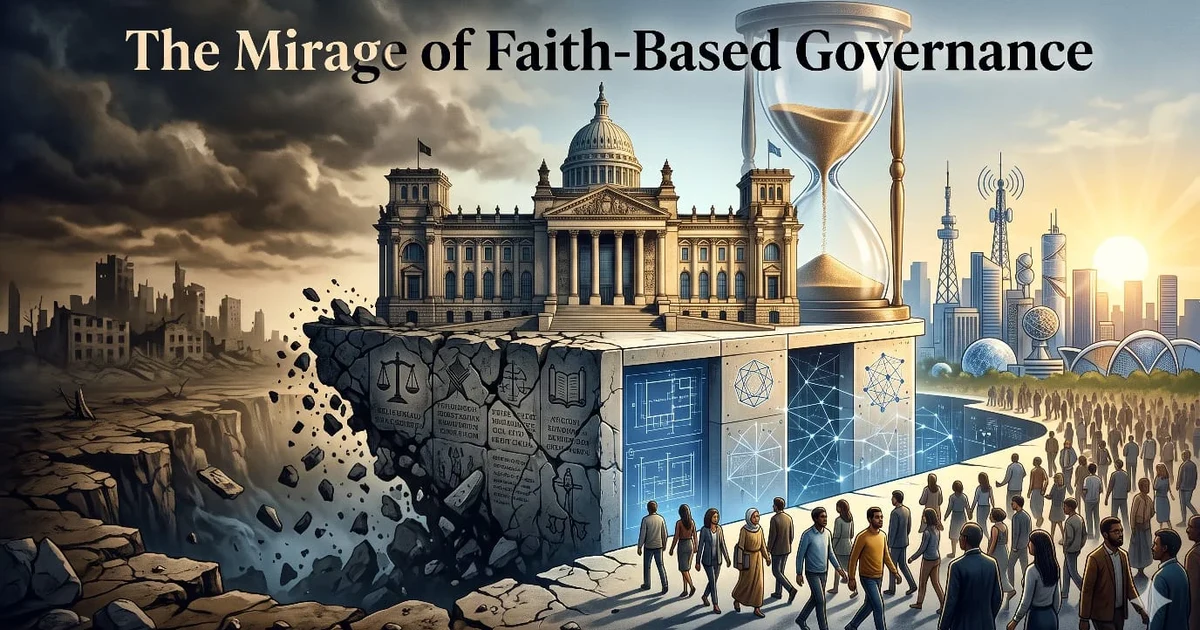
इतिहास का सबक बिल्कुल साफ और सीधा है। धर्म व्यक्तिगत आस्था का विषय है, देश चलाने का प्रशासनिक फॉर्मूला नहीं। जो मुल्क मजहब की बुनियाद पर तरक्की का ख्वाब देखते हैं, वे वक्त के साथ सिर्फ तबाही, तंगहाली और नाकामी की तरफ बढ़ते हैं। हुकूमतें संविधान, कानून और आधुनिक विज्ञान से चलती हैं, धार्मिक कट्टरता से नहीं। जब सत्ता धर्म के रंग में रंग जाती है, तो समाज में नफरत की दीवारें खड़ी होती हैं, वैज्ञानिक सोच दम तोड़ देती है और मुल्क बर्बादी के रास्ते पर निकल पड़ता है। असली तरक्की हर नागरिक को बराबरी का हक देने, आधुनिक सोच अपनाने और हुकूमत को दिमाग से चलाने में है। दुनिया के तमाम देशों का इतिहास और वर्तमान इस बात का सबसे बड़ा सबूत है।
Looking back at history, one thing becomes crystal clear: whenever a country tries to run its government using religion, things usually end in disaster. Religion is great for personal morals and bringing people together in a community. But when you turn religious books into national laws, you get social division, poor governance, and economic collapse.
Countries that build their national identity around a single religion almost always struggle over time. On the other hand, countries that succeed keep their government policies, laws, and economy strictly separated from religious rules.
When a government starts making choices based on religious dogma, it loses the flexibility it needs to solve real-world problems. In politics, compromise is necessary to move forward. But in a religiously driven state, compromise is seen as a sin or a weakness. Mistakes cannot be easily fixed because leaders claim their decisions are backed by faith rather than facts. We do not have to look far to see how this plays out—our own region offers clear examples.
कट्टरपंथ की वेदी पर चढ़ती तरक्की: ईरान, अफगानिस्तान और पाकिस्तान
Take Iran, for example. Before the 1979 revolution, Iran was a fast-growing, modernizing society. Tehran was full of life, with top universities, scientific research, thriving businesses, and a culture as open as many European cities. But once religious leaders took total control, everything flipped. By putting priests and religious scholars in charge of laws, schools, and the economy, Iran introduced strict social rules and cut itself off from much of the world. Today, despite having vast oil wealth, Iran suffers from high inflation, international sanctions, corrupt institutions, and a massive brain drain as educated young people flee the country.

Look at Afghanistan. Under fundamentalist rule, civil laws were tossed out and replaced with extreme religious codes. Women were completely banned from schools and workplaces, institutions collapsed, and the nation was plunged into severe poverty and global isolation.
Then consider our neighbor, Pakistan. In its very first days, Pakistan started on a much more inclusive note. Its founder, Muhammad Ali Jinnah, was quite liberal in his political views. In fact, to oversee the very birth of the nation’s parliament, Jinnah chose Jogendra Nath Mandal—a Hindu Dalit leader—to preside as the temporary Chairman of the first Constituent Assembly of Pakistan on August 11, 1947. This was the same assembly that formally welcomed Jinnah as Pakistan’s leader and shaped its earliest administration.
Jinnah then went on to name Mandal as Pakistan’s very first Law and Labour Minister. Jinnah wanted a constitutional nation where religion was a personal matter, not a test of citizenship, and Mandal’s high-profile, trailblazing role at the very start of the nation’s journey was meant to send a powerful message of inclusion to everyone.
However, after Jinnah died early, politicians and military leaders abandoned that vision. During the 1970s and 1980s, the state started pushing heavy religious policies to stay in power. Instead of making the country stronger, using religion as national glue tore Pakistan apart—contributing directly to the 1971 war and the creation of Bangladesh. Over time, state-enforced religion fueled violent internal conflicts, harmed minorities, destroyed the economy, and diverted precious public money away from schools, hospitals, and infrastructure into security and defense.
सफलता का असली राज़: धर्म नहीं, आधुनिकता और विज्ञान
Now, some people point to countries like Saudi Arabia or Israel and argue that religious nations can be rich and powerful. But if you look closer, their success comes from modern administration, technology, and market economics—not from running their governments on religious texts.
Saudi Arabia certainly built its early wealth on oil and its status in the Islamic world. But Saudi leaders realized that religious rules cannot run a modern economy. In recent years, the kingdom has actively pushed religious authorities out of government policy. They stripped the religious police of their power, gave women more civil freedoms, built new entertainment sectors, and invested billions in modern technology, renewable energy, and scientific research. Saudi Arabia is moving forward today precisely because it is separating its economic future from religious control.
Similarly, while Israel is a Jewish nation-state, its identity as a high-tech power house comes from democratic courts, strong property rights, top-tier universities, and massive investments in scientific research and start-ups. Israel’s tech companies, military, and infrastructure run on scientific logic and market forces. In fact, inside Israel today, major public fights break out whenever religious political groups try to force religious rules onto the general public.
The lesson for any country is simple. Religion belongs in the heart and in personal life, while government needs to be run using logic, science, and equal rights for every citizen. Nations that think religious lines will carry them into the future always end up falling behind. Real national progress comes from building great schools, encouraging scientific thinking, protecting minorities, and treating every citizen equally—not from building walls in the name of faith.