


When British scientist James Lovelock shared his idea called the “Gaia Hypothesis” in 1970, his point was simple: the Earth works like one giant living body. The air, water, soil, and climate all work together to keep the planet balanced so life can survive. When humans push this system too far, nature resets itself. And that reset is usually very painful for the people living through it.
“प्रकृति बदला नहीं लेती, वह बस अपना संतुलन वापस मांगती है। और जब वह संतुलन बनाती है, तो भारी तबाही होती है।”
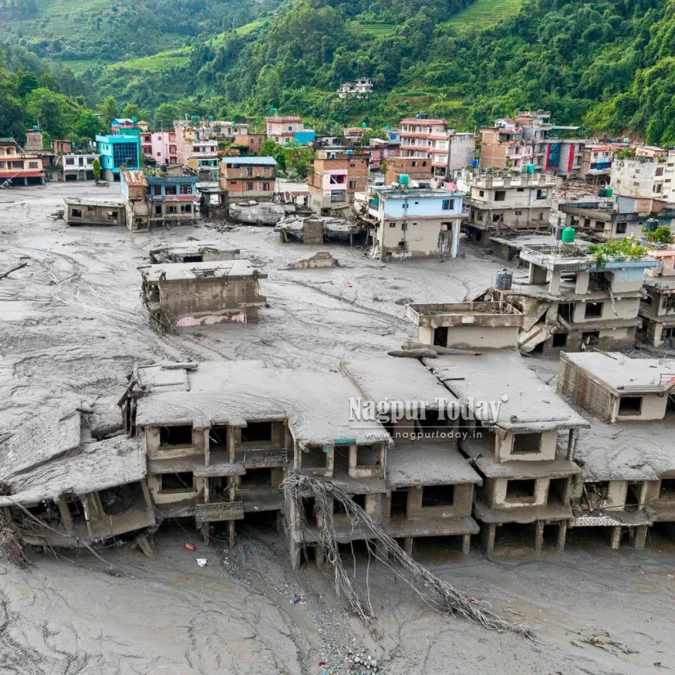
The recent disaster in Nepal shows this balance breaking right in front of us. Heavy rains and landslides caused fast, deadly floods across the region. Overflowing rivers like the Bhote Koshi and Bagmati rushed down mountain valleys, destroyed key bridges, broke hydro power plants, and killed over two hundred people. Soon after, the muddy water filled with trash and rocks flowed straight downstream into the Indian states of Bihar and Uttar Pradesh.
This disaster was not just bad luck. It was the direct result of humans messing with weak and sensitive nature. Yet in India, leaders and decision makers often treat these events as small, temporary problems instead of big warning signs.
Simple Physics, Not Complex Speeches
To understand what is happening in the Himalayas, we do not need complex speeches or hard science words. Nature runs on simple rules. When we cut into steep mountains, chop down big forests, and build heavy concrete structures right in flood paths, we destroy the earth’s natural defense system.

“हमने जिसे ‘विकास’ समझा, वह असल में हिमालय पर चलाई गई कुल्हाड़ी थी; अब पहाड़ जवाब दे रहा है।”
The Earth has survived massive asteroid hits, ice ages, and huge climate changes over billions of years. The planet will easily survive human activity. The real question is whether our cities and villages can survive the extreme weather that hits when nature resets itself.
In the Himalayas, heavy rainstorms and melting ice are happening more often because of rising temperatures. But human choices turn these natural events into huge disasters. When developers blast tunnels through soft rocks, build big dams without proper safety checks, and dump waste straight into riverbeds, they invite total ruin when heavy rains fall.
Weakening Rules for Fast Building
Over the last ten years, India’s environmental rules have changed a lot. The government has focused on building roads and dams quickly instead of respecting nature’s limits. Instead of protecting weak areas, safety checks have been cut down step by step.
The basic check used to test a project’s harm to nature, the Environmental Impact Assessment, has been made very weak. Many big projects can now skip public meetings and deep soil testing, especially if they are labelled as national highway or security projects.
A clear example was the Char Dham highway project in Uttarakhand. To avoid one strict environmental check required for roads longer than 100 kilometres, the project was split into dozens of smaller parts. Scientists warned that cutting steep hillsides and dumping rocks into local rivers would make the mountains collapse. Those warnings came true with deadly landslides in Joshimath and workers trapped inside the collapsed Silkyara tunnel.
The Forest Conservation Amendment Act of 2023 made things even worse. It allowed tree cutting along a 100 kms border area for highway projects without needing central government permission. This decision opened up huge parts of the delicate Himalayan mountains to heavy construction.
At the same time, governments keep building many power projects along small mountain streams. Workers blast deep tunnels in areas where earthquakes happen, weakening the mountain walls. When heavy rains or landslides hit these valleys, the dams break easily and send massive waves of water toward villages downstream.
Nature Has Limits
The biggest mistake in current government planning is treating nature like a store of free, endless materials. Covering lakes with concrete in cities like Bengaluru, cutting mountain trees for tourists, and lowering environmental rules leaves everyday people completely unprotected.
Humans do not own the Earth; we are just living on it. New laws, fast permissions, and money plans cannot stop how nature works. When we destroy nature’s defences, the land hits back with extreme heat, unpredictable rains, and terrible floods that do not care about borders.
“धरती किसी पार्टी, सरकार या सीमा को नहीं मानती। जब तक हम प्रकृति को नुकसान पहुँचाकर ‘विकास’ करना बंद नहीं करेंगे, तब तक हर बाढ़ और हर भूस्खलन हमें यही याद दिलाएगा: हम इस धरती के मालिक नहीं, सिर्फ मेहमान हैं, और प्रकृति का सब्र अब जवाब दे रहा है।”