
Nagpur: A year after violence tore through parts of Nagpur’s Mahal, the narrow lanes of the old city have regained their routine rhythm. Shops are open, traffic moves as usual, and the uneasy silence of that night has given way to everyday sounds. Yet beneath this outward calm, memories of fear, confusion, and loss continue to linger among residents who lived through those tense hours.
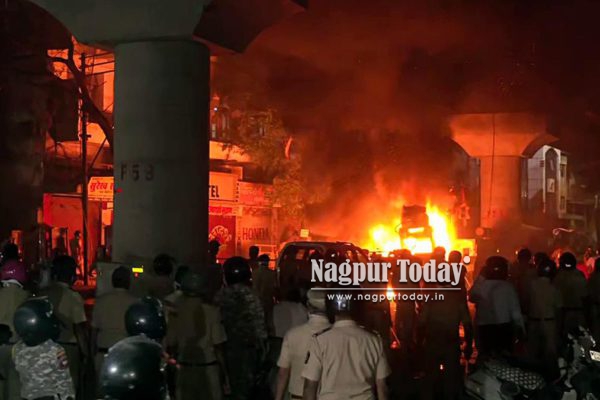
For many, the March 17 night is not just an event, it is a deeply personal memory. Residents still recall the harrowing experience of an elderly woman who came perilously close to losing her life. As unrest unfolded near Chitnis Park Square, a vehicle set ablaze outside her home sent flames and thick smoke towards the window beside her bed. Trapped in a smoke-filled room, she struggled to breathe.
Gold Rate
Mar 16 2026 - Time 11.45Hrs

“In that moment, it was chaos. Her daughter-in-law somehow managed to pull the bed away from the window,” a local resident recounted. Reaching the house was difficult amid the violence, but neighbours eventually managed to rescue her and rush her to hospital. Though she survived after a few days of treatment, the incident left a lasting impact on her health. “She never fully recovered. It changed her,” her son said quietly, adding that she passed away months later, still affected by the trauma.
Stories like hers are not isolated. Several families in Mahal continue to carry emotional wounds long after physical damage was repaired. One resident, who spent the night helping the injured and arranging first aid, remembers not just the violence outside, but the fear inside his own home. “My son kept calling, asking what was happening. He was terrified. Until morning, everything was normal, and then suddenly, it wasn’t,” he said. Even months later, the child struggled to forget the sounds of sirens, shouting, and chaos.
The violence, though limited to pockets such as Chitnis Park, Bhaldarpura, and adjoining areas, exposed how quickly peace in densely populated neighbourhoods can fracture. It also underscored how long it takes to rebuild a sense of trust once it is shaken.
According to police, the unrest was triggered by protests linked to demands concerning the tomb of Mughal emperor Aurangzeb in Chhatrapati Sambhajinagar. Tensions escalated rapidly, fuelled by rumours on social media, including false claims about the desecration of a religious cloth. What followed was a sudden outbreak of stone-pelting, arson, and vandalism targeting vehicles and shops.
More than 30 police personnel, including senior officers, were injured while attempting to bring the situation under control. Over 100 individuals were detained in the aftermath. However, investigators later clarified that no religious material had been damaged, highlighting the role misinformation played in escalating the situation.
Police Commissioner Ravinder Singal has since maintained that the incident should not be viewed as a full-scale citywide riot. He noted that no senior community leaders were involved and that many of those who participated were misled youth reacting impulsively in a charged atmosphere. The violence, he said, was avoidable and aggravated by provocative elements and a breakdown in timely communication.
In the months that followed, authorities shifted focus from immediate law enforcement to long-term peace-building. Police have initiated community outreach programmes, regular interactions, and confidence-building measures aimed at preventing similar flare-ups in the future. Sensitive localities, including Yashodharanagar, are under closer watch by law enforcement and intelligence agencies.
The incident also exposed significant infrastructural gaps. A large number of CCTV cameras installed by the Nagpur Municipal Corporation were found to be non-functional at the time, hampering evidence collection. As a result, many of those arrested were released within months due to lack of concrete proof. Even now, hundreds of cameras reportedly remain out of order, raising concerns about preparedness.
Legal and administrative actions taken after the incident have also drawn scrutiny. One of the accused, Fahim Khan, is currently out on bail. The demolition of a portion of his house by civic authorities, citing encroachment, was later questioned by the High Court for not following due procedure. The episode added another layer of complexity to an already sensitive situation. Khan’s wife was elected Corporator from Yashodhara Nagar in the civic election held earlier this year.
A year on, Mahal stands as a reminder of both fragility and resilience. While peace has returned, it carries with it lessons, about the dangers of misinformation, the need for stronger civic infrastructure, and the importance of trust between communities and authorities.
For residents, the healing continues quietly. Life has moved forward, but the memory of that night remains, etched in conversations, in caution, and in the collective hope that such a moment never returns.