

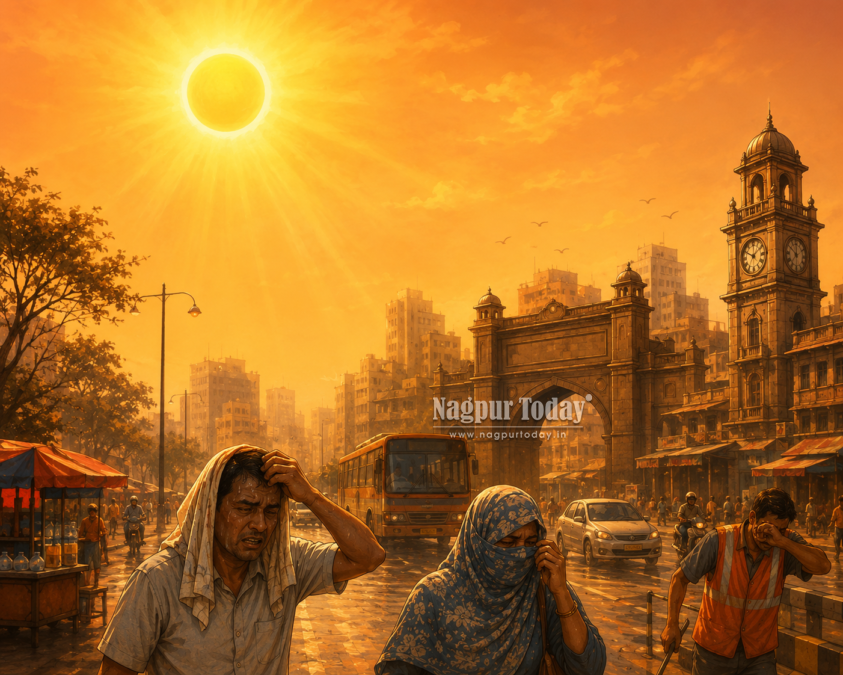
Nagpur: As Vidarbha continues to gasp under a punishing heatwave that has shown no mercy for nearly two weeks, the arrival of the dreaded ‘Nautapa’ period from May 25 is expected to turn the region into a virtual furnace.
Cities including Nagpur, Chandrapur, Wardha and Akola are likely to witness brutally high temperatures, with the mercury traditionally climbing to a blistering 46°C to 47°C during this notorious nine-day spell.
Roads are already wearing a deserted look during afternoons. Hot winds sweeping across Vidarbha feel less like air and more like blasts from a giant furnace. For thousands of outdoor workers, daily wage labourers, traffic personnel and street vendors, survival itself becomes a challenge during this phase.
In Indian weather tradition, ‘Nautapa’ marks the nine fiercest days of the Hindu month of Jyeshtha, believed to begin when the Sun enters the Rohini constellation. Though modern meteorology does not officially classify Nautapa as a scientific weather event, climate experts acknowledge that this period coincides with one of the most aggressive pre-monsoon heating cycles across central and northern India.

The science behind this scorching spell is equally severe.
During late May, the landmass over the Indian subcontinent heats rapidly, creating massive low-pressure zones. These systems later pull moisture-laden winds from the Arabian Sea and Bay of Bengal, laying the foundation for the southwest monsoon.
This is precisely why farmers across Vidarbha have historically viewed Nautapa with a strange mix of fear and hope.
A popular rural belief still echoes across villages: “The harsher the Nautapa, the stronger the monsoon.”
While weather experts stop short of fully endorsing this theory, they admit that sustained land heating remains a critical component in triggering India’s monsoon mechanism.
But for ordinary citizens, there is little romance in this weather phenomenon.
For them, Nautapa means burning afternoons, sleepless nights, dehydration, exhaustion, dizziness and an unending battle against heat and humidity.
Hospitals often witness a spike in cases related to heat exhaustion, dehydration and heatstroke during this period. Children, senior citizens and those working outdoors remain the most vulnerable.
Medical experts warn that ignoring symptoms such as severe headache, nausea, fainting, excessive sweating or sudden weakness can prove dangerous, and in extreme cases, even fatal.
Survival measures during Nautapa
• Drink water repeatedly, even if you do not feel thirsty
• Avoid venturing outdoors during peak afternoon hours
• Wear loose, light-coloured cotton clothing
• Cover the head using caps, scarves, umbrellas or white cloth
• Eat light meals and consume seasonal fruits with high water content
• Avoid excessive tea, coffee and oily food
• Keep children, elderly persons and patients indoors as much as possible
• Never leave children or pets inside parked vehicles
• Watch carefully for signs of heatstroke, including dizziness, vomiting or confusion
• Seek immediate medical assistance if heat stroke symptoms appear
As Vidarbha prepares to endure another punishing chapter of summer, Nautapa stands as a harsh reminder that before the monsoon clouds bring relief, the region must first survive the fury of the sun.