

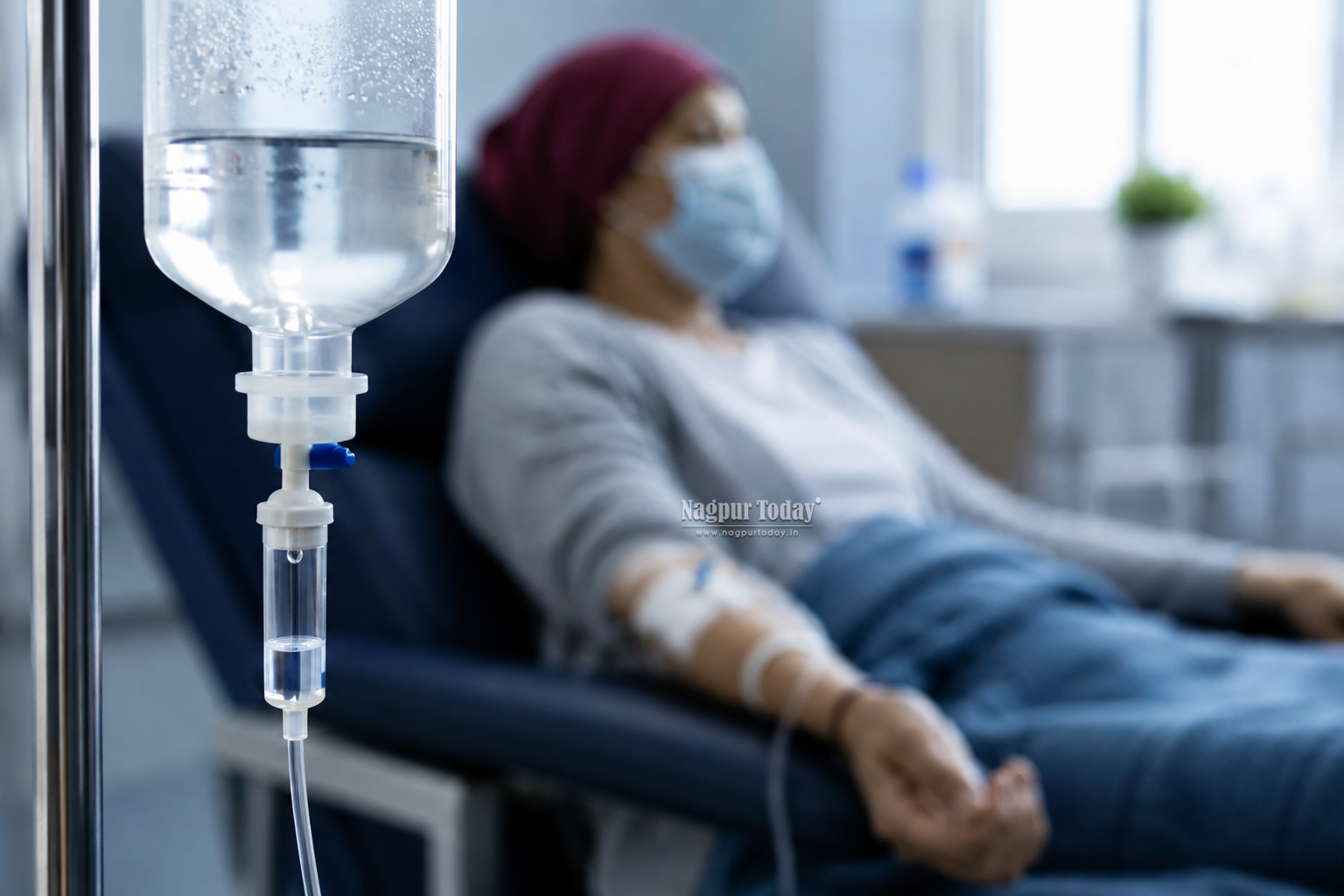
Nagpur: The ripple effects of escalating global conflicts and disrupted international supply chains are no longer confined to geopolitical discussions, they are now being felt in cancer wards across Nagpur. Government hospitals in the city are grappling with an acute shortage of two of the most critical chemotherapy drugs, Cisplatin and Carboplatin, leaving dozens of cancer patients facing uncertainty over their treatment and survival.
Doctors and healthcare experts have described the situation as a growing public health concern, warning that delays in chemotherapy can have devastating consequences for patients battling cancer.
The shortage has severely affected cancer care in several major government healthcare institutions, including the All India Institute of Medical Sciences, Government Medical College and Hospital, and Indira Gandhi Government Medical College and Hospital.
Hospital sources revealed that nearly 15 to 20 patients are being turned away every day because the required chemotherapy drugs are unavailable. For many patients, particularly those from economically weaker sections, government hospitals are the only affordable source of treatment.

Medical professionals fear that interruptions in chemotherapy schedules could significantly reduce treatment effectiveness and allow cancer to progress unchecked.
Why these drugs matter
Cisplatin and Carboplatin are among the most widely used chemotherapy medications in oncology. These platinum-based anti-cancer drugs are administered to treat a variety of cancers and are estimated to be used in nearly 60 percent of chemotherapy protocols.
The medicines work by preventing cancer cells from multiplying and spreading. For many patients, they form the backbone of treatment plans carefully designed around specific cycles administered every 7, 14, or 21 days.
Oncologists warn that missing even a single chemotherapy cycle can have serious consequences.
“If chemotherapy is delayed, cancer cells can become active again. Tumours may continue to grow, symptoms can worsen, and the disease may advance to a more critical stage,” said a senior cancer specialist.
The shortage has created anxiety among patients and their families, many of whom are already fighting emotional, physical and financial battles.
Several doctors admitted that they are being forced to postpone or alter treatment schedules because the medicines are simply unavailable.
A leading oncologist, speaking on condition of anonymity, said concerns about the supply situation had emerged even before the current international conflict escalated.
“We anticipated that global tensions could affect the availability of these crucial medicines. Without these drugs, we cannot administer chemotherapy. Missing treatment cycles directly affects patient outcomes. The biggest concern is that nobody knows how long this crisis will continue,” the doctor said.
For cancer patients, every delayed treatment session increases uncertainty and fear. Many are now worried not only about their illness but also about whether the medicines needed to fight it will be available when required.
Global conflict behind local crisis
Experts attribute the shortage largely to disruptions in the international supply chain. The raw materials used to manufacture Cisplatin and Carboplatin are imported from foreign countries. However, ongoing geopolitical tensions and conflict-related disruptions have severely affected global trade routes.
According to healthcare experts, shipping delays, rising maritime risks, container shortages, and customs bottlenecks have disrupted the steady flow of pharmaceutical raw materials into India.
As a result, domestic pharmaceutical manufacturers have struggled to maintain production levels.
Doctors and industry insiders point to another critical factor worsening the crisis, pricing controls. A senior medical professional explained that while production costs have risen sharply due to global instability, manufacturers are unable to proportionately increase prices because of government regulations.
“Suppose a medicine is being sold at Rs 300. Due to rising costs of raw materials and logistics, production may now cost more than that amount. If companies cannot recover their costs, manufacturing becomes commercially unviable,” the doctor said.
Sources claim that some overseas suppliers have reduced or halted shipments of raw materials, further tightening supplies.
A warning for India’s healthcare system
The crisis has once again highlighted India’s dependence on international supply chains for critical pharmaceutical ingredients. Healthcare experts noted that concerns about reliance on imported raw materials were raised during the COVID-19 pandemic, yet significant vulnerabilities remain.
If global tensions continue and supply chains remain disrupted, doctors fear shortages could extend beyond chemotherapy drugs and affect other life-saving medicines in the coming months.
Medical professionals are now urging authorities to take immediate steps to secure supplies, support domestic manufacturing, and ensure uninterrupted treatment for cancer patients.
For those battling a life-threatening disease, chemotherapy is not merely a routine medical procedure, it is often the difference between recovery and deterioration.
As hospitals struggle to cope with dwindling stocks, the shortage of Cisplatin and Carboplatin has evolved from a supply-chain issue into a humanitarian concern, with hundreds of cancer patients anxiously waiting for medicines that could determine the course of their lives.