

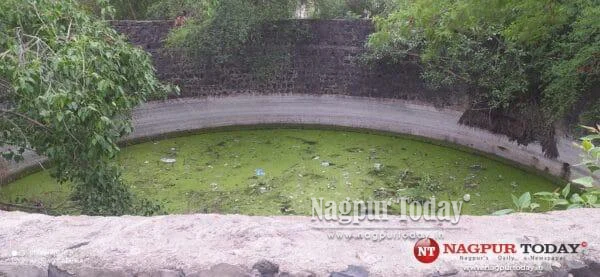
 Nagpur: The Nagpur Bench of the Bombay High Court has questioned the ₹125 crore estimated cost proposed by the Nagpur Municipal Corporation (NMC) for installing cameras at public wells across the city and asked the civic body to explore whether relatively low-cost forest-style “trap cameras” could be used instead.
A Division Bench comprising Justice Anil Kilor and Justice Rajnish Vyas sought details from the NMC on the feasibility of using such cameras before the next hearing.
The issue came up during the hearing of a Public Interest Litigation (PIL) filed by Sandesh Singalkar, seeking measures for the preservation, cleaning and revival of Nagpur’s public wells.
HC questions ₹125 crore proposal
During Wednesday’s hearing, the NMC placed before the Court a proposal involving an estimated expenditure of ₹125 crore for installing cameras at public wells.
The Bench orally observed that the proposed expenditure appeared excessive and asked the civic body to examine whether trap cameras commonly used in forests for wildlife monitoring could be deployed at the wells.

Such cameras could potentially provide continuous surveillance while helping the civic body monitor the condition of wells and prevent damage, dumping or other activities affecting the water sources.
The Court directed the NMC to submit details regarding the feasibility of using trap cameras by next week.
Nagpur has 860 public wells
The PIL also focuses on the deteriorating condition of Nagpur’s traditional water sources.
The NMC informed the High Court that the city currently has 860 public wells. Among the civic zones, Gandhibag has the highest number with 126 wells, while Lakadganj has the lowest with 34.
According to the civic body, approximately 443 wells can be cleaned by removing accumulated silt.
The Court is examining what measures can be adopted to protect these wells, improve their condition and make them useful as water sources again.
NEERI survey found widespread pollution
The case has been under consideration for several years. In August 2024, the High Court had directed the National Environmental Engineering Research Institute (NEERI) and the Groundwater Survey Department to submit suggestions regarding the cleaning and maintenance of Nagpur’s public wells.
NEERI had earlier surveyed the city’s wells and found that nearly half were polluted, with the water unsuitable for drinking.
The petitioner has sought comprehensive measures for rejuvenation of the wells and restoration of their water sources, rather than allowing the traditional water bodies to deteriorate further.
The latest hearing therefore puts the focus on both the cost of surveillance infrastructure and the larger question of how Nagpur’s neglected public wells can be protected and restored.
Advocate Ravi Sannyal appeared for the Pollution Control Board, Advocate Sudhir Puranik represented the NMC, and Advocate Smita Singalkar appeared for the petitioner.