

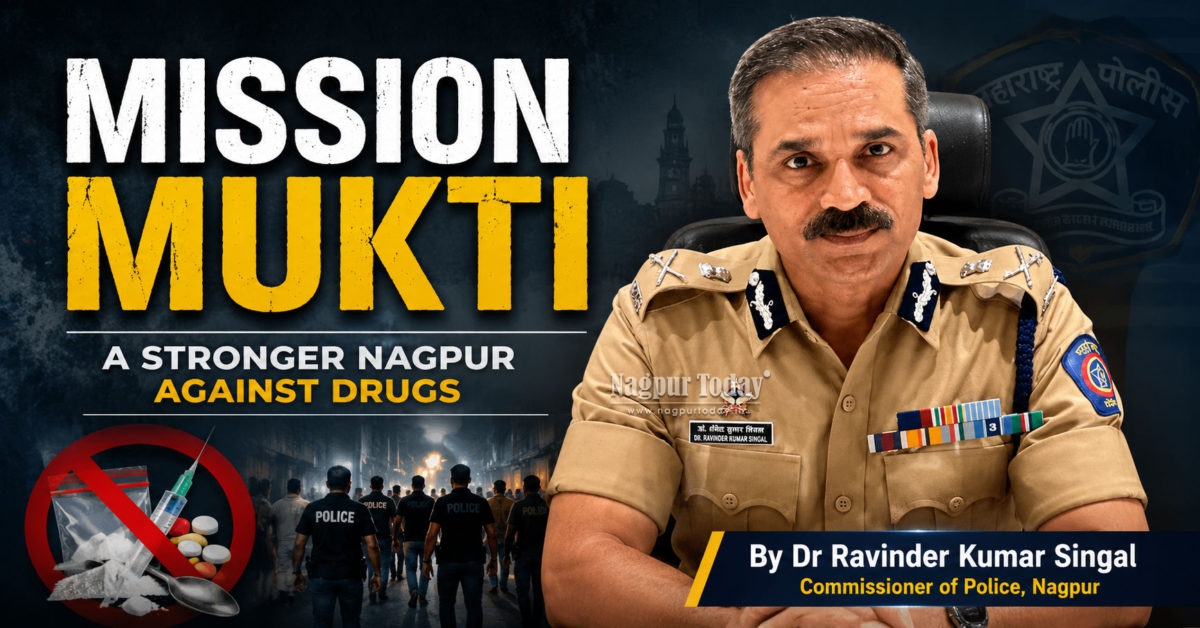
Nagpur: What began as a disturbing personal experience has today transformed into one of Nagpur’s most significant humanitarian initiatives. Mission Mukti, a flagship programme of the Nagpur City Police, has emerged as a co-ordinated effort to rescue homeless, mentally ill, abandoned, and vulnerable people living on the streets and help them return to a life of dignity and care.
The idea behind the mission dates back to 2012, when I witnessed a shocking incident while travelling from Morris College T-Point towards Tekdi Road. A mentally disturbed man was seen drinking dirty water directly from a roadside gutter. “That image stayed with me for years. It was deeply disturbing and raised serious questions about our collective responsibility as a society.”
After returning to Nagpur as Commissioner of Police, I decided to take up the issue seriously, believing that social problems are closely linked to policing. Police personnel are often the first responders in cases where homeless individuals die due to accidents, illness, or extreme weather conditions. Instead of ignoring the issue, the police leadership chose to address it systematically. Mission Mukti was launched after a series of meetings involving all concerned departments and non-governmental organisations working in the field.
Officials reviewed available resources, including the capacity of shelter homes run by the Government and NGOs, and discussed long-term rehabilitation measures. To the administration’s surprise, several NGOs were already working quietly to rescue homeless and mentally ill individuals from the streets. Eventually, six NGOs joined hands with the Nagpur City Police to execute the mission in a co-ordinated manner.

Various departments, including the Women and Child Welfare Department, the Beggar Rehabilitation Department, Child Welfare Officers, SSB teams, and other civic agencies, became part of the operation. Surveys were conducted to identify areas where homeless individuals and beggars were concentrated. Special attention was also given to the issue of minors being used for begging, a growing social concern affecting the image and conscience of society.
Before every rescue operation, extensive training and sensitisation programmes were conducted for all personnel involved. Medical support became another critical component of the initiative. Government Medical College (GMC), Mayo Hospital, and the Mental Hospital actively participated in planning and implementation. Most rescued individuals were found suffering from serious medical conditions, including skin diseases, respiratory illnesses, malnutrition, and mental health disorders.
Medical examinations were conducted before shifting them to shelter homes to ensure proper treatment and care. Both Government-run shelter homes and NGO-operated rehabilitation centres were utilised under the mission. During rescue drives, especially in the scorching summer period of Nautapa, arrangements for food, drinking water, medicines, and emergency care were made for both the rescued individuals and the rescue teams.
Over the last two years, Mission Mukti has successfully rescued nearly 600 people from the streets of Nagpur. Authorities say, the initiative is not merely about removing people from the roads, but about restoring dignity, safety, and hope. One of the most encouraging developments under the mission has been the focus on rehabilitation through skill development. With the support of the MSME Department and Industrial Training Institutes (ITIs), vocational training is now being provided to rescued individuals to help them become self-reliant. So far, 115 people have received skill training under the programme, enabling many of them to begin rebuilding their lives with confidence and independence.
Mission Mukti is currently in its third phase, with authorities aiming to make Nagpur a city free from forced begging and unsafe street living conditions. Citizens, social organisations, educational institutions, and corporates have been appealed to come forward and support the initiative through volunteering, rehabilitation support, employment opportunities, and awareness efforts. The mission has now become more than a police initiative, it is emerging as a social movement driven by compassion, responsibility, and collective participation.
A major factor behind the growing momentum of Mission Mukti has been the active participation and support of the press and media. Through continuous coverage, awareness campaigns, and responsible journalism, the media has helped sensitise society towards the plight of homeless and mentally vulnerable individuals, encouraging citizens to become active participants in the mission rather than silent spectators.
Mission Mukti stands today as an example of the humane face of policing — where law enforcement goes beyond maintaining order and works towards restoring dignity, hope, and humanity to those who have long been forgotten by society.