

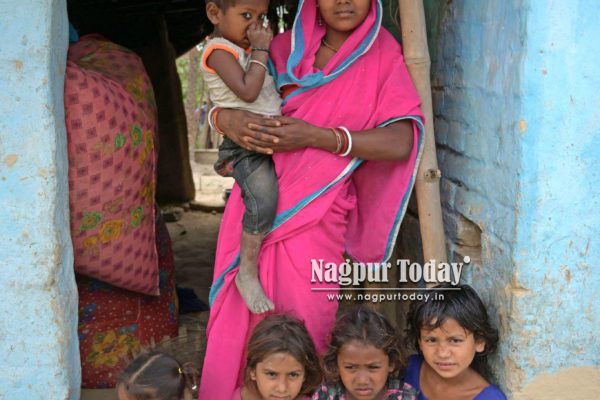
Nagpur/Mumbai: A welfare scheme meant to protect some of Maharashtra’s most vulnerable children is being crippled by bureaucratic delays, misplaced files, documentation hurdles and erratic payments, leaving thousands of eligible beneficiaries struggling for support that often arrives months, or even years, late.
These findings emerge from ‘Bal Sangopan Yojana: Analysis and Experiences’, a report released in May 2026 by Prayas, the Tata Institute of Social Sciences (TISS) and legal advocacy organisation iProbono India. The report paints a troubling picture of the implementation of the Krantijyoti Savitribai Phule Bal Sangopan Yojana, a flagship scheme intended to prevent children from being pushed into institutional care by providing financial support to families facing hardship.
Gold Rate
Sept 24,2026 - Time 10.30Hrs

Instead of serving as a lifeline, the scheme is often becoming a test of endurance for widows, single parents, families of prisoners and economically distressed households, the report states. ### Vulnerable Children Trapped in a Maze of Paperwork Introduced as a foster care initiative in 1995 and expanded in 2008, the scheme currently provides Rs 2,250 per month to eligible children below the age of 18. Beneficiaries include orphans, children of single parents, children whose parents are incarcerated and others in need of care and protection.
However, researchers found that accessing the assistance is frequently an uphill battle. Families reportedly spend six to twelve months merely gathering mandatory documents and completing administrative formalities. Even after applications are submitted, approvals can take another six to twelve months. In many cases, payments are not disbursed monthly as intended but are released in irregular batches, creating severe financial uncertainty for families already struggling to survive.

The report highlights how stringent documentation requirements often exclude the very children the scheme was designed to protect. Income certificates have emerged as one of the biggest barriers. In one documented case, seven out of 25 applications processed by a social worker were rejected because families could not obtain the required income proof. Researchers also uncovered instances where official records and beneficiary files were lost, forcing applicants to begin the process all over again.
Among the cases documented is that of a widow from Nanded, identified as Nirmala Patil (name changed), who supports her two children by conducting private tuition classes after her husband died of cancer. Although her children were enrolled under the scheme in 2023, she says the process took nearly 18 months. Even after approval, payments have remained irregular.
According to Patil, her children received only three months’ pending assistance last year, while this year they received a single instalment of Rs 2,250 each in April. Since then, no further payments have been credited. Every year, she is required to repeatedly submit school certificates, income documents and other records while undergoing fresh verification procedures, adding to the burden on an already distressed family.
One of the report’s most disturbing case studies concerns two children from Mumbai whose mother was sent to prison in a criminal case, leaving them in the care of their elderly grandmother. After social workers initiated the process to secure assistance under the scheme, the application was approved by the Child Welfare Committee. However, the file was allegedly lost three separate times after being forwarded to the Women and Child Development Department. Each time, social workers were forced to reconstruct the entire application from scratch. Staff transfers, administrative delays and missing paperwork prolonged the process for years. By the time financial assistance was finally sanctioned, the children’s mother had secured bail. Authorities then declared the children ineligible and discontinued the benefits, despite the family’s continuing financial hardship.
The case has raised serious questions about whether rigid procedural interpretations are defeating the very purpose of child welfare programmes.
Surekha Sale, Senior Social Worker and Assistant Director at Prayas, said documentation requirements continue to exclude large numbers of deserving children. “Many of the families we work with are daily wage labourers, slum residents, homeless persons or families affected by imprisonment. They often do not possess income certificates, ration cards or even birth certificates. As a result, many eligible children are unable to access benefits despite genuine need,” she said.
Sale also criticised the practice of terminating assistance for children of incarcerated parents immediately after the parent’s release. “The child does not automatically stop being vulnerable because the parent has come out of prison. We have seen several cases where financial distress continues, yet assistance is discontinued. Repeatedly preparing and resubmitting files because of procedural objections becomes exhausting for both beneficiaries and social workers,” she added.
Social activist Milindkumar Salve, State Coordinator of Sau Ekal Mahila Samiti and a member of the government’s Mission Vatsalya Committee, alleged that many eligible children remain outside the scheme despite applying years ago. According to Salve, some families continue waiting under the impression that their applications are being processed, only to later discover that their cases were never placed before Child Welfare Committees for approval.
RTI responses obtained by iProbono India from district authorities and Women and Child Development offices revealed glaring inconsistencies in record-keeping across Maharashtra. While some districts maintained detailed beneficiary data, others reported incomplete records or even nil figures in crucial categories. Researchers warned that the absence of a publicly accessible database tracking applications, approvals, rejections and fund disbursements has weakened transparency and accountability, making it difficult to assess the scheme’s actual reach and effectiveness.
Children of prisoners were formally included under the scheme in 2013 after sustained advocacy efforts. Ironically, the report notes that some of the most severe implementation failures documented involve families affected by incarceration. In responses submitted before the Maharashtra Legislature and through RTI replies, the Women and Child Development Department maintained that funds had been released under the scheme.
Officials attributed delays in individual cases to Aadhaar-bank linkage problems, migration of beneficiaries, changes in contact details and verification-related issues rather than a statewide shortage of funds. However, child rights advocates argue that regardless of the reason, the consequences are borne by vulnerable children whose education, nutrition and well-being depend on timely support. The report concludes that unless systemic reforms are undertaken, the Bal Sangopan Yojana risks falling short of its core objective, protecting children in crisis and ensuring they can remain with their families instead of slipping through the cracks of an overburdened welfare system.