

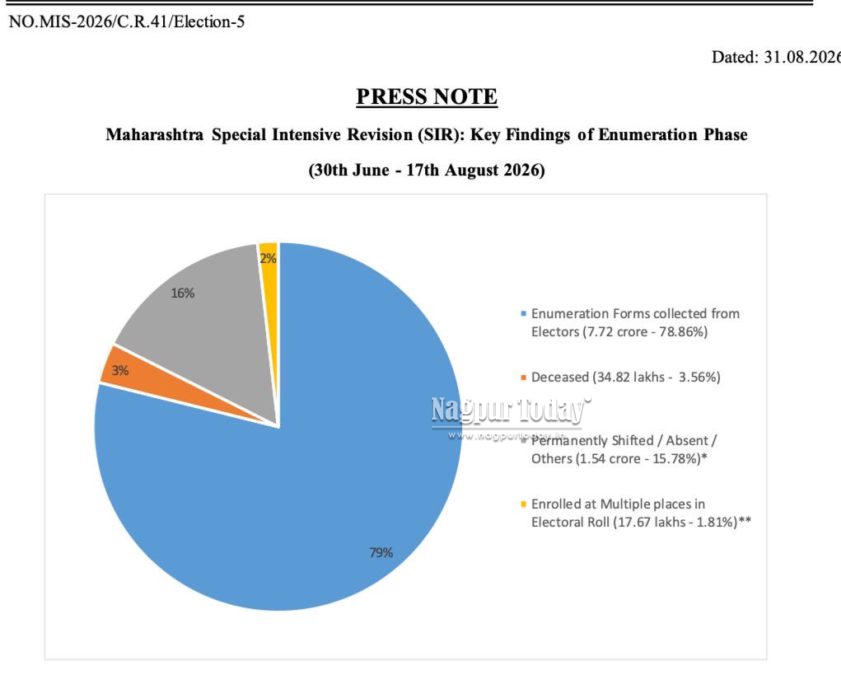
 Mumbai: The draft electoral roll released under the Special Intensive Revision (SIR) in Maharashtra has triggered a major debate over the state’s electoral process and the previous voter list. Amid claims that nearly 20 million voters have been left out of the draft roll, the key question is how such a large-scale change occurred in the voter records.
The issue is particularly significant because Maharashtra’s voter list recorded an increase of around 4 million voters between the 2024 Lok Sabha and Assembly elections. The sharp rise in the number of voters had raised questions at the time, while the Election Commission had expressed confidence in the voter-list process.
Now, nearly two years later, reports of a large number of names being excluded during the SIR have raised fresh questions about the reliability of the earlier records.
Why has there been such a major change in two years?
If the 2024 voter list was prepared after proper and comprehensive verification, what explains the exclusion of such a large number of names during the SIR?
Were there issues related to the identity, residence, deaths, migration or duplicate records of these voters? Or did the previous voter list include names that are now being removed after verification?

Clear answers to these questions will require official, reason-wise data.
From 4 million new voters to 20 million excluded names
The addition of around 4 million voters to Maharashtra’s electoral roll between the 2024 Lok Sabha and Assembly elections was widely discussed. Now, claims that nearly 20 million names have been left out of the draft roll during the SIR have once again placed the process used to prepare the earlier voter list at the centre of attention.
However, exclusion from the draft roll does not mean that voting rights have been permanently cancelled. The SIR process provides an opportunity to file claims and objections. The final electoral roll will be prepared after verification and hearings.
The final picture will emerge after the final roll
For now, it is crucial that the administration and the Election Commission clarify how many of the names excluded from the draft list relate to deceased voters, voters who have relocated, duplicate entries or other reasons.
It will also be important to know how many names are restored to the voter list after the claims-and-objections process.
These figures will show whether the deletions made during the SIR were part of a routine process to clean up voter records, or whether the previous voter list contained a large number of names that are now being verified.
Potential political impact in Maharashtra
Such a major change in the voter list is expected to have a political impact. Maharashtra’s ruling party and opposition have already been questioning each other over the electoral process and voter lists.
In this context, the final SIR roll will not be merely an administrative document; it will also be highly significant in the state’s political debate.
For now, the central question is why there is such a large gap between the number recorded in the 2024 voter list and the final figure that will emerge after the SIR.
The answer will become fully clear only after the final electoral roll and detailed official data are released.