

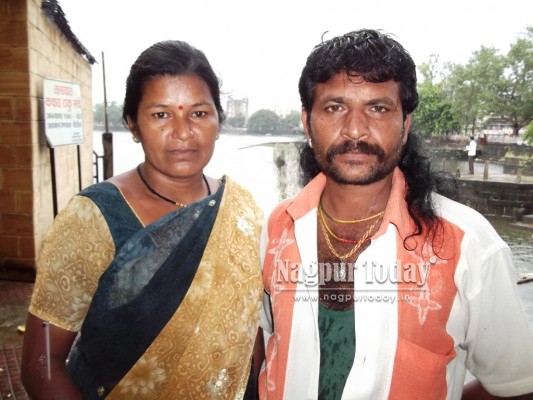
Nagpur: While most people turn away from tragedy, one man in Nagpur has spent more than three decades walking straight into it, not for fame, not for money, but to give dignity to the lost and hope to the desperate.
For over 30 years, Jagdish Khare, often known across the city as the “Lake Rescuer” or “Body Recoverer,” has been silently working along the dark edges of human despair, rescuing those who still have a chance to live, and retrieving bodies when fate has already claimed its toll.
Gold Rate
June 30,2026 - Time 10.30Hrs

Speaking at ‘Samvad’, a programme organised by Vidarbha Hindi Sahitya Sangha on Sunday, Khare opened his heart about the journey that has shaped his life since 1994, a journey born not out of ambition, but out of personal grief.
A tragedy that changed a life

Khare’s path began with a heartbreaking incident that left a permanent mark on his soul.
“A close friend of mine died by suicide. There was no one to help. We had to retrieve his body ourselves,” Khare recalled quietly. “That moment changed everything for me.”
What began as a painful experience slowly transformed into a lifelong mission.
With no formal education and no professional training, Khare taught himself how to dive into deep waters, lakes, wells, rivers, searching for bodies that others feared to approach. Since then, he has recovered more than 4,000 bodies from water bodies and other places across the region.
But Khare’s story is not only about death. It is also about saving life.
Over the years, he has rescued more than 1,800 people who were attempting to end their lives, pulling them back from the brink of irreversible tragedy.
A couple bound by compassion
Khare’s mission is not his alone. Standing beside him through every difficult moment is his wife, Jayshree Khare. While Jagdish retrieves bodies, Jayshree takes care of women victims and counsels those battling suicidal thoughts, often offering comfort when families are shattered by grief.
“I grew up watching my father work in an autopsy department,” Khare said. “After years of retrieving bodies, nothing frightens me anymore.”
Service despite hardships
Despite the extraordinary service he has rendered to society, Khare’s life has been far from easy. A sanitation worker by profession, he has faced social stigma, financial struggles and even difficulty finding housing, simply because of the nature of his work.
Often, there is little or no payment for retrieving unclaimed bodies.
“I do this as social service, not for money,” Khare said with quiet conviction. At times, police officials help him by providing fuel for the ambulance he uses during rescue and recovery operations.
A test of integrity
In many cases, Khare and his wife come across victims still wearing ornaments or valuables. Yet the couple has never touched them. “People call us mad,” Jayshree said softly. “But once a person has lost life, what value do those ornaments really have?”
Their honesty and dedication have earned Khare several honours, including the Nagpur Heroes Award and recognition in the Limca Book of Records.
A name written in someone’s final words
Perhaps the most moving testimony to Khare’s service came in the form of a suicide note. “Once, we found a note where the person had written that if Jagdish Khare retrieves my body, it should be handed over to my father,” he recalled. The memory still weighs heavily on him.
Yet despite witnessing thousands of tragedies, Khare says he has never thought of walking away from this difficult path.
With no expectation of reward, and driven only by a deep sense of humanity, Nagpur’s quiet hero continues to stand where few others would dare, between life and death, offering dignity to the departed and a second chance to the living.


NMC Commissioner Pulls Up Officials Over Waterlogging

सोलर प्लांट के बावजूद भारी बिजली बिल #maharashtranews #smartmeter #electricity #bills #newsupdate

ट्यूशन फीस बढ़ोतरी के खिलाफ कांग्रेस आंदोलन #maharashtranews #tuitionfees #congress #andolan

महिला को एमडी ड्रग्स के झूठे केस में फंसाने की साजिश नाकाम...

एमआईडीसी में युवक की बेरहमी से हत्या #nagpurnews #crime #murdernews #newsupdate

सिर्फ एक धक्का... फिर चला चाकू #nagpurnews #crime #accusedarrested #murdernews