


This is slightly longish. But worth a read for people interested in Real Estate.
Nagpur’s skyline is changing at an unprecedented pace. Towering commercial structures are radically reshaping traditional hubs like Civil Lines, Ramdaspeth, and Dhantoli. But beneath the glossy sales brochures lies a frustrating reality for businesses: basic urban planning, developer accountability, and safety frameworks are being left far behind.
Gold Rate
Sept 29,2026 - Time 10.30Hrs

We are attempting to build for the future on the infrastructure of the past, and the structural cracks are already beginning to show.
“दिखावे में आलीशान, पर सुविधाओं में परेशान, यही है नागपुर के नए कमर्शियल हब्स का सच।”

1. The Parking Illusion: Nagpur vs. Tier 1 Reality
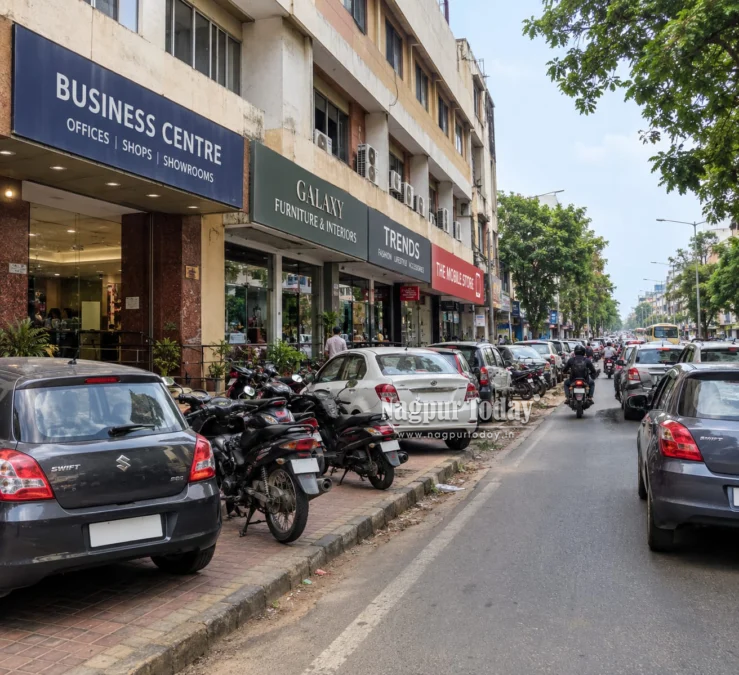
The most glaring daily failure of Nagpur’s commercial hubs is parking. Under Maharashtra’s Unified Development Control and Promotion Regulations (UDCPR), the baseline mandate of providing just one car park per 100 square meters (approx. 1,076 sq. ft.) of commercial space is fundamentally broken.
For a 1 Lac sq. ft. building housing over 200 offices, UDCPR rules require a paltry 100 parking spaces, a figure cut in half to roughly 50 spaces along Transit Oriented Development (TOD) metro corridors. To meet these meager thresholds on paper, developers install mechanical stack and puzzle parking systems. In Nagpur’s extreme summer heat, these complex systems are frequently abandoned due to slow retrieval times and constant mechanical breakdowns.
“बिल्डिंग्स तो आसमान छू रही हैं, लेकिन गाड़ियाँ खड़ी करने के लिए जमीन कम पड़ रही है।”
The result is daily chaos. Vehicles spill onto public streets, turning major arterial roads into gridlocked bottlenecks. Ask any business owner or client, and they will confirm that functional, accessible parking is practically non-existent in modern developments. Barring rare exceptions like VR Mall, Riaan House, or the legacy foresight of Shriram Tower in Sadar, nearly every major commercial building in the city falls drastically short.
2. The Vertical Bottleneck: The Lift Crisis
As builders push vertical limits to maximize sellable area, internal logistics fail to keep pace. Developers routinely install the absolute minimum number of elevators required by law. During peak hours, wait times convert high-rise lobbies into crowded platforms, bleeding corporate productivity dry.
“४.० FSI के चक्कर में FLOOR पर FLOOR तो बना दिए, लेकिन लिफ्ट के इंतज़ार में लोगों का आधा दिन ऑफिस के बाहर ही निकल जाता है।”
3. The RERA Double Standard: Marketing Illusion vs. Legal Reality
While MahaRERA mandates that commercial spaces be advertised and sold strictly on actual Builtup Area, sales teams continue to quote heavily inflated “Super Built-Up” figures. This pricing trick artificially lowers the advertised per-square-foot rate. However, when executing legal Sale Deeds, builders revert to actual Builtup/Carpet Area to avoid regulatory fines. Buyers are trapped in a confusing “two-book” system, ultimately paying top price for unusable common spaces repackaged as private property.
4. The Glass Trap: Western Design in a Tropical Climate
Massive glass curtain walls along Wardha Road and Civil Lines copy coastal Western architecture while ignoring local climate realities. In Nagpur’s brutal +45°C summer heat, glass creates a massive greenhouse effect, driving air conditioning costs sky-high. Furthermore, local maintenance infrastructure such as high-rise window-washing cradles and specialized cleaning teams is virtually non-existent, leaving elite glass facades looking weathered and neglected within months.
“४५ डिग्री की नागपुर की गर्मी में कांच की इमारतें बनाना समझदारी नहीं, एक महंगा GREENHOUSE TRAP है।”
5. Policy and Municipal Capacity: Urgent Questions for NMC & NIT
Nagpur is operating under a dangerous regulatory and municipal deficit. Applying uniform statewide UDCPR standards across Maharashtra treats Nagpur like Mumbai or Pune, completely ignoring our unique urban layout, extreme weather, and heavy reliance on personal vehicles.
Equally concerning is safety. An alarming number of commercial structures operate without modern firefighting systems or valid Occupation Certificates (OCs) from the Nagpur Municipal Corporation (NMC). As commercial skylines push past 70 to 100 meters, municipal fire services still lack ultra-high-reach hydraulic ladders, leaving high-rises dangerously reliant on internal pumps and sprinklers that are rarely maintained.
6. Lessons from Bengaluru: Grade-A Infrastructure & Strategic Parking
While evaluating office spaces in Bengaluru for regional banking clients, the contrast in design philosophy was striking. Top Bengaluru commercial developments routinely provide 2 car parks per 1,000 sq. ft., double Nagpur’s standard.
This is not lost space; it is sound economics. Generous parking allows developers to command substantial rental premiums from tier-one corporate tenants. Dedicated parking bays become recurring revenue drivers, leased separately for ₹3,000 to ₹10,000 per slot per month. Bengaluru projects also solve lobby congestion on tight plots by pairing high-speed elevators with escalators connecting double basements straight to the main lobby.
Because Nagpur faces intense heat, slow metro adoption, and limited last mile transit, our city relies far more heavily on personal vehicles. A forward thinking, Grade-A commercial project in Nagpur should target 3 car parks per 1,000 sq. ft. (around 300 dedicated spots for a 1 Lac sq. ft. building) to truly future-proof the asset.
7. Shift the Target from FSI Obsession to Net Profit
Nagpur has a high concentration of wealthy corporate leaders driving luxury vehicles. Yet, most are forced to operate out of poorly maintained, decaying commercial setups.
“क्या विडंबना है कि नागपुर का एक बड़ा व्यापारी सुबह अपने १५ से ५० करोड़ के आलीशान बंगले या अपने ५ से १० करोड़ के फ्लैट से ३ करोड़ की मेबैक (MAYBACH) कार में सवार होकर निकलता तो है, लेकिन दिनभर काम करने के लिए आकर उतरता कहाँ है? एक ऐसे पुराने, सीलन भरे और पान की पिचकारियों से सने जर्जर कमर्शियल कॉम्प्लेक्स में, जिसे वो अपना कॉर्पोरेट हेडक्वार्टर कहते हैं!”
Inside, these corporate suites are magnificent. Business owners routinely spend ₹5,000 per sq. ft. on interior fit-outs inside spaces bought at ₹5,000 to ₹8,000 per sq. ft. in 30-year-old structures.
Meanwhile, developers squeeze margin boundaries illegally, convert top-floor terraces into private units, or hijack common elevators for personal use. This stems from a short-sighted budget mindset obsessed with 100% FSI consumption. Globally, iconic architectural landmarks rarely exhaust allowable FSI. They are defined by grand lobbies, open atriums, smart basement logistics, and ample parking qualities that command unmatched rental yields that far outstrip the value of unbuilt square footage.
“अगर सस्ता ही सबसे अच्छा होता, तो नागपुर की सड़कों पर सिर्फ बजट कारें दिखतीं, मर्सिडीज नहीं। क्वालिटी बनाओ, खरीदार खुद आएगा!”
If Nagpur’s developers want to be true partners in the city’s growth, they must move past the shortcut mindset of maximum FSI loading and side-margin encroachment. Tier-1 cities have already proven that world-class planning, ample parking, and pristine maintenance command premium rates and generate ongoing monthly revenue.
“सच मानिए, अगर शहर में अच्छी, अंतरराष्ट्रीय स्तर की साफ़-सुथरी बिल्डिंगें बनने लगें, जहाँ मेंटेनेंस और हाइजीन का कड़ा नियम हो, तो सीढ़ियों और कोनों में दिखने वाले ये पान की पिचकारी के निशान भी अपने आप गायब हो जाएंगे।”
Why Experimentation Beats FSI Obsession: Local Proof Points and Visionaries Who Transformed Nagpur
Most builders hesitate to innovate, preferring copycat models that fill the city with generic, uninspired structures. But real estate history in Nagpur proves that pioneers who take calculated risks reap extraordinary rewards. While many have contributed to raising construction standards over the years, a select few stand out because their bold decisions involved immense risk and ultimately transformed Nagpur’s skyline.
- Poonam Chambers by N. Kumar / Linkhouse Hotels Pvt. Ltd. (1990s): Developed along Chhindwara Road in Byramji Town, a location dismissed at the time as far out of the city, this grand project shifted Nagpur’s commercial center of gravity and proved buyers would travel for superior infrastructure.
- Gulmohar by SDPL (Civil Lines): Sparked Nagpur’s residential apartment transformation by introducing the city’s very first duplex flats. Spanning ~2,500 sq. ft. and selling at a record ₹20 Lakhs per unit in 1995. Gulmohar continues to command high respect and market value today.
- Amrata Manor by Amrata Associates & Heritage by Alankar Real Estate Pvt. Ltd. (1999 – 2000): Amrata Manor made history as the first building in Nagpur to break the ₹1,000 per sq. ft. barrier, with its opening unit sold at ₹1,100 per sq. ft. by Roshan Real Estate. Meanwhile, Heritage (built by Alankar Real Estate Pvt. Ltd., a sister concern of the famous Hotel Centre Point) set a legendary standard for developer commitment when the builders demolished 100 to 120 concrete basement pillars over layout and Vastu concerns to rebuild from scratch. Both projects offered massive 2,000 to 3,500 sq. ft. layouts, unheard of at the time.
- Shriram Tower by Shriram Buildcon (Sadar, c. 2000): Built with expansive basement parking and large floor plates when Grade-A office space was non-existent. Roshan Real Estate brokered a landmark 5,000 sq. ft. corporate lease here for Max New York Life, an unprecedented size for office leasing back then, turning the property into a local landmark long referred to as the “Max Building”.
- Kukreja Infrastructure & Sri Bhagirath Reality Private Limited: Kukreja Infrastructure redefined vertical luxury starting from Kukreja Infinity (3,500–4,000 sq. ft.) to their iconic development The One (6,000+ sq. ft. flats). Sri Bhagirath Reality Private Limited (by SB Rander Group) raised the bar even higher with sprawling 13,000 to 14,000 sq. ft. single-floor plates in Civil Lines at their landmark project, Altair, a name translating to “the brightest star,” and which indeed stands as one of the brightest housing developments for a long time to come. Today, luxury apartments in Nagpur command ₹10 to ₹20 Crores, proving the market gladly pays top rupee for uncompromising space and quality.
All of these innovators broke away from standard formulas and succeeded. As the classic 90s Maggi Hot & Sweet commercial used to say: “It’s different!” Build something genuinely different, and Nagpur will reward you.
“अच्छा बनाओगे, अलग बनाओगे, तो पैसा कमाओगे!”
“और अगर फिर भी आपके मन में ज़रा भी शक या डर है कि ‘अलग और प्रीमियम बनाएंगे तो बिकेगा या नहीं?’… तो निश्चिंत रहिए, पंकज रोशन बेचेगा!”
However, building a masterpiece is only half the battle; maintaining it is what preserves its legacy. Over the years, Nagpur has seen several magnificent buildings constructed with great passion, only to crumble into shabby, neglected structures due to poor facility management. Once considered the crown jewels of the city, their fading facades stand as a warning. It is a sincere piece of advice to developers: treat long-term maintenance as an essential pillar of your brand, because every deteriorating building carrying your name ultimately puts your hard-earned reputation at stake.
When a developer builds something truly unique and uncompromising in quality, high profitability follows naturally. Because of the distinct value proposition and complete lack of direct competition, the project faces zero price resistance. This uniqueness allows the developer to command significantly higher profit margins while making the entire inventory far easier and faster to sell.
If a developer envisions a specialized commercial complex, crafted with superior architectural design, weather-responsive facades built for Nagpur’s extreme climate, high-speed intelligent elevators, and generous parking, the rates realized will far outstrip prevailing market averages. Beyond basic square footage, occupiers willingly pay a steep premium for high-efficiency floor plates, grand double-height entrance lobbies, integrated professional facility management, and energy-efficient building systems that lower long-term operating costs.
In evaluating Nagpur’s modern landscape, one must also acknowledge the administrative vision of Dr. T. Chandrashekhar (IAS). Serving concurrently as Municipal Commissioner (NMC) and Chairman of the Nagpur Improvement Trust (NIT) from 2000 to 2002, he spearheaded the Integrated Road Development Project (IRDP). His bold demolition drives cleared decades of encroachments, widened narrow bottlenecks into major arterial avenues, built major junctions, and developed extensive storm-water drainage networks. By transforming transit efficiency and city infrastructure, his work laid the groundwork for modern Nagpur and catalyzed a long-term rise in land values across the city.
“शायद यहाँ उठाई गई कुछ बातें आपको थोड़ी बढ़ा-चढ़ाकर लग सकती हैं। लेकिन सच तो यह है कि जब तक कहानी में थोड़ा ड्रामा न हो, तब तक बात गहराई से समझ नहीं आती। ठीक वैसे ही, जैसे एक ३ घंटे की फिल्म में अगर अतिशयोक्ति का इस्तेमाल न किया जाए, तो उसी कहानी को समझाने के लिए पूरी वेब सीरीज बनानी पड़ जाएगी!”
- The Pioneer of Exclusive Mandates — Roshan Real Estate: When appointing exclusive project sales brokers was virtually unheard of in Nagpur, Roshan Real Estate pioneered the exclusive sales mandate model. By securing complete project mandates, Roshan Real Estate successfully drove sold-out strategies for landmark residential developments like Amrata Manor as well as specialized commercial hubs like Indo Unique Plaza at Ghatate Layout. Over decades of practice, Roshan Real Estate has contributed silently to proper market pricing, consistently championing top-tier residential and commercial assets while executing nearly 2 Million sq. ft. in corporate leasing transactions.
If you wish to read, why one should mandate any broker, kindly click the link below:
https://share.google/dnVdNd1F2jlCIEdG8
क्या आप लेखक के इस विचार से सहमत हैं? अपनी राय ज़रूर साझा करें।