

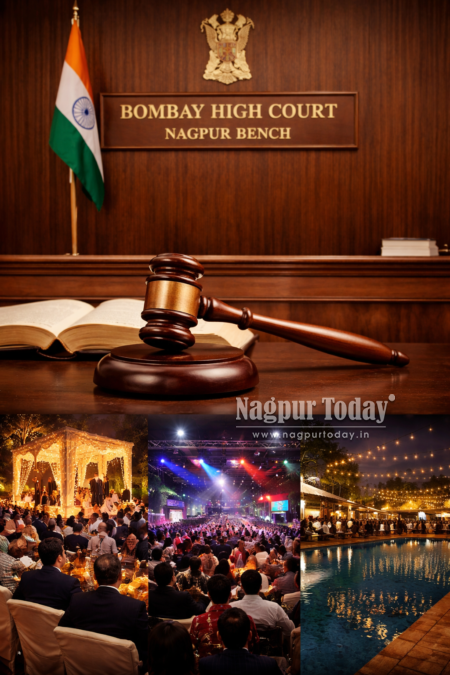
Nagpur: Taking a tough stand on rising noise pollution, the Nagpur Bench of the Bombay High Court has directed authorities to immediately verify whether lawns, marriage halls and club houses in the Civil Lines area of Nagpur possess valid permissions and adhere to prescribed norms, warning that licences must be cancelled in case of violations.
A division bench comprising Justice Anil Pansare and Justice Nivedita Mehta issued the stern directives while hearing multiple PILs highlighting unchecked noise pollution from social events at these venues. These included Swagat Lawn and Hall, Great Grand Lawn, Season Lawn, Sarpanch Bhavan, Gondwana Club, CP Club, Srushti Lawn, Officers Club, Ladies Club, Prestige Hall and Lawn, Jawahar Vidyarthi Sabhagruha, Satpuda Lawn and Deshpande Sabhagruha.
Gold Rate
Mar 232026 - Time 10.20Hrs

Court flags lax enforcement
The bench made it clear that enforcement of the Noise Pollution (Regulation and Control) Rules, 2000, along with guidelines issued by the Maharashtra Pollution Control Board, lies squarely with the local administration.
During the hearing, it emerged that nearly 13 such establishments operate in Civil Lines, including prominent lawns, halls and clubs frequently hosting large-scale events.
Mandatory norms ignored
Referring to MPCB’s 2016 circular, the court noted that these venues are legally required to:
• Install sewage treatment plants
• Maintain proper soundproofing systems
• Obtain prior permission for use of loudspeakers, DJs and Dolby sound systems
However, when questioned, MPCB officials admitted that most establishments had failed to secure the necessary permissions, exposing serious regulatory lapses.
Verification drive ordered
Taking serious note of the violations, the court directed the district administration, police, and municipal authorities to conduct a thorough verification of licences granted to all such establishments in Civil Lines.
It further ordered that any venue found violating conditions must face strict action, including cancellation of licences, sending a strong warning to habitual offenders.
The court’s tough stance signals zero tolerance towards noise pollution and regulatory violations, putting the onus firmly on authorities to act without delay.