

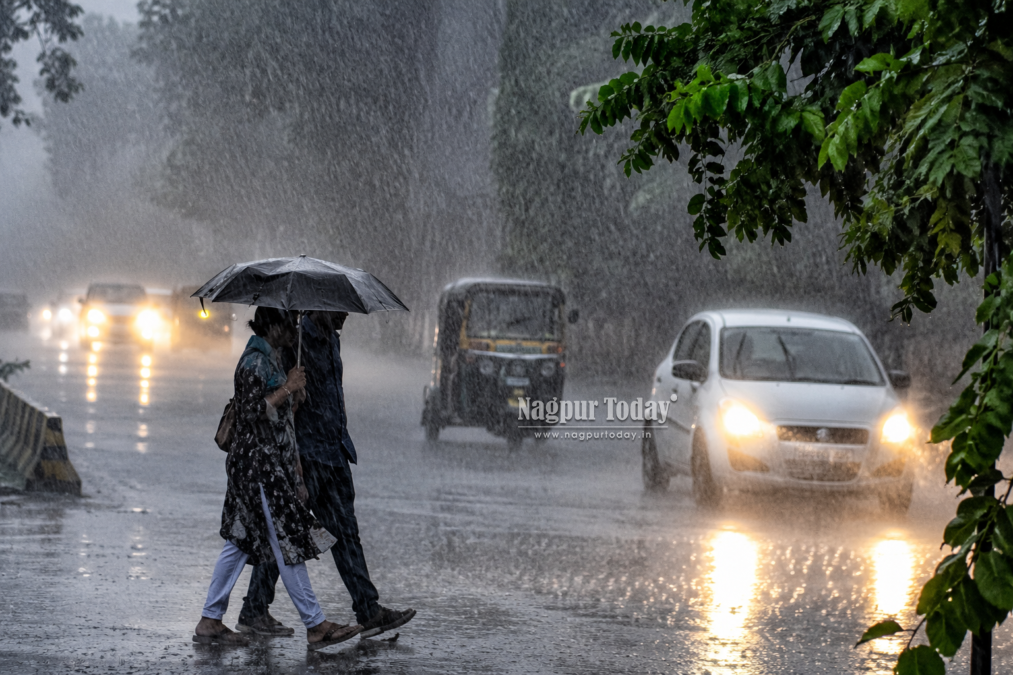
New Delhi: Bringing relief from scorching summer temperatures and renewed hope for farmers across the country, the Southwest Monsoon has officially arrived in Kerala, signalling the start of India’s crucial four-month rainy season.
The India Meteorological Department (IMD) on Thursday announced the onset of the monsoon over Kerala, marking one of the most eagerly anticipated weather events of the year. The arrival came on June 4, just a few days later than the normal onset date of June 1.
According to the IMD, the monsoon has now covered the entire state of Kerala, along with Lakshadweep and Mahe. It has also advanced across the remaining parts of the southwest and southeast Arabian Sea, creating favourable conditions for its further movement into other regions of the country.
Meteorologists have indicated that the monsoon is likely to gain momentum over the next two to three days. The weather system is expected to spread into larger parts of the central Arabian Sea and extend towards Goa, Maharashtra, Karnataka, Andhra Pradesh and Tamil Nadu.

Additional regions of the Bay of Bengal and the Northeastern states are also expected to come under the influence of the monsoon in the coming days.
The weather department attributed the onset to intensified cloud formation over the southeast Arabian Sea and strengthening westerly winds in the lower atmosphere, both of which are key indicators of monsoon activity.
Heavy rainfall predicted
Kerala has already witnessed widespread rainfall during the past two days, with several areas receiving intense showers.
The IMD has forecast isolated heavy to very heavy rainfall ranging between 7 cm and 20 cm across parts of Kerala over the next six to seven days. Similar weather conditions are expected in isolated areas of Tamil Nadu and Karnataka, where heavy rainfall warnings have also been issued.
Lifeline of the Indian economy
The arrival of the Southwest Monsoon carries significance far beyond weather forecasts. The seasonal rains are considered the backbone of India’s agriculture sector and play a vital role in replenishing reservoirs, groundwater levels and irrigation systems.
Nearly 70 per cent of India’s annual rainfall is received during the monsoon season, making it critical for the cultivation of major kharif crops such as rice, soybean, cotton, pulses and sugarcane.
A timely and well-distributed monsoon is also regarded as a key factor influencing rural incomes, food production, inflation and overall economic growth.
Rainfall outlook remains positive
In an encouraging development, the IMD has projected that India is likely to receive rainfall amounting to around 90 per cent of the Long Period Average (LPA) during the current monsoon season.
Weather experts believe that while regional variations are expected, the overall rainfall outlook could provide much-needed support to agriculture and water availability across large parts of the country.
As monsoon activity gradually expands northward, several regions currently reeling under intense heat are expected to experience relief in the coming weeks.
In Delhi, where temperatures have remained high, the IMD has issued a yellow alert for rain and thunderstorms. The national capital recorded a minimum temperature of 29.7 degrees Celsius on Thursday, with changing weather conditions expected over the next few days.
With the monsoon finally making landfall, attention will now shift to its pace of advance and distribution, factors that will significantly influence India’s agricultural output, water security and economic outlook in the months ahead.