

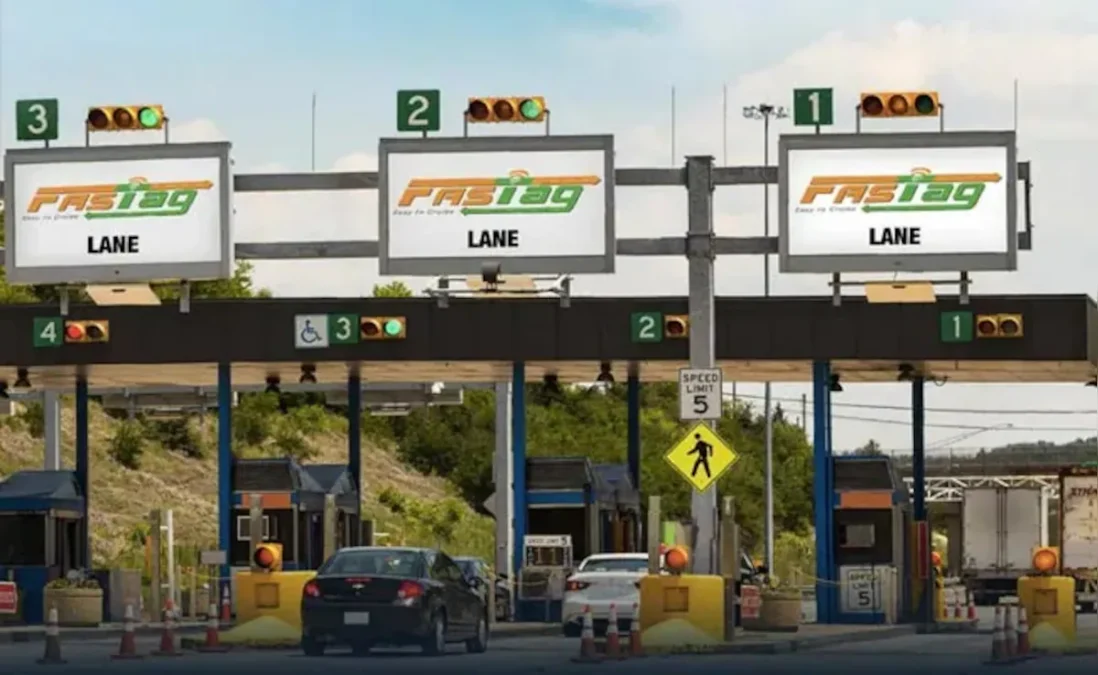
Mumbai: Cash payments at toll plazas across Maharashtra are set to become a thing of the past, with the State Government deciding to make FASTag-based toll collection compulsory from April 1. The decision, approved by the Maharashtra Cabinet chaired by Chief Minister Devendra Fadnavis, will cover all existing and upcoming toll projects, signalling a statewide shift towards fully electronic toll collection.
The move is aimed at ending delays at toll booths, ensuring greater transparency in revenue collection and reducing the traffic congestion caused by conventional toll payment methods. The Public Works Department had moved the proposal, which also received the Cabinet’s approval for corresponding amendments to the Public-Private Partnership (PPP) Policy, 2014, to facilitate its implementation.
The government has made it clear that motorists cannot simply drive through dedicated FASTag lanes without complying with the electronic payment system. Vehicles without a valid FASTag, or those entering FASTag-designated lanes without a proper tag, will have to pay twice the applicable toll charge. The penalty is intended to discourage non-compliance and ensure uniform adoption of the system.
The mandate will extend well beyond the existing toll network. At present, toll collection is operational across 13 road projects managed by the Public Works Department and another nine administered by the Maharashtra State Road Development Corporation (MSRDC). All these projects, along with future toll infrastructure developments, will come under the new framework.

According to the government, electronic toll collection will facilitate faster vehicle movement, cut down waiting time and help commuters save fuel. It is also expected to make toll revenue collection more accountable by reducing dependence on manual transactions.
Government Rules of Business undergo major overhaul
In another significant decision, the Cabinet approved a comprehensive revision of the Maharashtra Government Rules of Business, seeking to remove procedural ambiguities, streamline administrative functioning and accelerate decision-making at the government level.
The rules, originally framed in 1975, are undergoing their third major revision. The latest changes redefine the procedures for placing matters before the Cabinet, cases requiring the approval of the Chief Minister or Governor, and the functioning of Cabinet and Council of Ministers meetings.
The revamped framework consists of 48 regulations, four schedules and one annexure, organised into nine sections. It also seeks to simplify legislative procedures, clearly define administrative responsibilities and ensure that official orders are issued at a minimum level of Under Secretary.
The amendments were recommended by a study group comprising departmental secretaries after examining the corresponding rules followed by the Central Government and other States. The revised provisions will be published in the official gazette after receiving the Governor’s approval.