
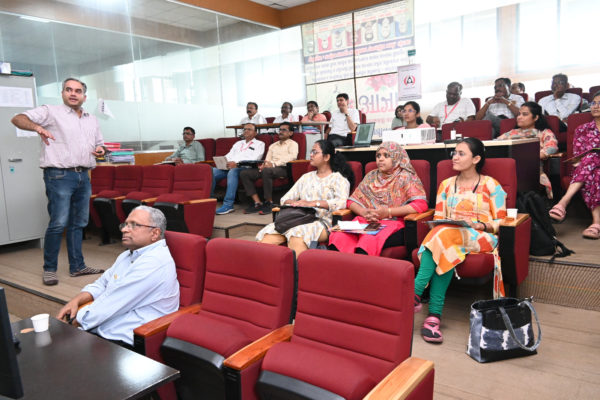
Nagpur: A two-day Structural Safety Workshop on strengthening disaster risk management systems began on Tuesday at the Atal Bihari Vajpayee Auditorium, Nagpur Municipal Corporation (NMC). The event was jointly organized by NMC and the United Nations Development Programme (UNDP), in collaboration with Geo Hazards Society, New Delhi.
The inaugural session was attended by Geo Hazards Society Regional Director Dr. Hari Kumar, NMC Executive Engineer Shrikant Waikar, along with officials including Manoj Gadre, Mahesh Gedam, Anil Gedam, Vijay Gurubakshani, Manish Soni, and Rajiv Gautam. Officers from the Fire and Disaster Management Department, UNDP Coordinator Arusha Anand, Geo Hazards Society’s Pranav Sethi and Alpana Khandare were also present.
Gold Rate
Mar 25,2026 - Time 11.05Hrs

The workshop aims to review local hazards, current vulnerabilities in Nagpur, master plans, building codes, best construction practices, and city-specific safety manuals. It will also focus on developing training modules to ensure the safety, resilience, and sustainability of housing and lifeline infrastructure.
Addressing participants on the opening day, Dr. Hari Kumar stressed the critical role of engineers in disaster preparedness. He noted that India regularly faces earthquakes, cyclones, cloudbursts, floods, thunderstorms, and landslides. “If we adopt preventive measures and pre-planning based on disaster management standards, loss of lives and property can be minimized,” he said.
Drawing on examples from Japan, Nepal, the United States, and Indian states, Dr. Kumar explained the importance of emergency planning. He highlighted that before construction, soil testing and legal compliance with the help of engineers, architects, and planners can prevent many disasters. Strengthening building foundations and enhancing structural capacity are essential to withstand emergencies.
He also pointed out that earlier, India was divided into five earthquake zones. Citing Odisha’s cyclone shelters as a successful example of long-term disaster planning, he emphasized the need for similar proactive measures nationwide.
Meanwhile, Pranav Sethi of Geo Hazards Society focused on fire safety, noting that many fires start due to short circuits. He stressed the importance of designing buildings so that smoke can escape safely in case of fire, thereby saving lives. Public awareness and knowledge, he added, are crucial in managing such risks.