

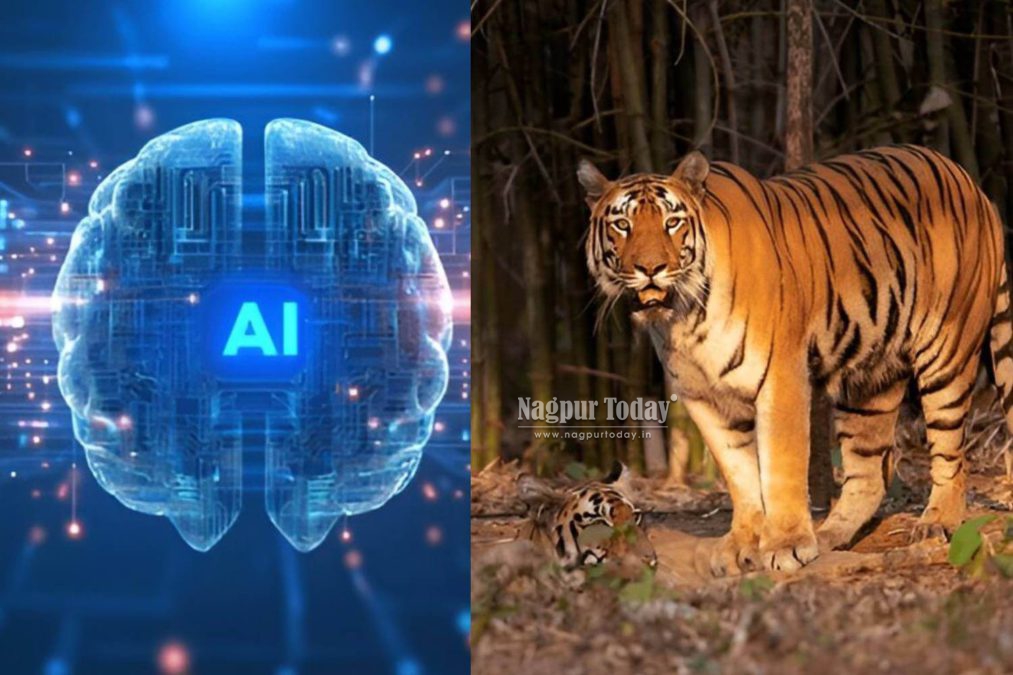
Nagpur: In a significant move aimed at reducing human-wildlife conflict, an Artificial Intelligence (AI)-based early warning system to track the movement of big cats has been activated in three locations in Nagpur’s rural belt near the Pench Tiger Reserve. The advanced system will soon be expanded to 40 sensitive locations, enabling real-time alerts to villagers and forest officials about the presence of tigers, leopards and other dangerous wildlife.
Forest officials said the technology has already begun functioning and has generated alerts in the initial phase. On Thursday night, the system issued a second warning about tiger movement near Pipariya village close to Deolapar, alerting both local residents and forest authorities.
Gold Rate
Mar 25,2026 - Time 11.05Hrs

Network planned in 40 sensitive locations
The project has been jointly undertaken by the Forest Department and the Nagpur Rural Police after identifying 40 villages and forest-fringe locations vulnerable to wildlife movement. These areas fall under the jurisdiction of the Pench wildlife division as well as the regional forest division.
Officials expect the installation of the entire AI monitoring network to be completed by April 15. Once operational, the system will help authorities closely track wildlife movement in villages located along forest boundaries and issue timely alerts to prevent encounters.
Human–wildlife conflict a major concern
The initiative comes in the wake of rising human–wildlife conflict in Nagpur rural areas. Over the past two-and-a-half to three years, nearly 15 villagers have lost their lives in attacks by tigers or leopards. Several such incidents triggered public anger and protests in affected villages, posing law and order challenges for authorities.
To address the growing threat, the Forest Department decided to adopt AI-driven monitoring technology that can warn villagers in advance about the presence of predators in nearby areas.
How the technology works
The system has been developed with support from Marvel, which is working to expand the use of artificial intelligence across multiple government sectors.
Under the project, high-capacity surveillance cameras and acoustic sensors have been installed at selected locations in forest-fringe villages. The system operates using two advanced detection techniques, bio-acoustic monitoring and bio-visual monitoring.
When predators such as tigers, leopards or bears move through the forest, animals like spotted deer, sambar, monkeys and peacocks emit distinctive alarm calls to alert others. The bio-acoustic system detects these calls, analyses them using AI algorithms and generates warning alerts.
At the same time, the bio-visual monitoring system captures images through cameras installed in the area. If the footage detects the presence of a wild animal, the system automatically verifies the species and sends an alert notification.
Alerts sent directly to phones
The warning messages are transmitted directly to the mobile phones of forest officials and local villagers, allowing them to take precautionary steps and avoid entering high-risk zones.
Officials said that within just four days of installation, the system has already generated two alerts about tiger and leopard movement, indicating its effectiveness in preventing potential attacks.
Plan to expand to other reserves
Encouraged by the initial results, the Forest Department is planning to expand the AI-based wildlife alert system to other major reserves in Maharashtra, including Navegaon–Nagzira Tiger Reserve and Tadoba–Andhari Tiger Reserve in Chandrapur district.
Authorities confirmed that a memorandum of understanding has been signed between the Forest Department and the technology partner to extend the project in the coming phases.
Officials believe the initiative will significantly strengthen early warning mechanisms in forest-fringe villages and help reduce casualties caused by tiger and leopard movement across Maharashtra.