

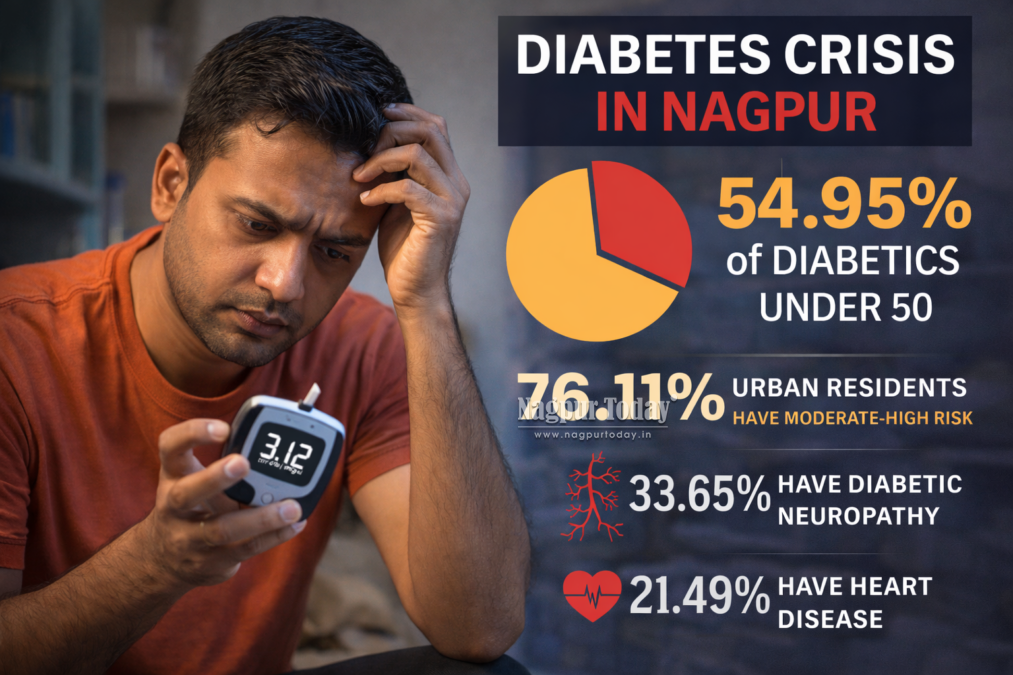
Nagpur: In outpatient departments, diagnostic labs and hospital wards across Nagpur and Central India, doctors are witnessing a troubling shift, diabetes is no longer a disease of old age. It is striking earlier, progressing faster, and tightening its grip on a generation still in its most productive years.
Evidence is mounting. A 2024 study conducted at Nagpur’s Indira Gandhi Government Medical College found that 76.11% of urban residents fall into the moderate-to-high diabetes risk category, meaning three out of four city dwellers are living on the edge of metabolic disease. The warning signs are no longer subtle.
Gold Rate
Mar 30,2026 - Time 10.25Hrs

Data from the Central India Diabetes Registry deepens the concern. An analysis of 15,892 patients registered between 2014 and 2019 revealed that nearly 55% were below the age of 50. Among these relatively young patients, almost two-thirds had poorly controlled blood sugar levels. One-third had already developed diabetic neuropathy, while over 21% were living with coronary artery disease, complications once associated with long-standing illness in the elderly.
The trend mirrors Maharashtra’s wider trajectory. A decade ago, diabetes prevalence in the state stood at 8.4%. By 2019–20, the figure had jumped sharply to 13.6% among men and 12.4% among women, an alarming rise of nearly 50% in just ten years.
At the national level, the picture is even more sobering. The 2025 RSSDI White Paper labelled India’s diabetes burden an “epidemic.” The ICMR-INDIAB study in 2020 estimated 101 million Indians were living with diabetes. Four years later, a Lancet–WHO study nearly doubled that figure, estimating 212 million affected adults, of whom 133 million remain untreated, silently accumulating irreversible damage.
Diabetes begins before birth
What sets this crisis apart is its long shadow, stretching back not just years, but generations. Medical experts now agree that adult-onset diabetes often has its origins in the womb.
Dr Sunil Gupta, a senior diabetologist in Nagpur who has treated more than 60,000 patients, explains the mismatch driving the epidemic. “Human genetics evolve over centuries,” he said. “But in just three decades, we have shifted from physically demanding lives to sedentary routines with excess calories everywhere. Our biology simply hasn’t caught up.”
Two scientific theories explain how this vulnerability is programmed early. The Thrifty Genotype Hypothesis suggests that excessive maternal nutrition alters fetal gene expression, encouraging fat storage later in life. On the other end, the Thrifty Phenotype Hypothesis shows how maternal undernutrition leads to poor pancreatic development, creating lifelong metabolic fragility.
“Diabetes does not start at 40,” Dr Gupta said. “It often begins during pregnancy. Both nutritional excess and deprivation in the mother can imprint diabetes risk in the unborn child through epigenetic changes.”
A lifestyle designed for disease
Beyond prenatal factors, doctors point to a toxic convergence of modern habits. Traditional diets rich in whole grains and fibre have been replaced by refined carbohydrates. Water has given way to sugar-loaded beverages. Ultra-processed foods and fast food now deliver dense calories, unhealthy fats and excess sugar with minimal nutrition.
This dietary shift, combined with reduced physical activity, has driven obesity to the centre of the crisis. Excess body fat fuels insulin resistance, where cells stop responding to insulin, forcing the pancreas to work harder until it fails. Add chronic stress, sleep deprivation and tobacco use, and the metabolic balance collapses even faster.
What needs to change—and fast
Experts say tackling diabetes requires more than medication, it demands a permanent reset of lifestyle and environment. Diets must pivot back to whole grains, fruits, vegetables and fibre, with strict limits on processed and sugary foods. Physical movement must be restored as a daily necessity, not an optional add-on, through walking, exercise and reduced screen dependence.
Prevention, doctors stress, must begin even before birth, with better maternal nutrition and pregnancy care. Alongside this, large-scale screening, early diagnosis, affordable treatment and sustained lifestyle education are critical to slowing the disease.
Urban design and workplace culture also matter. Cities and offices must encourage movement and healthy choices rather than trap people in sedentary routines. Weight management remains a cornerstone in reducing insulin resistance, supported by long-term dietary discipline and activity.
Equally vital are stress reduction, mental health support and tobacco cessation, often overlooked but essential components of diabetes control.
For Central India, where nearly half of all diabetic patients are under 50, the warning is unmistakable. The disease is advancing faster than the systems meant to stop it. The window for prevention is still open, but narrowing rapidly.