

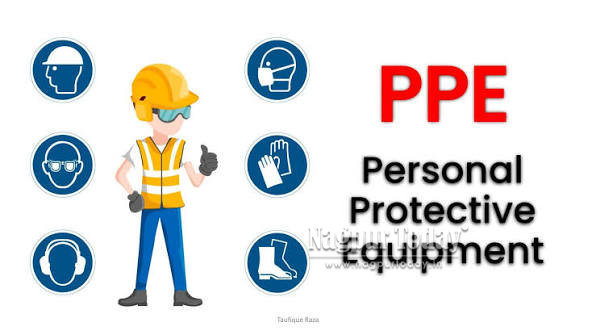
Imagine a construction site where workers are trained and appropriate engineering and administrative controls are in place. This sounds like a perfectly safe place to work, right? So, workers are not wearing any personal protective equipment (PPE). But what if flying debris strikes a worker’s eye or a shovel slips from one worker’s hand and strikes another worker below?
Gold Rate
Sept 12,2026 - Time 10.30Hrs

In the above scenario, it is well understood that even after hazards have been eliminated or controlled as far as reasonably practicable, some residual risk may remain in hazardous industrial environments. While working, tools still fall, people still slip, chemicals still spill. In that fraction of a second when all precautions fail and a hazard finds a way to cause injury, properly selected and correctly used personal protective equipment can reduce exposure and the severity of injury.
Some residual risks may remain even after preventive measures are applied. The hierarchy of controls provides a structured framework for managing these risks. Before we understand why PPE is your final safeguard, let’s review the hierarchy of controls.

What Is the Hierarchy of Controls in Workplace Safety and PPE?
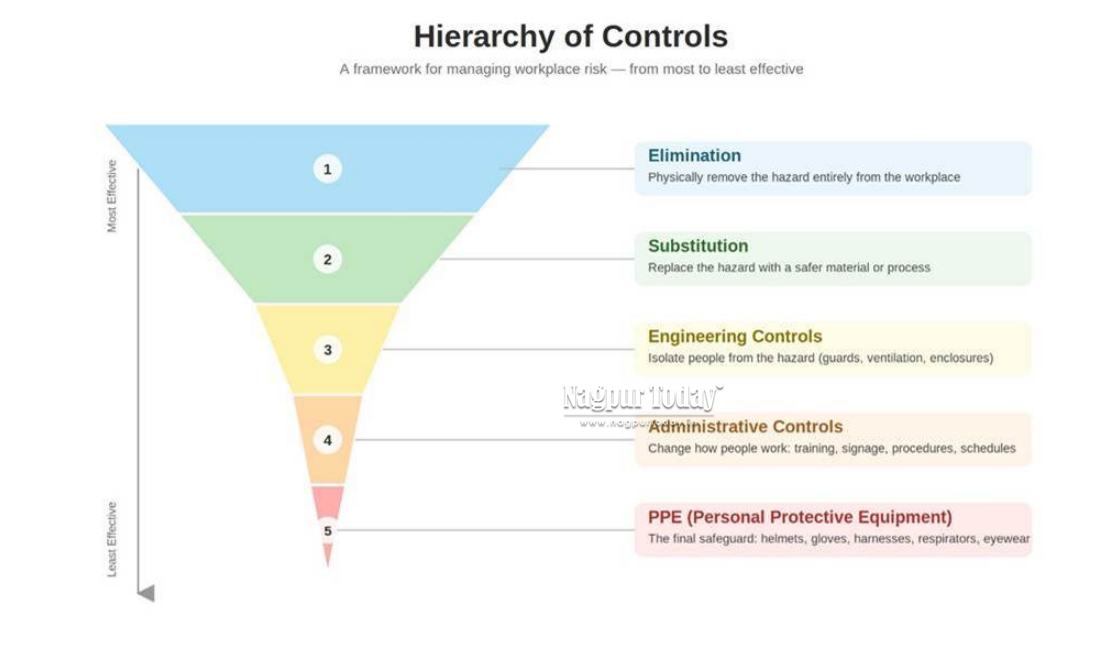
The hierarchy of controls in safety and PPE is a structured, top-down framework that ranks hazard control measures from most to least effective. This framework is widely recognised by occupational safety organisations around the world such as OSHA, NIOSH, and OSH, and it forms a baseline for several safety guidelines issued by these institutions.
Understanding the Five Levels of the Hierarchy of Controls
- Elimination
This is the first level in the hierarchy of controls and is considered the most effective method of controlling workplace hazards. As the name indicates, this level involves physically removing the hazard from the workplace.
- Substitution
When a hazard cannot be eliminated, substitution involves replacing the hazardous material, equipment, or process with a safer alternative.
- Engineering Controls
Engineering controls isolate workers from hazards or reduce exposure through physical changes to equipment, processes, or the workplace.
- Administrative Controls
Administrative controls reduce exposure by changing how work is planned or performed through procedures, training, signage, supervision, work schedules, and safe-work practices.
- Personal Protective Equipment
The last line of defence is PPE. This control measure suggests the use of personal protective equipment, such as safety helmets, safety goggles, and safety shoes, while working in a hazardous environment. Because residual risks may remain, the use of personal protective equipment provides an essential final barrier between workers and specific workplace hazards.
Myth and Reality: Why PPE Is Ranked Last in the Hierarchy of Controls
In the hierarchy above, the bottom position is reserved for personal protective equipment, aka PPE. Why? Let’s understand the reason!
The Myth: PPE is placed last in the hierarchy of controls because it’s least effective.
The Reality: Personal protective equipment is placed last in the hierarchy of controls, not because it’s least effective, but because it is the ultimate hazard control method you can rely on after higher-level controls have been considered and implemented as far as reasonably practicable. It does not remove the hazard; instead, workers wear personal protective equipment to reduce their exposure to it.
Common Safety and PPE Mistakes People Make
Let’s look at some common mistakes people make when selecting, using, and maintaining safety equipment. Avoiding these mistakes can improve the effectiveness of personal protective equipment and strengthen workplace safety.
- Ignoring applicable safety standards and purchasing uncertified or unsuitable safety products.
- Using ill-fitting or unsuitable PPEfor the task and identified hazard.
- Continuing the use of personal protective equipment after it has been damaged or has reached the end of its service life.
- Failing to provide workers with the skills and training required to usePPE
- Ignoring discomfort or poor fit and treating it as an unavoidable part of using personal protective equipment.
5 Quick Tips to Ensure the Effectiveness of Your PPE
1.Regularly Inspect Your Personal Protective Equipment
It is important to perform frequent physical checks while using personal safety equipment. Regular inspections help identify damage, wear, contamination, or deterioration before the PPE compromises the wearer’s protection.
2.Always Purchase Appropriately Tested and Certified PPE
Certification or conformity marking against applicable standards helps confirm that PPE has been tested for specified performance requirements. Appropriately certified PPE indicates that the product has been tested against specified requirements under the applicable standard. Users must still confirm that the PPE is suitable for the identified hazard and working conditions.
3.Ensure Proper Storage of Safety and PPE Products
Proper storage of personal safety equipment is important for preserving the condition and service life of the products. Follow the manufacturer’s storage guidelines to keep your PPE in good condition for a long time.
4.Receive Training on the Correct Use of PPE
Some types of PPE require specialised training for correct fitting, adjustment, use, inspection, and maintenance. Training, workshops, and demonstrations help you gain clarity on usage and a clear understanding of the technical aspects of PPE, ultimately helping you use it effectively.
- Select PPE According to the Hazard and Required Fit
Conduct a hazard assessment and select personal protective equipment suited to the identified risk, the wearer, and the working conditions. Correct sizing and compatibility with other PPE are essential for effective protection.
KARAM Safety: Advancing PPE and Workplace Protection in India
In the past few decades, safety awareness has increased. KARAM Safety, a leading Indian manufacturer of certified PPE and fall protection equipment, is contributing to safer working environments across industries. KARAM aims to help reduce workplace risks and strengthen protection when workers need it most.
KARAM Safety is one of the largest brands in the safety industry, with a fully backwards-integrated manufacturing facility that supports quality control. Due to its strong R&D capabilities, advanced manufacturing processes, and quality control mechanisms, it also has licensee agreements with international brands like Black+Decker and DeWALT to manufacture and sell safety equipment in certain regions.
Bottom Line
In the end, after understanding the hierarchy of controls and how this risk-management framework works, we can say that the use of personal protective equipment is a structured requirement wherever residual risks remain or applicable safety requirements mandate its use. The framework recognises that residual risks and potential exposure may remain even after higher-level control measures are implemented. So, your PPE provides an essential final layer of protection against identified residual hazards and is thus the last line of defence, protecting you when all other measures have done their part.