

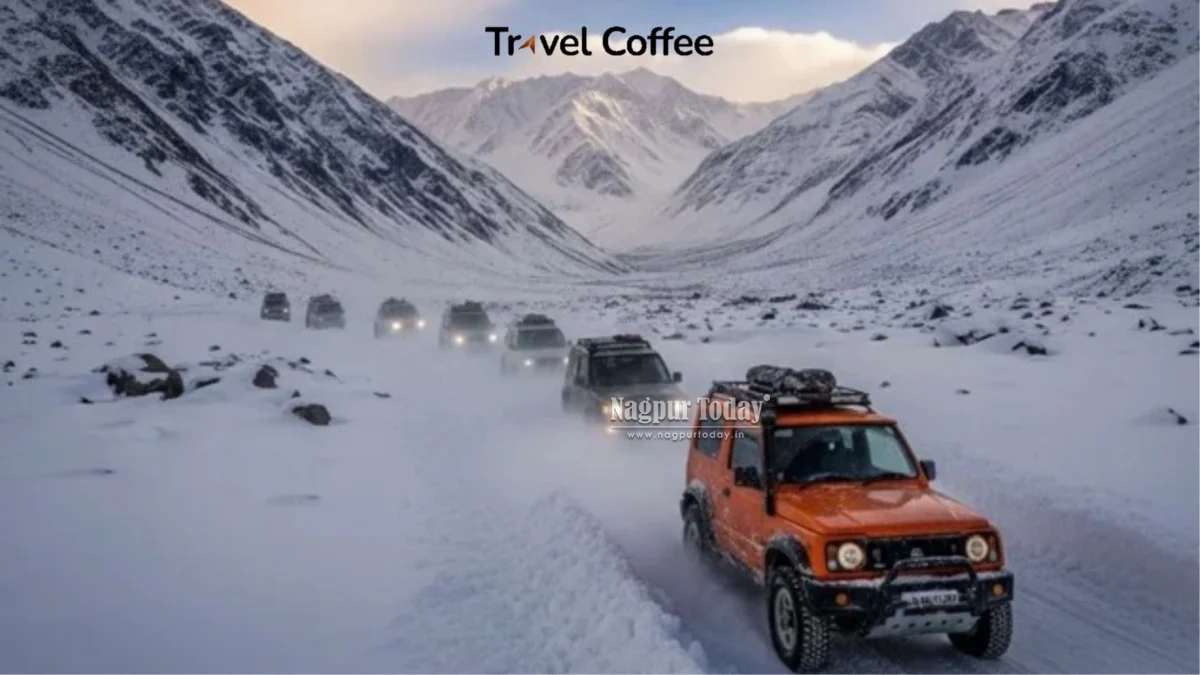
Two people can pick the same Himalayan destination and still need two completely different holidays.
A solo traveller heading to Spiti may want a structured group departure, shared logistics and some company on a long circuit. A couple may want privacy and a slower morning. A family often cares most about sensible driving hours, predictable stays and a pace that suits a child and a grandparent in the same vehicle.
Same mountains. Different trips.
This is the part most package pages skip. They compare nights, hotel categories and prices as if the destination decides the holiday by itself. For Shimla rooted Travel Coffee, planning a Himalayan journey usually starts a step earlier, with the traveller. The company runs road journeys across Spiti, Ladakh, Kinnaur, Manali, Shimla and the quieter valleys of Himachal.
Take the destination most people begin with. If you are comparing Spiti Valley tour packages, the first real question is not the price. It is the route. A one way loop from Shimla through Kinnaur, then out via Manali and the Atal Tunnel, is a different trip from a short there and back run from the Manali side, even though both end at Kaza. The Shimla approach climbs gradually over several days, which helps the body settle into the altitude. The Manali approach is faster but gives it less time to adjust. Neither is better in the abstract. They are better for different people, on different dates.

That single idea, that the same place needs to be designed differently for different travellers, runs through everything below.
Which Himalayan Trip Is Right for You?
A quick, honest map before the detail.
Shimla suits first time hill travellers, families and couples who want a comfortable break without long drives, with the classic sights close together.
Manali works as a first mountain holiday, a snow trip or a couple’s break, and also as the starting gate for harder journeys into Lahaul, Spiti and Zanskar.
Jibhi and Tirthan are for slower travel: river time, short forest walks and days without a sightseeing checklist.
Kinnaur is apple country and old wooden villages on the way higher, through Sangla, Kalpa and Chitkul.
Spiti Valley is a high altitude cold desert of ancient monasteries and very clear night skies, more demanding than the green valleys, with altitude shaping the whole plan.
Ladakh is the other great high altitude road trip, wider and more varied than a first visit suggests.
Zanskar is deep, remote and expedition style, and honestly the wrong choice for a first mountain holiday.
No destination here is better than another. They ask different things of you, and give back different things in return.
Not Every Himalayan Tour Package Should Be Planned the Same Way
It is easy to choose a holiday on six numbers: destination, nights, hotel category, cab type, sightseeing count and price. All six matter. None of them, on its own, tells you whether the trip will fit you.
What genuinely shapes a good itinerary sits deeper: who is travelling and their ages where that matters, time spent at altitude before, the season, how much privacy the group wants, how many hours in a vehicle feel comfortable, and the pace people prefer. A four night Kufri and Mashobra trip for grandparents and young children is a completely different design problem from a four night snow run for a group of friends, even in the same district. Sold as the same Shimla package, one of those groups comes home tired. The label tells you far less than the design underneath it.
Spiti Valley Tour Packages: Choose the Route Before You Compare the Price
Spiti has become one of the most popular road trips in the Indian mountains, and its packages can look confusingly similar from the outside. The clearest way to compare them is by route and shape, not by price.
The full circuit runs one way, usually Shimla to Kinnaur to Kaza to Chandratal and out through Manali, taking in Sangla, Chitkul, Kalpa, Nako and Tabo. A shorter trip goes in and out from the Manali side through the Atal Tunnel, with far less driving. Then there is format. Group departures share the cost and logistics. Private journeys give a family their own vehicle and timing. Bike expeditions turn the road into the point of the trip, usually on a Royal Enfield with a support vehicle. Summer Spiti and winter Spiti are almost two different destinations, the second reached through the Atal Tunnel when conditions allow. Chandratal, near Kunzum, is a seasonal addition rather than a year round one. These are different trips that happen to share a valley.
There Is No Single Best Spiti Valley Itinerary
The best itinerary depends on your dates, your days in hand, your starting point, your comfort with altitude and, often, on what the road is doing that week. A traveller with ten days can do the full loop properly, with acclimatisation built in and time to sit in Kaza rather than pass through it. A traveller with six days is better served by a focused Manali side trip than a rushed attempt at the whole circuit. A good plan starts from these constraints, not from a wish to fit everything in.
Shimla to Spiti or Manali to Spiti?
Both routes reach Kaza and feel completely different on the way. The Shimla and Kinnaur side is the long, gradual approach through Narkanda, Sangla, Chitkul and Kalpa. Because the height comes on slowly, the body usually copes better, and you see far more of Kinnaur. The Manali side, through the Atal Tunnel, is short and direct, ideal when time is limited, but the altitude arrives faster. Many of the best trips use both, in through Shimla and out through Manali. Access on either side depends on the season and road conditions.
Why Rushing Spiti Usually Gives You Less
Spiti punishes a packed schedule. The drives are long and slow, the altitude asks for rest, and trying to tick off every high village in too few days turns a rare trip into a blur of packing and short stops. Kaza rewards two or three nights, not a single overnight. There is a habit in this industry of measuring an itinerary by how much it includes. An itinerary does not become better simply because four more sightseeing points have been fitted onto the PDF. Usually it becomes worse, because each point now gets less time. Sometimes the more useful advice is to do less, and to do it properly.
Group, Private, Bike, Premium or Luxury: Spiti Can Be a Completely Different Trip
A group departure suits more people than the stereotype suggests: solo travellers who do not want to plan a hard circuit alone, couples happy with company and shared costs, older adults comfortable with the format, and international visitors who want the logistics handled. A shared Spiti group tour is not automatically a young person’s party trip.
A private journey is about control and privacy. Couples and honeymooners set their own pace, families stop when a child needs to stop, and photographers plan the day around the light. The route can be identical to the group version. The rhythm is yours.
On a bike trip, the road stops being the way to the destination and becomes the destination. Rider experience, machine condition, a support vehicle, realistic daily distances and weather awareness move to the centre of the plan.
Upgrading a Spiti trip should mean more than a bigger number next to the hotel. In a high, remote valley the honest levers are better located stays, more comfortable rooms where the infrastructure allows, a better vehicle, more privacy and, above all, better pacing and more time in each place. A premium trip that only adds a star to the hotel but keeps the same rushed schedule has upgraded the wrong thing.
Same Spiti. Completely different holidays.
What Good Spiti Tour Operators Do That Travellers Rarely See
Most of the work that makes a high altitude trip go well is invisible from the brochure. It sits in routing that respects acclimatisation, experienced drivers who know how these roads behave, honest timings when a two hour distance on the map takes five, weather and road status awareness with a plan for closures, permit handling including the Inner Line Permit foreign nationals need, verified stays, and ground support you can actually reach in the valley rather than a distant city.
Travel Coffee runs Spiti end to end with its own teams in Shimla and Kaza, carries oxygen in its group vehicles for altitude emergencies, and builds acclimatisation time into its itineraries. It helps to be clear about what that means. Careful pacing and oxygen on hand reduce the risk of altitude sickness. They do not remove it, and no itinerary can make high altitude travel completely safe for everyone, so anyone with a health condition should speak to a doctor first. What good operations buy is a far better managed trip when the mountains do something unexpected, which at this height they eventually will.
In high altitude travel, operations are part of the product.
Shimla Tour Packages: The Classics Matter, but Shimla Goes Much Further
For many travellers, Shimla is the first hill station they ever see, and the classic circuit earns its place. A walk along the Ridge and Mall Road, Christ Church in the evening light, the Hanuman temple on Jakhu hill, and a day at Kufri are genuinely good introductions to the mountains. Most Shimla tour packages are built around exactly this, usually as an easy trip by overnight Volvo or private cab from Delhi or Chandigarh. There is nothing second rate about a mainstream first trip done well.
The Quieter Side of Shimla
A short drive from the town, the mood changes. Mashobra is Shimla with the crowds and traffic removed, deodar forest and apple orchards and little to tick off. Naldehra has one of the oldest golf courses in the country and a quiet ridge to walk. Fagu and the countryside towards Narkanda trade the market bustle for orchards and wide valley views. The difference is not a longer list of sights. It is a different kind of day.
When Shimla Becomes the Start of a Bigger Himalayan Journey
Shimla is also a gateway. Head past Narkanda and the road climbs into Kinnaur, through Sangla and up to Kalpa with its view of the Kinner Kailash range, on to Chitkul, and eventually into Spiti. Seen this way, Shimla is both a destination in its own right and the first chapter of a much longer road journey. Which one it becomes depends on how many days you have.
Offbeat Himachal: Jibhi, Tirthan, Shoja and the Case for Slower Travel
Beyond the well known towns sits a quieter Himachal of river valleys, forest homestays and high meadows. Offbeat Himachal tour packages usually mean smaller stays, longer drives on narrower roads, patchy signal and far fewer cafes. In exchange, you get space, silence and a version of the state that still feels like itself. Jibhi is a small Banjar village of wooden homes, forest trails and quiet waterfalls. Tirthan Valley, beside the Great Himalayan National Park, is made for trout streams and slow days by the river. Above them, Shoja and the Jalori Pass area open into cool forest and the gentle walk to Serolsar Lake.
There is an important distinction here. Offbeat should not simply mean the least famous place on the map. A valley can become popular and still be travelled thoughtfully, on its own terms. What makes a trip offbeat is as much the way you travel as the place you pick. If someone comes back from Jibhi feeling as though they finished a sightseeing marathon, the itinerary probably missed most of the reason people go to Jibhi in the first place.
Manali Tour Packages: The Same Town Can Start Very Different Journeys
Few places in the Indian mountains carry as many different trips as Manali. Manali tour packages can mean a first family holiday with Solang and Rohtang, a snow trip out to Sissu and the Sethan igloo stays, a quiet couple’s break or honeymoon, a comfortable private trip, or the opening leg of something far bigger.
Because Manali is also a launch point. It is the short side entrance into Spiti through the Atal Tunnel, the starting line for many bike expeditions, and the road head for expedition style journeys deeper into Lahaul and towards Zanskar. A Manali honeymoon and a Manali to Zanskar expedition may begin in the same town, but they are fundamentally different travel products, with different vehicles, different risk and different pacing. What you are actually planning is the journey that leaves the town.
Ladakh Tour Packages: Your First Ladakh Trip and Your Third Should Not Look the Same
Ladakh is wider and more varied than a first visit suggests, and the right trip depends heavily on how much of it you have already seen.
A first Ladakh trip usually centres on the classics, and rightly so: Leh and its monasteries for acclimatisation, Nubra Valley over the Khardung La with its dunes and Bactrian camels, and Pangong Lake past the Chang La. These are the images that bring people to Ladakh, and Ladakh tour packages built around them make a strong first visit.
A second or third trip can go further. Turtuk, a Balti village in the far north that only opened to visitors in 2010, sits lower and greener than the rest of Ladakh. Tso Moriri, quieter and harder to reach than Pangong, lies deep in the Changthang plateau. Hanle, with its dark skies and observatory, rewards travellers who want the remote edge. These are the Leh Ladakh tour packages for people who already know the headline sights. As with Spiti, altitude, pacing, vehicle, privacy and route depth move the answer for a family, a couple, a group, a rider or someone in a private SUV. Even the honest advice not to chase Pangong in a single day, but to stay a night by the lake, is part of designing the right trip rather than the busiest one.
After Spiti and Ladakh, Some Travellers Start Looking at Zanskar
Zanskar is not the next trending destination, and it should not be sold as one. It is one of the more remote and committing road journeys in the country, reached on hard, exposed roads, with long days and simple stays. The rewards are real: ancient monasteries like Phugtal, the deep isolation of the valley, and landscapes very few travellers ever see. The demands are equally real.
That is why Zanskar suits a particular traveller: repeat Himalayan visitors, experienced road trippers, and people comfortable with 4×4 and expedition style journeys, and with limited comfort and connectivity for days at a stretch. Zanskar is not the logical next trip for every traveller, and that is exactly why it should not be sold like a generic Ladakh extension.
Standard, Premium or Luxury: What Are You Actually Paying For?
This is where a lot of shopping goes wrong, because the tiers get reduced to hotel stars. They are about more than that. Standard should mean reliable, not careless: dependable stays, appropriate transport and the core experience, all planned properly. A well designed standard trip beats an expensive one that is not. Premium is where the money starts buying comfort and time: better properties and locations, a more comfortable vehicle, more privacy and, in the mountains, better pacing, which is often worth more than the hotel upgrade. Luxury, where the destination allows it, adds high quality stays, premium transport, stronger service and real breathing room, though in very remote areas the ceiling is set by what the region can actually offer.
The most expensive package is not automatically the right package. The useful question is whether your budget goes towards things that genuinely improve your experience, or simply towards a longer list of inclusions.
Group Travel Is Not Just for Gen Z
Structured group journeys attract a far wider mix of people than the marketing suggests. On a well run Himalayan departure you will find younger solo travellers, yes, but also couples, groups of friends, working professionals, older adults comfortable with the format, and international visitors. They join for the company, the shared cost, the convenience, the support, and simply not wanting to organise a complicated route alone.
A good group does not depend on everybody being the same age. It depends on travellers understanding and being comfortable with the journey they are joining. Match the person to the right departure, and the age mix takes care of itself.
Which Himalayan Destination Fits Your Travel Style?
Choose Shimla if you want an easy first mountain trip, short drives and the classic hill station experience, comfortable for families, first timers and senior citizens.
Choose Manali if you want a versatile base that can be a relaxed holiday, a snow trip or the start of a bigger journey.
Choose Jibhi or Tirthan if you want slow, green, riverside days and forest walks rather than a sightseeing list.
Choose Kinnaur if you like a road journey through apple country and old villages, and do not need a packed itinerary.
Choose Spiti if you want a high altitude cold desert, ancient monasteries and clear night skies, and you are ready for long drives and a plan shaped by altitude.
Choose Ladakh if you want the great Himalayan road trip in its fullest form, matched to how much of it you have already seen.
Choose Zanskar if you are an experienced mountain traveller who wants real remoteness and an expedition, and you are honest with yourself about the demands.
How to Compare Himalayan Tour Packages Before You Book
Before you compare prices, compare these. They tell you far more about a trip than the headline number does.
Is the route realistic for the number of days, or is it trying to fit too much into too little time?
How many hours will you travel each day, and are those mountain hours rather than plains hours?
Has altitude been considered, with a sensible climb and acclimatisation where the destination needs it?
Who is operating the trip on the ground, and where are they based?
What vehicle will actually be used, and is it suited to the terrain?
What accommodation and room category are included, and are the stays named before you pay?
What is the plan if weather or road conditions change?
What meaningful costs are excluded, such as flights, some meals, permits or entry tickets?
Does the trip genuinely fit the travellers’ comfort, pace and style, not just the destination?
Are you paying for things that improve the experience, or simply for a longer list of inclusions?
None of these questions is about brand loyalty. They are the questions any careful traveller should ask of any operator, including this one.
What “Local” Should Actually Mean in Himalayan Travel
Local knowledge is one of the most overused phrases in travel, so it is worth pinning down what it changes in practice. It means reading real mountain driving time, not map distance. Knowing how a route behaves in May versus October. Working with drivers who have done these specific passes many times. Knowing which stays are genuinely good and which only photograph well. And knowing when to change a plan, and when to tell a traveller that adding one more place will make the trip worse rather than better.
Travel Coffee is based in Shimla, with ground teams in Shimla and Kaza, and it plans its routes, stays and seasonal advice from people who live on and drive these roads. The value of that is the many small, practical decisions it quietly gets right, and the occasions when the most useful thing a local team can say is that something is not worth doing on your dates.
How Travel Coffee Thinks About the Right Trip
By now the pattern in this article has a name, or rather three. The first is local knowledge, understanding each destination as it actually works on the ground, in each season. The second is professional operations, the routing, drivers, vehicles, permits, stays and reachable support that hold a trip together when conditions shift. The third is right fit itineraries, understanding who is travelling before deciding how the trip should look.
You can see this in the range Travel Coffee works across: group departures and private journeys, standard, premium and luxury, families, couples, honeymooners and solo friendly trips with women only options, bike trips, road journeys and 4×4 expeditions, classic hill stations and offbeat valleys, and Indian travellers and international guests with permit support where routes require it. The breadth is not the point in itself. It exists so the trip can be matched to the person.
Travel Coffee does not believe travellers should have to fit themselves into a package. The package should fit the traveller.
Frequently Asked Questions
Which is better for a first Himalayan trip, Shimla, Manali or Spiti?
For a first Himalayan trip, Shimla or Manali is usually the better choice, as both offer comfortable stays, short drives and no high altitude strain. Spiti is more rewarding but more demanding, with long drives and real altitude, so it suits travellers who are already prepared. If in doubt, start with Manali, which can also lead into bigger journeys later.
Is Spiti Valley suitable for families and couples?
Yes, Spiti Valley is suitable for families and couples when the trip is designed around pacing. Couples usually prefer a private journey with slower mornings and more privacy, while families do best with sensible driving hours, comfortable stays and built in acclimatisation. Because Spiti sits at high altitude, the itinerary should climb gradually and avoid cramming too much into too few days.
Which is better, Spiti Valley or Ladakh?
Choose Spiti Valley for a compact, raw road trip reached as a loop from Himachal, and choose Ladakh for a larger, more varied journey with famous lakes, high passes and better infrastructure around Leh. Neither is objectively better. For a first high altitude road trip both work well, so decide by the time you have, the landscape you want and how you like to travel.
How many days are ideal for a Spiti Valley trip?
A full Spiti Valley circuit ideally needs around nine to ten days, entering from the Shimla and Kinnaur side and exiting through Manali, which allows for acclimatisation and unhurried time in Kaza. A shorter Manali side trip can be done in roughly six days, covering Kaza and Chandratal with far less driving. Fewer days usually means rushing, which Spiti tends to punish.
Should you enter Spiti from Shimla or Manali?
Enter Spiti from Shimla for a longer, gradual climb that helps with altitude and adds Sangla, Kalpa and Chitkul, or from Manali through the Atal Tunnel for a shorter, faster route that gains height quickly. Many of the best trips combine the two, in through Shimla and out through Manali. Access on either side depends on the season and road conditions.
What is the difference between standard, premium and luxury Himalayan packages?
The difference is more than hotel stars. Standard means reliable stays, transport and the core experience, planned well. Premium adds better properties and locations, a more comfortable vehicle, more privacy and better pacing. Luxury adds high quality stays where the destination allows, premium transport and more breathing room. In remote areas the top tier is limited by what the region can actually offer.
Are Spiti and Ladakh group trips only for young travellers?
No, Spiti and Ladakh group trips are not only for young travellers. Group departures attract solo travellers, couples, friends, working professionals, older adults comfortable with the format and international visitors. People join for the company, the shared logistics and the support of not planning a hard route alone. A good group is defined by comfort with the journey, not by everyone being the same age.
Which places can you explore beyond Shimla and Manali?
Beyond Shimla and Manali you can explore Kinnaur, with Sangla, Kalpa and Chitkul on the road towards Spiti, the quieter Banjar valleys of Jibhi, Tirthan and Shoja, and, for experienced travellers, Lahaul and Zanskar. These range from gentle green weekend valleys to serious high altitude journeys, so the right one depends on your time, comfort and experience.
The Best Trip Is Not Necessarily the One That Covers the Most
Ask people about a Himalayan trip years later and they rarely recall how many sightseeing points were on the itinerary. They remember the first time Spiti opened out in front of them. Watching a parent take in Pangong. A quiet morning by the river in Tirthan. Snow on the Ridge in Shimla. An evening in Kaza with the sky full of stars.
Those moments do not come from covering the most ground. They come from a trip designed with enough room to actually experience the place, and matched to the people travelling.
The itinerary gets you there. What happens along the way is what comes home with you.
We Brew Core Memories, Not Coffee.