
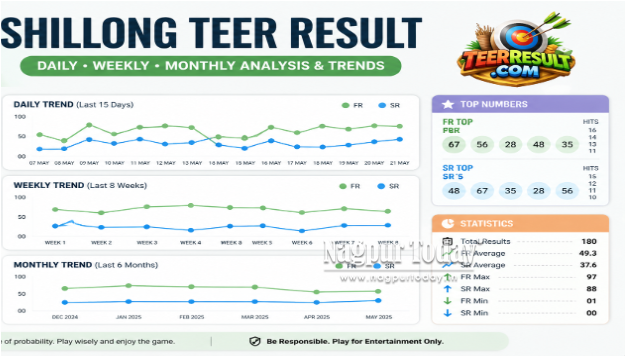
 Shillong Teer is more than just a numbers game—it’s a system where patterns and trends often catch the attention of players. While results are ultimately based on chance, analyzing trends across different timeframes can provide valuable insights. Whether you’re looking at daily fluctuations or long-term patterns, understanding how numbers behave over time can help you make more informed decisions.
One of the best ways to start is by tracking the Shillong Teer Previous Result. This data serves as the foundation for all types of analysis, helping players identify repeating numbers, emerging trends, and shifts in patterns. By comparing daily, weekly, and monthly trends, you can develop a deeper understanding of how the game evolves.
Daily Trends: Spotting Immediate Patterns
Daily trend analysis focuses on short-term observations. It involves studying results from one day to the next to identify quick changes or repeating numbers. This type of analysis is especially useful for players who prefer fast decision-making.
Gold Rate
May 11- 2026 - Time 10.30Hrs

When you examine the Shillong Teer Result List, you may notice that certain numbers appear consecutively or within a short span. These are often referred to as short-term “hot numbers.” Daily trends can also reveal sudden shifts, such as a move from high numbers to low numbers or from odd to even results.
The advantage of daily analysis is its immediacy. It allows players to react quickly to recent patterns. However, it can also be unpredictable, as short-term trends may change rapidly without warning.
Weekly Trends: Finding Balanced Insights
Weekly trends provide a more stable perspective compared to daily analysis. Instead of focusing on just a few results, this approach examines data over a seven-day period. This helps filter out random fluctuations and highlights more consistent patterns.
Using a structured Shillong Teer Chart, players can identify numbers that appear multiple times خلال the week. These numbers are often considered reliable because they show repeated activity over a longer period.
Weekly analysis also helps in understanding distribution patterns. For example, you might notice that certain ranges (like 00–49 or 50–99) dominate the results during a specific week. This type of insight allows players to adjust their strategies accordingly, making weekly trends a popular choice for many enthusiasts.
Monthly Trends: Identifying Long-Term Patterns
Monthly trend analysis takes things a step further by examining results over several weeks. This approach focuses on long-term patterns, offering a broader view of number behavior. While daily and weekly trends can be influenced by short-term fluctuations, monthly trends tend to be more stable.
By analyzing a month’s worth of data, players can identify numbers that consistently appear over time. These long-term “hot numbers” often attract attention because they show sustained activity. Similarly, numbers that rarely appear during a month are considered “cold,” which some players believe may eventually reappear.
Monthly analysis requires patience and consistency, but it provides valuable insights that are not visible in shorter timeframes. It’s like looking at the bigger picture—understanding overall trends rather than focusing on individual moments.
Comparing Daily, Weekly, and Monthly Trends
Each type of trend analysis has its own strengths and limitations. Daily trends are quick and responsive but can be volatile. Weekly trends offer a balanced view, combining recent data with some level of consistency. Monthly trends provide long-term insights but may not reflect immediate changes.
The key is to combine these approaches for a more comprehensive strategy. For example, you might use monthly data to identify strong patterns, weekly data to refine your choices, and daily data to make final adjustments. This layered approach helps you make better-informed decisions.
Think of it like navigating a journey. Daily trends are like checking your current location, weekly trends are your route map, and monthly trends are your overall destination plan. When used together, they create a clearer path forward.
Why Trend Analysis Matters for Players
Trend analysis transforms Shillong Teer from a simple guessing game into a more strategic experience. By studying patterns across different timeframes, players can develop a deeper understanding of number behavior. This not only improves decision-making but also makes the game more engaging.
However, it’s important to remember that no trend guarantees success. Shillong Teer results are influenced by chance, and patterns can change unexpectedly. The goal of trend analysis is not to predict with certainty but to make smarter, data-driven choices.
Conclusion: A Smarter Way to Approach Shillong Teer
Shillong Teer chart trends—whether daily, weekly, or monthly—offer valuable insights into how numbers behave over time. By comparing short-term and long-term patterns, players can develop a more balanced and informed approach to the game. While no method can guarantee results, combining different types of analysis can significantly enhance your understanding and strategy. The key is consistency—keep tracking, keep analyzing, and keep learning from the data.