

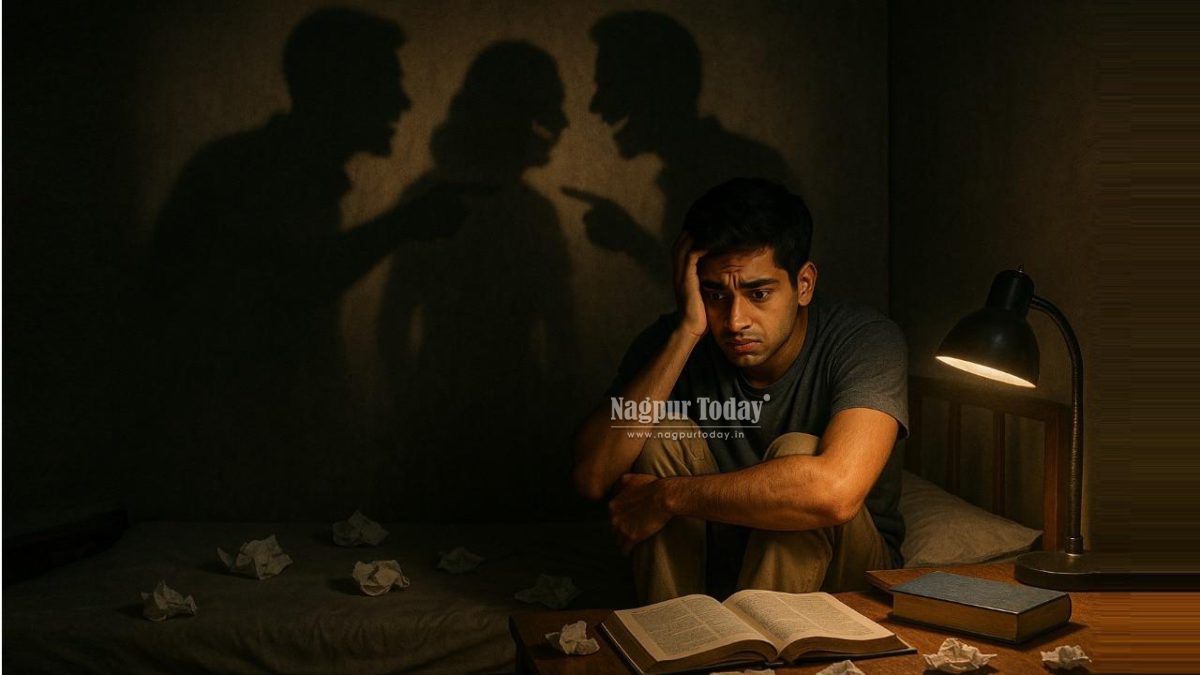
Nagpur: Behind examination scores, competitive rankings and academic expectations, a disturbing mental health crisis is steadily tightening its grip on Nagpur’s student community. The recent spate of suicides involving school and college students has sent shockwaves across the city, exposing the harsh emotional burden silently carried by thousands of young minds struggling to cope with pressure, fear of failure and loneliness.
Within a span of just a few days, multiple young lives were lost in tragic circumstances, triggering serious concern among educators, parents, mental health professionals and law enforcement agencies. The incidents have once again reignited debate over the intense academic culture surrounding competitive examinations, the absence of robust emotional support systems and the growing inability of students to handle setbacks.
According to data from the National Crime Records Bureau, Maharashtra continues to record one of the highest numbers of student suicides in the country, with more than 1,800 such deaths reported in 2023 alone, a grim trend that experts warn is showing no signs of slowing down.
One of the latest tragedies involved Shreena Gadpayle, a first-year engineering student studying at a college on Kalmeshwar Road. She allegedly jumped from a flyover near White House on Kamptee Road and succumbed to her injuries a day later despite medical efforts. Police have registered an accidental death case and are probing the circumstances surrounding the incident.

On the very same day, another heartbreaking case emerged from Bajaj Nagar police limits, where 15-year-old Class 10 student Sanvi Yeskade allegedly died by suicide at her residence in Surendranagar. She was rushed to a nearby hospital but was declared dead before treatment could begin.
These incidents came close on the heels of the May 4 death of Shreyash Mane, a second-year BTech Computer Science student at Indian Institute of Information Technology (IIIT) Nagpur. The 20-year-old student allegedly jumped from the sixth floor of his hostel building reportedly due to exam-related stress and incomplete syllabus preparation. His death triggered protests on campus, with students demanding better counselling facilities, academic flexibility and stronger psychological support mechanisms.
Following the unrest, Nagpur Rural Superintendent of Police Harssh A Poddar visited the campus and interacted with students in an attempt to calm tensions and address concerns.
The alarming trend is not limited to recent weeks alone. Earlier this year, Class 12 student Nikita Bansod allegedly died by suicide after appearing for her Physics board examination, while BCA student Arsh Bante reportedly took the extreme step after failing examinations. Last year too, Nagpur witnessed shocking cases involving NEET aspirants and students from All India Institute of Medical Sciences Nagpur, deepening concerns over the emotional well-being of students pursuing highly competitive careers.
Mental health experts believe the crisis stems from a dangerous combination of intense academic competition, unrealistic expectations from parents and society, social comparison, coaching pressure and the lack of emotional resilience among adolescents.
Psychiatrist Dr Sudhir Bhave said today’s adolescents are trapped between external competition and internal emotional pressure, while lacking the coping skills required to process failure or disappointment.
He warned that repeated reporting and discussion of such incidents can sometimes create a “copycat effect” among emotionally vulnerable students and urged strict adherence to guidelines issued by the Indian Psychiatric Association regarding sensitive reporting of suicides.
Clinical psychologist Dr Anupama Gadkari stressed that parents often fail to identify early warning signs such as withdrawal from social interaction, persistent negativity, emotional detachment or indirect references to self-harm.
She emphasised that adolescents require open communication, emotional reassurance and unconditional support rather than criticism or comparison. “Help must reach children before emotional distress turns into hopelessness,” she observed.
In view of the growing concern, Dr Ravinder Kumar Singal had earlier directed the police information centre not to publicly circulate detailed information related to suicide cases. He also appealed to media organisations to exercise restraint and avoid sensational reporting that could adversely affect emotionally vulnerable individuals.
As Nagpur grapples with this deeply worrying pattern, the rising number of student suicides is emerging not merely as isolated personal tragedies, but as a larger social warning demanding urgent intervention from families, educational institutions, policymakers and mental health systems alike.