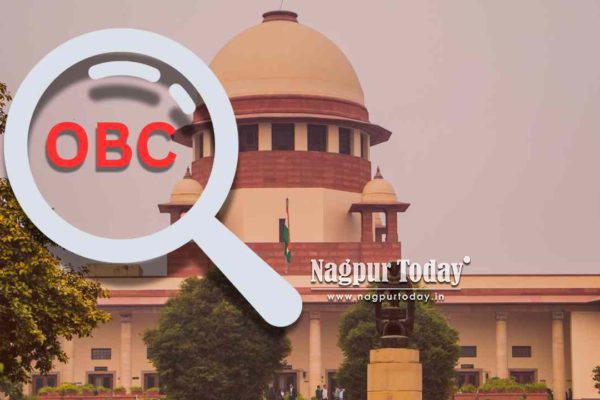
Nagpur: A cloud of legal uncertainty hangs over the Nagpur Municipal Corporation as the future of 40 corporators elected from OBC-reserved wards now hinges on a crucial Supreme Court hearing later this week. At the heart of the issue is a familiar constitutional fault line, the 50% cap on reservations, which the present composition of the civic body has crossed.
The total reservation in the 151-member NMC has climbed to 54.30%, placing the OBC quota in the judicial crosshairs. Should the apex court enforce its past rulings without deviation, the election of all 40 OBC corporators could be set aside, triggering fresh by-elections in open wards. However, legal opinion remains divided on whether the court will take such a drastic route.
Gold Rate
Mar 25,2026 - Time 11.05Hrs

The matter is listed for hearing on Wednesday, January 21, and its outcome is expected to have ripple effects far beyond Nagpur. The Supreme Court had earlier directed the State Election Commission to complete elections to local self-government bodies by January 31, prompting Maharashtra to conduct polls for municipal corporations, councils and nagar panchayats in quick succession. Elections to 12 district councils are scheduled for February 7, while several others were deferred precisely due to unresolved concerns over excess reservation.
Despite these unresolved legal questions, elections were conducted in the Nagpur and Chandrapur municipal corporations, even as the reservation threshold was reportedly breached. The upcoming hearing is therefore expected to bring clarity not only to the NMC’s composition but also to stalled district council polls across the state. Aspirants awaiting those elections are closely tracking the proceedings.
Senior constitutional lawyers point out that Scheduled Caste and Scheduled Tribe reservations are constitutionally protected and are unlikely to be disturbed. “Whenever the overall quota exceeds 50%, it is the OBC reservation that becomes legally vulnerable,” said a senior advocate, recalling a similar episode from 2021.
That year, the Supreme Court struck down OBC reservations in several district councils in Maharashtra, leading to the annulment of 16 OBC-reserved seats in Nagpur district council alone. The seats were subsequently thrown open, and bypolls were conducted in the general category following a judgment by Justices A M Khanwilkar and J K Maheshwari. Drawing parallels, some jurists believe the NMC could face a comparable outcome.
Others, however, warn of the financial and administrative fallout of cancelling elections across two municipal corporations and dozens of local bodies. Re-polling would involve significant public expenditure, a factor the court may weigh carefully. “This is ultimately taxpayers’ money,” noted one legal expert, suggesting that the apex court could allow the results to stand as a one-time exception, while laying down strict safeguards to prevent future violations of the reservation ceiling.
As things stand, the NMC comprises 40 OBC corporators, 30 from Scheduled Castes, 12 from Scheduled Tribes and 69 from the general category. Whether this composition survives judicial scrutiny or is partially unseated will be known after the Supreme Court weighs in — a decision that could redraw the political map of urban local bodies across Maharashtra.