
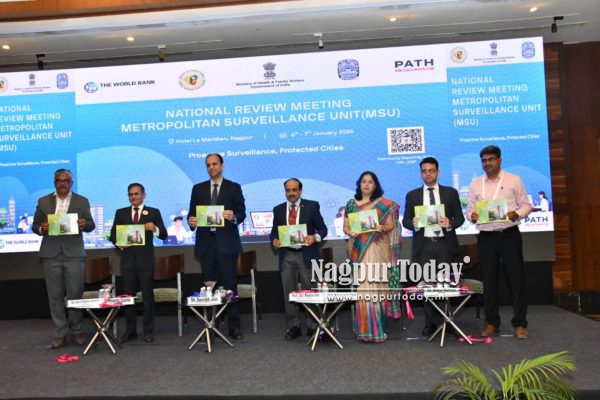
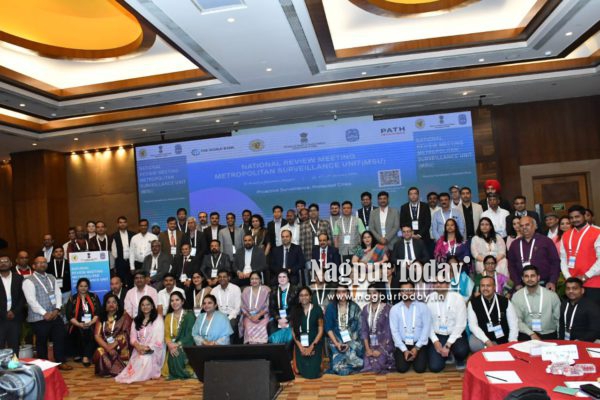
Nagpur: A high-level national review meeting to assess the progress of 20 Metropolitan Surveillance Units (MSUs) under the Prime Minister–Ayushman Bharat Health Infrastructure Mission (PM-ABHIM) was held in Nagpur on January 6 and 7, 2026. The two-day meeting was jointly organised by the Central Surveillance Unit (CSU), Integrated Disease Surveillance Programme (IDSP), international public health organisation PATH, and the World Bank at Hotel Le Meridien, Wardha Road.
The meeting focused on reviewing the performance of MSUs across the country, identifying implementation challenges, addressing operational gaps and preparing a roadmap to strengthen urban disease surveillance and public health preparedness. Enhancing coordination among states and key stakeholders to reinforce the urban public health system was a key objective of the deliberations.
Gold Rate
Mar 13 2026 - Time 11.45Hrs

Addressing the gathering, Saurabh Jain, Joint Secretary, Ministry of Health and Family Welfare, stressed that cities must be judged not merely by smart infrastructure but by the strength of their public health systems. “It is far more important for cities to be resilient from a health perspective. Strengthening health systems should remain the priority,” he said.
Best practices from Nagpur MSU highlighted
During the inaugural session, a coffee table book showcasing the best practices of MSU Nagpur, operational under the Nagpur Municipal Corporation since January 2025, was released by chief guest Saurabh Jain. The publication highlighted visual documentation of effective urban surveillance measures and innovative public health interventions. The session also featured discussions on future strategies for strengthening urban health security.
Rapid response saved lives
In a technical session, Dr Deepak Selokar, Medical Health Officer, Nagpur Municipal Corporation, made a detailed presentation on MSU Nagpur’s swift investigation and response during the Chhindwara outbreak in September 2025, caused by contaminated cough syrup. He explained how timely surveillance and coordinated action helped avert multiple child fatalities, underscoring the critical role of MSUs in emergency response.
A panel discussion featured experts including Dr Himanshu Chavan (NCDC), Guru Rajesh Jaimi (World Bank), Dr Tikesh Bhisen (PATH), Dr Pragya Yadav (ICMR), Abhay Bhalerao (Animal Husbandry Department), Dr Shatanik Bhagwat (Gorewada Wildlife), Dr Sandeep Chaudhary (Government Veterinary College), Dr Deepak Selokar (MSU Nagpur), Dr Manjusha Giri (Indian Medical Association) and representatives from various institutions.
The discussion focused on strengthening urban health infrastructure, challenges in surveillance systems, human–animal–wildlife interactions and their impact on public health. Participants were also briefed on the All-Hazards Preparedness Framework and trained to develop City Emergency Response Plans to strengthen coordinated preparedness and response during public health emergencies.
Need for real-time public health intelligence
Guiding the participants, Dr Selokar emphasised that urban health surveillance can no longer rely solely on periodic reports. “Developing real-time public health intelligence is now essential. MSUs under PM-ABHIM provide a unique opportunity to integrate municipal systems, private healthcare providers and diagnostic laboratories into a coordinated and collaborative surveillance ecosystem,” he said. He added that MSUs function not just as data-collection units but as decision-support platforms enabling early detection, rapid response and targeted public health action in complex urban settings.
Dr Ranjan Das, Director, NCDC, highlighted the urgent need to strengthen disease surveillance in urban areas, citing rapid urbanisation, migration, environmental changes and increasing pressure on health systems. He stressed the importance of technology adoption, data integration, agile response mechanisms and active involvement of local administrations.
Field visit and recognition
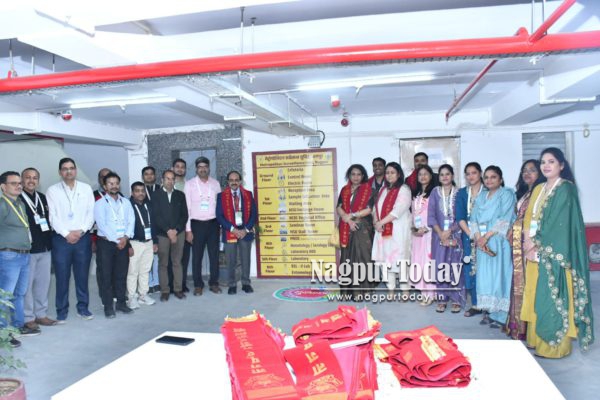
As part of the review, participants undertook an exposure visit to the MSU Nagpur facility at KT Nagar. The central review team appreciated the phased progress achieved by MSU Nagpur under the leadership and guidance of Nagpur Municipal Commissioner Dr Abhijit Chaudhari. Additional Commissioner (City) Vasumana Pant, Dr Deepak Selokar, and the MSU Nagpur team actively participated in the proceedings.
Senior officials from the Centre and states attended the meeting, including Saurabh Jain, Dr Ranjan Das, Dr Himanshu Chauhan (Additional Director, NCDC), Dr Shubhangi Kulsange (Joint Director, NCDC), and World Bank representative Guru Rajesh Jaimi. Representatives from PATH, including Dr Mutreza, Dr Pradeep Awate, Dr Amol Mankar, Dr Tikesh Bhisen, along with officials Satyam, Amit Tiwari and others, were also present.
The two-day national meeting resulted in key strategic decisions aimed at strengthening MSUs across the country through technology-driven, real-time disease surveillance, improved data integration and enhanced response capacity. Representatives from 20 MSUs operating across various states and municipal bodies participated in large numbers.
The meeting concluded with a consensus on the urgent need to reinforce collaborative urban disease surveillance and public health response systems to make cities safer, more resilient and better prepared to tackle public health threats.