
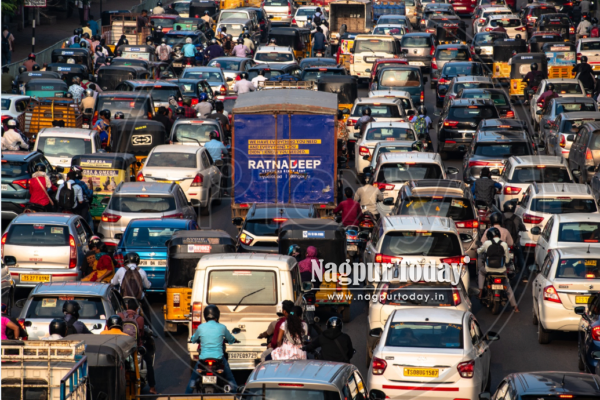
Nagpur: The Second Capital of Maharashtra is hurtling toward a traffic and environmental crisis, with vehicle registrations soaring at an alarming 11% every year, according to data released by the Regional Transport Office (RTO) in response to an RTI filed by activist Abhay Kolarkar. The unchecked rise, dominated by two-wheelers and cars making up 93% of all vehicles, is crippling city mobility and severely degrading air quality.
The figures expose a dangerous escalation:
Gold Rate
June 09 2026 - Time 10.30Hrs

2022–23: 22,518 vehicles registered
2023–24: 25,745 (up 11.5%)
2024–25 (up to October): 28,597 (up 11.2%)
Even more alarming, 18,885 new vehicles were added in just the first seven months of the current financial year. The highest surge occurs in October–November, around the festive season.
“People postpone vehicle purchases until Dussehra and Diwali, causing a dramatic spike in registrations,” Kolarkar noted.
The explosion in private vehicles has worsened congestion to unprecedented levels, with commuters facing suffocating traffic jams, long queues at signals, and deteriorating lane discipline. Major intersections across Nagpur are now gridlocked during peak hours, increasing travel times and accident risks.
Environmental impact has also reached critical levels, with emissions from thousands of new vehicles contributing heavily to air pollution and deteriorating public health indicators. The rise in auto-rickshaws over the last two years has further altered traffic density and pollution patterns.
Rising dependence on private vehicles
The overwhelming tilt toward personal vehicles signals an alarming collapse in public transport confidence. Two-wheelers and cars form the bulk of this surge:
Year
Two-Wheelers
Cars
2022-23
14,147
6,986
2023-24
12,902
7,696
2024-25
18,708
7,586
2025-26 (up to Oct)
12,902
4,554
Urban planners warn that unless sustainable transport reforms are implemented urgently, such as improved public transport, parking policies, and strict pollution controls, Nagpur may soon face irreversible traffic paralysis.
With roads bursting beyond capacity, residents and experts are demanding immediate intervention from the Nagpur Municipal Corporation (NMC) and traffic authorities to prevent a total mobility collapse.


नाबालिग छात्रा से किया दुष्कर्म .. #nagpurnews #crime #newsupdate

कार का शीशा तोड़ 5 लाख चोरी; दिनदहाड़े बॅगलिफ्टिंग.. #nagpurnews #latestnews #crime

GANGA-JAMUNA इलाके में युवक से चाकू की नोक पर 25 हजार की...

मोमिनपुरा में पुराने विवाद पर युवक पर जानलेवा हमला.. #nagpurnews #Crime #LatestNews

शादी नहीं होने के तनाव में युवक ने दी जान.. #nagpurnews #LatestNews...

विकास ठाकरे का 5 करोड़ मानहानि दावा; मार्मिक के लेख पर ठाकरे...