

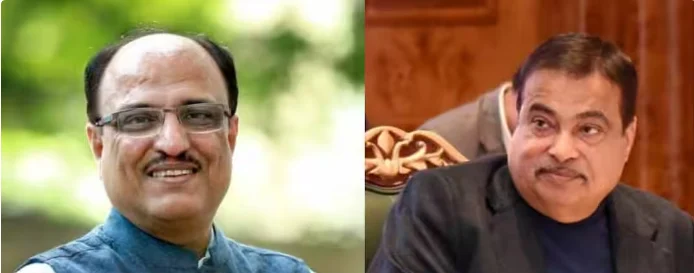
Nagpur: The BJP’s defeat in the Nagpur Graduates’ constituency has turned into more than just an electoral setback. It has triggered uncomfortable questions over candidate selection, internal dissent and the party’s failure to manage its own political backyard. At the centre of the controversy is former MLC Anil Sole, a close confidant of Union Minister Nitin Gadkari, whose denial of a BJP ticket and subsequent Independent candidature added another dimension to the party’s electoral troubles.
Congress candidate Abhijit Wanjari secured a second consecutive victory in the Nagpur Graduates’ constituency, defeating BJP nominee Sudhakar Kohale by 3,271 votes. The defeat is particularly embarrassing for the BJP as Nagpur is not merely the home turf of Chief Minister Devendra Fadnavis and Union Minister Gadkari but also one of the party’s most established political strongholds.
The outcome has once again raised questions about the BJP’s decision to overlook Anil Sole, a former MLC and an influential political figure associated with Gadkari. After being denied the party nomination, Sole entered the electoral battlefield as an Independent, exposing the dissatisfaction within the BJP over its candidate selection.
Sole reportedly stopped his campaign only after Chief Minister Fadnavis personally visited his residence and intervened to resolve the dispute. However, whether the intervention came too late to prevent electoral damage remains a matter of political debate. The extent to which Sole’s Independent candidature divided BJP supporters and affected Kohale’s prospects is yet to be established.

But the most striking aspect of the Nagpur election was the unusually high number of invalid votes, which has become a major talking point after the BJP’s defeat.
More than 15,000 votes were declared invalid, including nearly 9,000 ballots reportedly marked with preference number ‘2’ against Kohale but without assigning subsequent preferences to the remaining 37 candidates. The unusual voting pattern has triggered questions about voter awareness, the handling of preferential ballots and possible dissatisfaction among sections of the electorate over the BJP’s candidate choice.
The sheer number of invalid ballots has added another layer of controversy to an already contentious election. If a substantial section of voters deliberately marked Kohale as their first preference but failed to complete the required voting procedure, the implications for the final outcome merit close examination. However, the exact reasons behind the invalidation of these ballots cannot be established merely from the voting pattern.
BJP candidate Sudhakar Kohale has indicated that he would appeal against the invalid votes, challenging the manner in which they were treated. The proposed appeal could bring further scrutiny to the counting process and the reasons for the large number of rejected ballots.
For the BJP, the defeat carries considerable historical and political significance. Gadkari himself represented the Nagpur Graduates’ constituency from 1990 to 2014, making the seat a prestigious political possession for the party. Losing it for a second consecutive term underlines the difficulty the BJP has faced in retaining its influence among the educated electorate of the region.
Chandrashekhar Bawankule, who was in charge of the BJP’s election campaign, accepted responsibility for the defeat and promised corrective measures. He asserted that the party would work to reclaim the constituency in the next election.
However, Bawankule’s remarks also indicated that the party was not prepared to treat the defeat as an isolated electoral accident. He said the BJP would identify those responsible for damaging its prospects and take corrective action, suggesting that internal accountability could follow the setback.
The BJP’s troubles were not confined to Nagpur. The party contested three seats in Maharashtra but managed to win only the Pune Graduates’ constituency, where Kaustubh Gawade defeated Shiv Sena rebel Sachin Sanap. The allies had already been at loggerheads over seat-sharing and candidate selection, with accusations of cross-campaigning further exposing the fragile nature of their electoral understanding.
A BJP functionary alleged that Shiv Sena workers had campaigned against BJP nominee Smita Jadhav in the Pune Teachers’ constituency, contributing to her defeat. The BJP maintained that a united Mahayuti campaign could have delivered all five seats to the ruling alliance.
Shiv Sena, however, refused to accept the blame. Pune unit chief Ravindra Dhangekar countered that the BJP should stop taking its alliance partners for granted, describing the election verdict as a reality check for the party.
The Chhatrapati Sambhajinagar Graduates’ constituency also exposed divisions within the Mahayuti. NCP (Sharadchandra Pawar) candidate Pratapsinh Patil defeated the NCP nominee Satish Chavan. Shiv Sena veteran Abdul Sattar openly admitted supporting the Sharad Pawar faction’s candidate instead of his own alliance partner, arguing that the NCP had made the wrong choice in selecting its nominee.
NCP failed to win any of the five constituencies, with party chief Sunetra Pawar acknowledging that every electoral outcome offers lessons.
Meanwhile, Chief Minister Devendra Fadnavis shared a public platform with Shiv Sena (UBT) chief Uddhav Thackeray and MNS president Raj Thackeray in Mumbai on Thursday. Dismissing speculation surrounding the political bonhomie, Fadnavis described such interactions as part of Maharashtra’s political tradition.
Yet, the Nagpur results have left the BJP with a more immediate problem at home. The defeat of its official candidate, the sidelining of Gadkari confidant Anil Sole, the controversy surrounding more than 15,000 invalid votes and the allegations of alliance partners working at cross-purposes have collectively exposed serious weaknesses in the party’s electoral management.
For a party that considers Nagpur its political fortress, the bigger question is no longer simply why Kohale lost by 3,271 votes. It is whether the BJP underestimated the resentment generated by its candidate selection and failed to recognise the warning signals within its own ranks.
The Anil Sole episode and the extraordinary number of invalid ballots have ensured that this defeat will not be forgotten as just another electoral loss.