

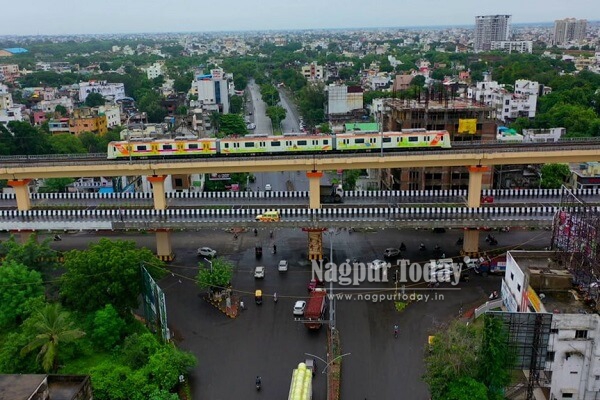
Nagpur: The city is set for a dramatic leap in urban mobility as the blueprint for Nagpur Metro’s Phase-3 proposes a massive 54.5-kilometre expansion, positioning Nagpur among India’s most extensively connected Tier-2 cities. Once completed, the expansion will take the total Metro network from the existing and under-construction 82 kilometres (Phases 1 and 2) to nearly 129 kilometres, a scale of connectivity rarely seen outside metropolitan giants.
The ambitious plan is part of the Comprehensive Mobility Plan (CMP) 2025 prepared by MahaMetro in line with Ministry of Housing and Urban Affairs (MOHUA) guidelines. Finalised after stakeholder consultations and public feedback, the plan aims to plug key mobility gaps that continue to strain Nagpur’s growing road network.
Gold Rate
Mar 12 2026 - Time 11.45Hrs

Four corridors, one transformational vision
Phase-3 revolves around four strategic corridors designed to reshape the city’s transport spine:
• Mankapur Square to Rachna Junction (25 km) along the Inner Ring Road
• Sitabuldi to Koradi (11.5 km), including Nagpur’s first underground metro stretch
• MIDC ESR to CEAT Ltd (3 km) in the Butibori industrial belt
• Khapri to New Nagpur (15 km) linking upcoming township developments
The largest and most transformative component is the 25-km Mankapur–Rachna corridor. By tracing the Inner Ring Road, this line will introduce orbital connectivity, allowing commuters to bypass Central Nagpur instead of converging at Sitabuldi. This shift from a purely radial network to a hub-and-spoke system with a bypass loop could significantly decongest the city core during peak hours.
Importantly, this corridor will initially operate through articulated buses, enabling MahaMetro to assess ridership demand before upgrading to full metro rail, a phased and financially cautious approach.
First underground Metro for Nagpur
The 11.5-km Sitabuldi–Koradi corridor marks a historic engineering milestone for Nagpur. For the first time, the city will witness underground metro construction, a 3-km stretch cutting through the dense urban core where flyovers, narrow roads and heritage structures make elevated construction impractical.
The project is estimated at around Rs 3,500 crore, with an average cost of Rs 304 crore per kilometre, reflecting the high expense of underground infrastructure, which typically costs 2.5 to 3 times more than elevated lines.
The 3-km MIDC ESR–CEAT corridor will strengthen last-mile connectivity within the Butibori industrial zone, directly benefiting thousands of workers. Meanwhile, the 15-km Khapri–New Nagpur link is aligned with transit-oriented development plans, ensuring future townships grow around mass transport rather than congested road networks.
What lies ahead
A Detailed Project Report (DPR) will be prepared over the next nine months, outlining cost structures, funding patterns, ridership projections and implementation schedules for government approvals.
MahaMetro has indicated that Phase-3 construction will begin only after Phase-2 is fully commissioned. This phased rollout is intended to consolidate operational experience, maintain quality standards and ensure financial prudence.
If executed as planned, Phase-3 could fundamentally redefine how Nagpur moves, shifting the city toward a circular, interconnected transit ecosystem and reinforcing its status as a model urban centre in central India.