

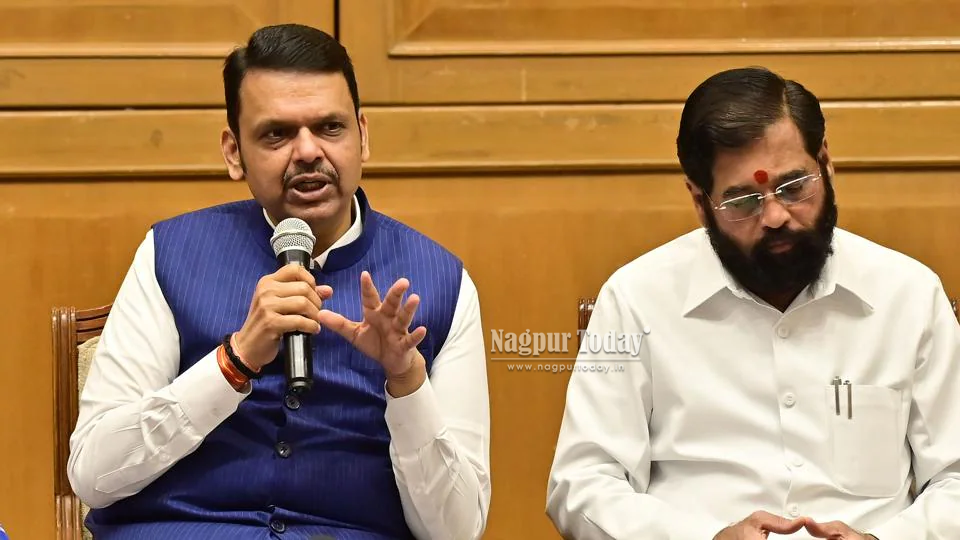
Nagpur: The Mahayuti alliance, which has repeatedly projected a united face to take on the Opposition, appears to be discovering that its biggest troubles may be coming from within. Barely had the dust settled on the Maharashtra Legislative Council elections than the BJP and Shiv Sena began trading accusations, turning an electoral setback into an open exercise in blame-shifting.
With the Opposition Maha Vikas Aghadi (MVA) securing three of the five graduates’ and teachers’ constituency seats against Mahayuti’s two, the BJP has apparently found an immediate explanation for its disappointing performance: its own alliance partner, the Shiv Sena.
Maharashtra BJP chief spokesperson Navnath Ban on Thursday accused the Eknath Shinde-led Shiv Sena of failing to honour alliance commitments, alleging that its non-cooperation in Nagpur and Pune weakened the ruling coalition’s prospects. The allegations have exposed serious cracks in the ruling arrangement, raising uncomfortable questions about whether the Mahayuti exists as a functioning political alliance or merely as a convenient arrangement for sharing power.
The controversy particularly centres on the Pune Teachers’ constituency, where the Shiv Sena extended last-minute support to Independent candidate Sachin Sanap against the BJP’s official nominee. Ban alleged that this move damaged the alliance’s unity and failed to deliver any corresponding electoral advantage to the BJP in the Pune Graduates’ constituency.

In a pointed attack on its ally, Ban claimed that had the Shiv Sena extended proper support to the BJP and the Ajit Pawar-led NCP, the Mahayuti could have secured all five seats. Instead, according to him, the Sena’s insistence on pursuing its own interests in Pune put its partners in difficulty and cost the alliance an opportunity to improve its tally.
The BJP spokesperson also accused Shiv Sena Minister Abdul Sattar of campaigning against the NCP in the Chhatrapati Sambhajinagar constituency, further aggravating the situation within the ruling coalition.
Taking the attack beyond verbal criticism, Ban used a post on X to question the Sena’s commitment to coalition politics, suggesting that supporting one candidate at the expense of alliance partners was hardly consistent with the much-publicised principle of ‘alliance dharma’.
BJP Vice-President Keshav Upadhye also joined the chorus, calling for a comprehensive review of the election results. He questioned why the ruling alliance had managed to win only two seats when, according to him, a much better performance was possible had all three partners coordinated their campaigns.
His remarks on X effectively underlined the growing discomfort within the BJP over the electoral outcome, particularly the failure to retain the three graduates’ constituencies.
The results have certainly given the ruling alliance plenty to explain. Congress candidate Abhijeet Wanjari retained the Nagpur Graduates’ constituency, defeating BJP nominee Sudhakar Kohale. The NCP (Sharadchandra Pawar) registered victories in the Pune and Chhatrapati Sambhajinagar Graduates’ constituencies through Harshada Deshmukh-Jadhav and Pratapsinh Patil, respectively.
The BJP managed to secure the Pune Teachers’ constituency through Kaustubh Gawade, while the Shiv Sena won the Amravati Teachers’ constituency with Kiran Sarnaik.
Thus, while both the BJP and Shiv Sena managed to save face by winning one seat each, the NCP failed to open its account, and the MVA walked away with three victories.
What makes the post-election developments particularly significant is that the BJP’s criticism is not merely about lost seats but also about the credibility of coordination among the three ruling partners. The public accusations suggest that the alliance’s electoral understanding was far from seamless, despite its combined political and administrative strength.
For the moment, the BJP appears more interested in questioning its ally’s conduct than examining the reasons behind its own candidates’ defeats. Whether the Shiv Sena accepts these allegations or returns the political fire remains to be seen.
One thing, however, is clear: the MLC results have done more than rearrange five seats in the Legislative Council. They have brought the Mahayuti’s internal contradictions into the open, with its partners now appearing more eager to hold each other responsible than collectively own the outcome.