
Nagpur: Maharashtra has inched closer to wiping out Naxalism, aligning with the Central Government’s target of making the country completely Naxal-free by 2026. Chief Minister Devendra Fadnavis said the State’s steady progress is the result of long-term planning, aggressive policing, and development-focused strategies.
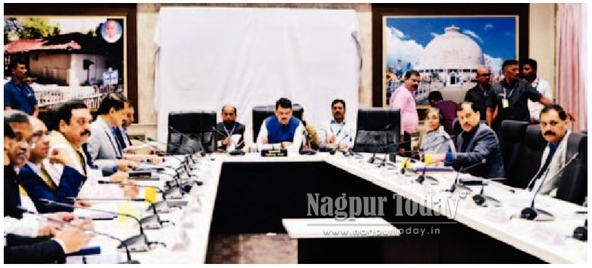
Chairing a review meeting of the State-level committee formed under the National Policy and Action Plan at the Legislature Building in Nagpur, Fadnavis stressed that eliminating Naxalism requires a two-pronged approach, firm security presence and sustained development.
Gold Rate
Mar 30,2026 - Time 10.26Hrs

He said police outposts must be established even in the most remote pockets of the affected regions, equipped with adequate personnel and full infrastructure support. Once the insurgency is rooted out, welfare programmes should follow immediately to integrate local communities into the mainstream. These programmes, the Chief Minister added, must ensure access to government schemes, generate employment for youth, promote cultural activities, and create markets for local products.
Fadnavis also highlighted the significant role of the police in enabling the surrender of several wanted Naxalites, especially in Gadchiroli. Successful surrender operations led by Gadchiroli Police have weakened the insurgency’s leadership. He instructed officials to expedite the disbursement of the promised Rs 1 crore rehabilitation incentive and recommended promotions for officers who have shown exceptional courage in Naxal-hit zones.
The construction of the new Superintendent of Police office building in Gadchiroli has been approved, and funds will be provided as required.
The meeting was attended by Chief Secretary Rajesh Aggarwal; Additional Chief Secretary (Finance) O. P. Gupta; Additional Chief Secretary (Public Works Department) Manisha Mhaiskar; Additional Chief Secretary (Forest) Milind Mhaiskar; Director General of Police Rashmi Shukla; Principal Secretary (Home) Anoop Kumar Singh; Additional Director General of Police (Special) Sherring Dorje; Additional Director General, CRPF Ajay Sharma; and other senior officers. Deputy Inspector General of Police Ankit Goyal gave a presentation.
Symbolic victory at a former Naxal hotspot
A poignant example of the State’s progress is Laheri in Bhamragad tehsil, the site where 17 policemen were killed in a Naxal ambush on October 8, 2009. Naxals had reportedly celebrated after the attack. Today, a new police outpost stands at the same location, restoring confidence among locals and symbolising the decline of Naxal dominance.
Development projects undermining Naxal influence
Alongside security operations, major infrastructure projects are reshaping Gadchiroli. A 17.30-km Dhodraj–Nilgunda–Kawande road is underway, along with the Korama Nala and Bedre bridges that will connect the route to Bijapur. A 750-metre bridge over the Indravati River on the Damaranchha–Sandra road has also been approved.
Connectivity improvements have been significant: 271 mobile towers had been installed by 2022, and between 2023 and 2025, another 521 towers were set up — bringing remote villages into the communication network and weakening the isolation on which Naxalism once thrived.
With strengthened policing, relentless development, and strategic outreach, Maharashtra now finds itself on the verge of becoming Naxal-free, a milestone that once seemed distant.