

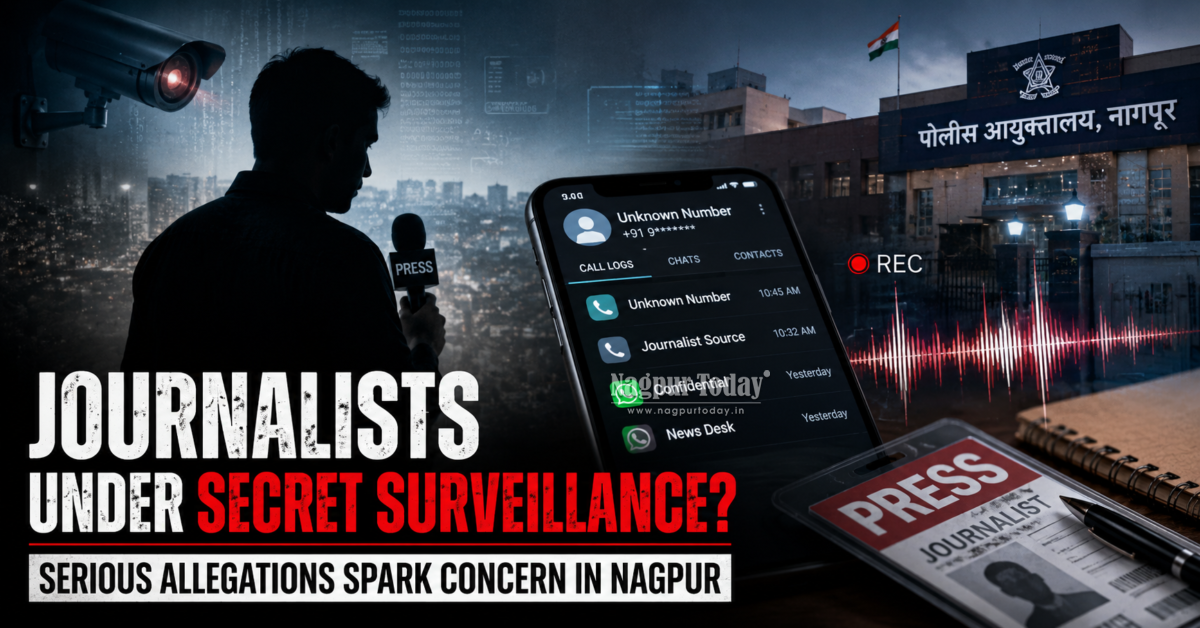
 Nagpur: A fresh controversy linked to Nagpur’s cyber policing system has triggered serious debate across the city, raising concerns not only about law enforcement practices but also about the freedom of the press in a democratic society.
Following recent disciplinary action, including suspensions and dismissals involving certain police officials, another sensitive issue has now come under the spotlight. This time, the allegations are even more alarming – claims that journalists in Nagpur may have been placed under secret digital surveillance.
According to information circulating from reliable sources, mobile numbers belonging to several journalists – particularly crime reporters and investigative journalists – were allegedly being monitored through technical means. Reports suggest that call records, WhatsApp activity, private conversations, and even personal mobile usage patterns of certain journalists may have been secretly tracked.
If proven true, the matter could amount to a serious violation of privacy rights and press freedom. In a democracy, journalists serve as the “fourth pillar,” responsible for exposing truth, questioning authority, and informing the public. Allegations that journalists themselves are being monitored have therefore sparked widespread concern within media circles.
Sources claim that specific officials allegedly collected details related to journalists’ mobile numbers, contacts, and communication patterns. Questions are now being raised over whether reporters’ interactions, information gathering activities, and professional sources were secretly observed.

What has further intensified suspicion is the reported reluctance of some officials to directly deny the allegations. While no officer has officially confirmed the claims, there has also reportedly been no clear categorical rejection of the accusations, fueling speculation and unease.
Legal experts point out that under Indian law, technical surveillance mechanisms may only be used in serious criminal investigations and with proper authorization. However, unauthorized monitoring of journalists’ phones, private conversations, or personal data – especially without any clear criminal basis – could amount to misuse of power and violation of constitutional rights.
Journalists often deal with sensitive information and confidential sources. Their professional communication is protected by principles of privacy and press independence. Any attempt to interfere with that confidentiality could create a chilling effect on journalism itself.
The controversy has now led to growing demands for an independent and transparent investigation into the allegations. Questions are also being raised about accountability if any official is eventually found guilty of abusing their authority.
— Ravikant Kamble