

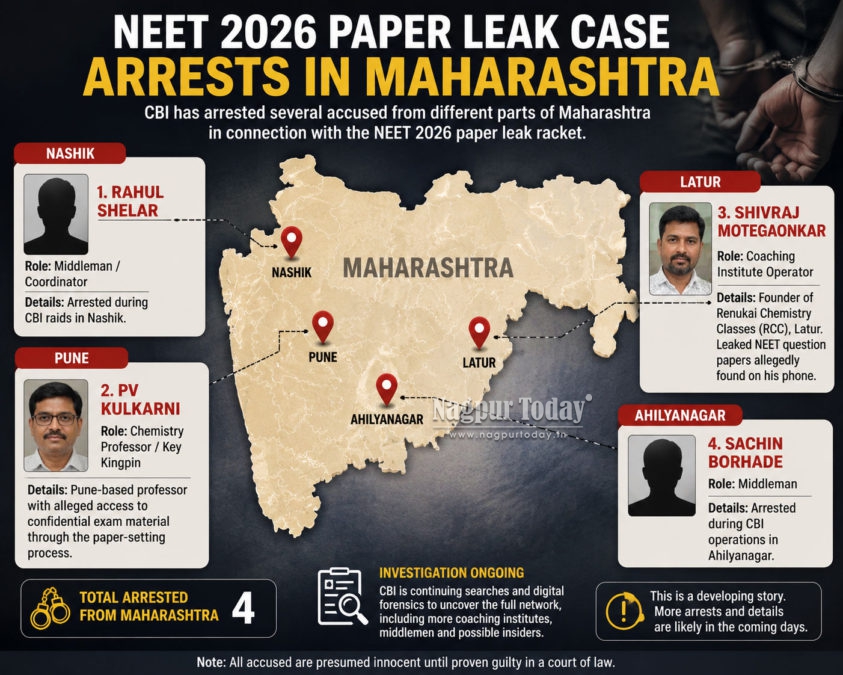
 India’s biggest medical entrance examination has once again come under a cloud – and this time, Maharashtra has emerged as one of the central points in the rapidly expanding NEET 2026 paper leak investigation.
What started as social media whispers among students soon turned into a nationwide scandal involving coaching operators, alleged middlemen, confidential exam material, digital communication networks, and arrests by central agencies. From Latur’s powerful coaching ecosystem to Pune’s academic circles, investigators are now probing how Maharashtra allegedly became one of the key operational hubs in the NEET leak racket.
The controversy has shaken the trust of lakhs of students and parents who spend years preparing for one of India’s toughest examinations.
Maharashtra Under The Scanner
The investigation intensified after the CBI reportedly arrested multiple accused linked to Maharashtra. Among the names drawing national attention was a coaching institute operator from Latur, a city long known for producing top-performing NEET and JEE candidates.
Investigators are also probing the role of academic contacts and alleged intermediaries operating through cities like Pune and Nashik. Sources connected to the investigation claim digital evidence, including mobile devices and communication records, is being examined to understand how confidential exam information may have circulated before the examination.

While agencies have not publicly disclosed every operational detail, the emerging picture points toward a structured network rather than isolated cheating attempts.
Latur: From Coaching Capital To Controversy
For years, Latur has been considered one of Maharashtra’s biggest coaching destinations. Thousands of students from across the state migrate there annually for NEET and engineering entrance preparation.
The city built a reputation around discipline, intensive preparation models, hostel-based study culture, and result-oriented coaching systems. Families invested massive amounts of money hoping to secure government medical seats for their children.
But the NEET leak investigation has now placed this education ecosystem under uncomfortable scrutiny.
Officials are careful not to blame the entire coaching industry, yet the alleged involvement of individuals connected to coaching circles has raised difficult questions:
- Has extreme competition created fertile ground for exam mafias?
- Are some institutes becoming too commercially powerful?
- Is the pressure to deliver ranks pushing ethical boundaries?
Education experts say the coaching economy surrounding competitive exams has transformed into a multi-crore industry where success often determines reputation, admissions, and revenue.
How The Alleged Network Operated
Investigators believe the operation may have involved several layers working together.
Possible Structure Being Probed:
- Access to confidential exam material
- Transmission through digital channels
- Middlemen identifying interested candidates
- Financial transactions involving huge sums
- Last-minute circulation before the exam
Authorities suspect encrypted messaging apps and temporary communication groups may have been used to avoid detection.
Sources indicate that some students or parents may have been approached with promises of “guaranteed selection” in exchange for massive payments running into lakhs or even crores collectively.
Officials are also examining whether insiders with access to examination systems played any role in the leak chain.
The Business Of Competitive Exams
The NEET ecosystem today is no longer limited to textbooks and classrooms.
Across India, especially in states like Maharashtra, coaching has become a parallel education economy worth hundreds of crores. Entire local economies in cities such as Latur and Kota revolve around student migration, hostels, transport, libraries, and private institutes.
With medical seats limited and competition brutal, parents often spend:
- ₹2 lakh to ₹10 lakh annually on coaching
- Additional hostel and living expenses
- Specialized test series and mentorship programs
Experts believe such intense financial and emotional pressure creates conditions where illegal shortcuts can thrive.
A retired education administrator familiar with competitive exam systems said:
“When selection becomes a business model, unethical ecosystems can emerge around desperation and fear.”
Students Feel Betrayed
The biggest impact of the scandal has fallen on genuine students.
Lakhs of aspirants prepare for NEET for years, often sacrificing social life, sleep, and mental well-being. Many students study for 10 to 14 hours daily hoping for a fair chance at securing a medical seat.
Now many are questioning whether merit alone is enough.
Students across social media platforms expressed anger after reports of arrests surfaced. Several aspirants demanded strict punishment for anyone found guilty, arguing that paper leaks destroy trust in the entire examination process.
For repeat aspirants, the possibility of re-examinations has created additional mental stress and uncertainty.
Technology Has Changed The Nature Of Exam Fraud
Earlier paper leak scandals often relied on photocopies or physical distribution.
Today, investigators say digital technology has transformed exam fraud into a sophisticated operation involving:
- Encrypted apps
- Disposable devices
- Cloud sharing
- Temporary chat groups
- Digital payment trails
Cyber experts believe organized leak networks now operate faster and with greater secrecy than traditional cheating rackets.
This has forced agencies to adopt digital forensic investigations alongside conventional interrogation methods.
Political Pressure And National Debate
The controversy has also triggered political reactions across the country.
Opposition parties have questioned the credibility of examination systems, while education activists are demanding structural reforms within national testing agencies.
Several experts are now calling for:
- Stronger cybersecurity measures
- Encrypted paper delivery systems
- Tighter background checks
- Faster leak detection protocols
- Stricter anti-cheating laws
The scandal has reignited a larger debate over whether India’s entrance examination system has become excessively dependent on high-pressure coaching culture.
Questions Investigators Still Need To Answer
Despite multiple arrests, several major questions remain unanswered:
- How early was the paper leaked?
- How many students benefited?
- Did the network operate across multiple states?
- Were exam insiders involved?
- How much money changed hands?
- Could more arrests happen in Maharashtra?
Investigators are expected to continue digital analysis and financial tracking in the coming weeks.
More Than Just A Paper Leak
The NEET 2026 controversy is no longer being viewed as a simple cheating case. It has evolved into a larger national conversation about trust, merit, commercialization, and the enormous pressure surrounding India’s competitive examination system.
For Maharashtra- especially cities celebrated for academic excellence – the scandal has become both a legal investigation and a reputational crisis.
As agencies dig deeper into the alleged network of coaching operators, middlemen, and financial transactions, the outcome of this probe could reshape how competitive exams are monitored across India in the years ahead.