

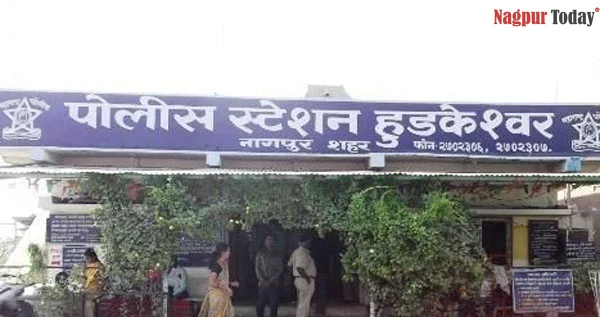
Nagpur: Hudkeshwar has emerged as Nagpur’s most crime-prone police station jurisdiction, recording the highest number of serious offences as well as emergency calls seeking police intervention, according to a comprehensive nine-month crime audit conducted across all 35 police stations in the city.
The findings, based on crime statistics and Police Control Room calls between January and September, have raised serious concerns over the concentration of criminal activities in certain pockets of the city. Police Commissioner Vishwas Nangre Patil, who reviewed the data, has directed officials to undertake scientific crime mapping and formulate a targeted strategy to tackle the growing law-and-order challenges.
The audit has brought several police station jurisdictions under the scanner, with Hudkeshwar leading the list. MIDC emerged as the second most crime-affected area, registering 403 offences and 10,750 emergency calls. Gittikhadan followed with 324 offences and 10,606 calls. Both jurisdictions have also drawn attention for illegal activities, including betting, matka and gambling.
Kalamna recorded 333 offences and 8,907 calls, while Jaripatka reported 326 offences and 9,404 calls. Yashodhara Nagar registered 311 offences and 7,760 calls, reflecting the substantial policing pressure in these areas.

An interesting aspect of the audit was the high volume of emergency calls from Ajni. Although the jurisdiction registered 262 offences, it generated as many as 10,440 calls seeking police assistance during the nine-month period, indicating a significant demand for police intervention.
On the other end of the spectrum, Old Kamptee recorded the lowest number of serious offences at 76, accompanied by 2,237 calls. Shantinagar reported 93 offences and 2,827 calls, while Sonegaon registered 90 offences and 3,845 calls.
Bhandewadi recorded 108 offences and 1,400 calls, while Sakkardara reported 146 offences and 3,765 calls. Koradi registered 163 offences and 5,061 calls.
The police leadership is now examining why certain jurisdictions are witnessing a disproportionate concentration of criminal incidents and emergency calls. Rather than adopting a uniform policing approach, the Commissioner wants station-specific interventions based on the nature, frequency and geographical concentration of offences.
The proposed action plan will focus on identifying crime-prone pockets, strengthening preventive policing and deploying appropriate measures to contain organised and habitual criminal activities. Special attention is also expected to be given to areas where illegal betting, matka and gambling networks continue to operate.
Police Commissioner Vishwas Nangre Patil said the crime trends were being examined scientifically and a special action plan had been prepared to curb criminal activities. He added that individual strategies would be drawn up for every police station in accordance with its local crime profile.
Specific measures would be identified for each jurisdiction, with decisions on their implementation expected shortly after the Assembly session.
The nine-month audit has thus provided the Nagpur Police with a detailed picture of the city’s crime landscape. The real challenge, however, will be to translate the statistical findings into effective ground-level policing and ensure that the identified hotspots no longer remain safe havens for criminals.