

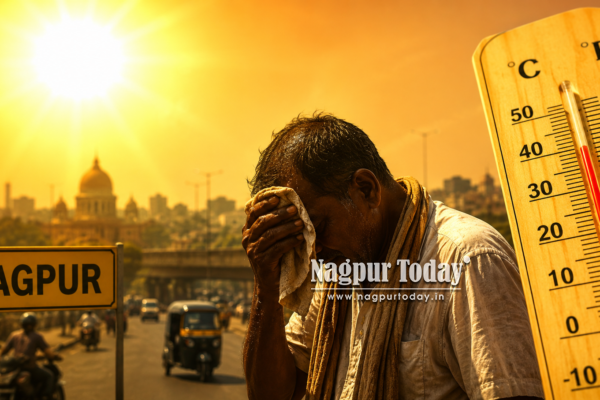
 Nagpur: As temperatures repeatedly crossed 45°C during May, a silent humanitarian crisis unfolded across Nagpur’s streets. While most residents sought refuge indoors, dozens of homeless individuals were left exposed to the relentless summer heat, struggling daily without adequate shelter, drinking water, medical assistance, or social support.
Hospital records reveal that 98 unidentified persons died in Nagpur during May alone, raising serious concerns about the impact of extreme weather on the city’s most vulnerable population.
Although authorities are yet to confirm the exact causes of death in every case, officials suspect that heatstroke, dehydration, exhaustion, and heat-related complications may have contributed to several of the fatalities.
98 Unclaimed Deaths in Just One Month
According to official hospital data, 59 unidentified natural deaths were recorded at Indira Gandhi Government Medical College and Hospital (Mayo Hospital), while another 39 deaths were reported at Government Medical College and Hospital (GMCH) during May.
Behind every statistic, however, lies a human story.

Most of the deceased remain unidentified, with no relatives coming forward to claim their bodies. Many spent their final days living on footpaths, beneath flyovers, near railway stations, or in abandoned structures, battling extreme temperatures with little protection.
Streets Turned Into Survival Zones
For Nagpur’s homeless population, summer is not merely uncomfortable—it can be deadly.
As roads and concrete surfaces absorb and radiate heat throughout the day and night, those living outdoors face prolonged exposure to dangerous temperatures. Elderly individuals, people suffering from illnesses, and those without regular access to food and water are particularly vulnerable.
Throughout May, Nagpur witnessed multiple days with temperatures touching 45°C to 46°C, significantly increasing the risk of heat-related illnesses.
Alarming Spike Over 48 Hours
One of the most concerning aspects of the data is the sudden rise in deaths recorded over a short period.
Hospital records show that 31 unidentified persons died within just 48 hours between May 27 and May 28, including 16 deaths on one day and 15 on the next.
While investigations into individual cases are ongoing, the clustering of deaths during an intense heatwave has prompted renewed discussions about public health preparedness and emergency support systems.
Among the deceased were four women, highlighting that the tragedy affected people across different age groups and backgrounds.
Questions Over Protection for the Vulnerable
The deaths have also sparked broader questions about the effectiveness of existing heat action plans and social welfare measures.
Nagpur continues to witness rapid urban growth, infrastructure expansion, and modernization. However, the deaths of nearly a hundred unidentified persons within a single month underscore the challenges faced by those living on the margins of society.
Social activists and public health experts believe that greater efforts may be needed to improve access to temporary shelters, drinking water facilities, medical outreach, and emergency assistance during extreme weather events.
A Tragic Reminder
For most residents, the summer of 2026 may be remembered for record-breaking temperatures.
For 98 unidentified individuals, it became their final summer.
Many died alone, without family members by their side and without anyone to claim them. Their names may never be known, and their stories may never be fully told.
Yet their deaths serve as a powerful reminder that the true measure of a city’s progress is not only its roads, buildings, and infrastructure—but also how effectively it protects its most vulnerable citizens during times of crisis.