
 Nagpur is once again at a crossroads-literally and financially.
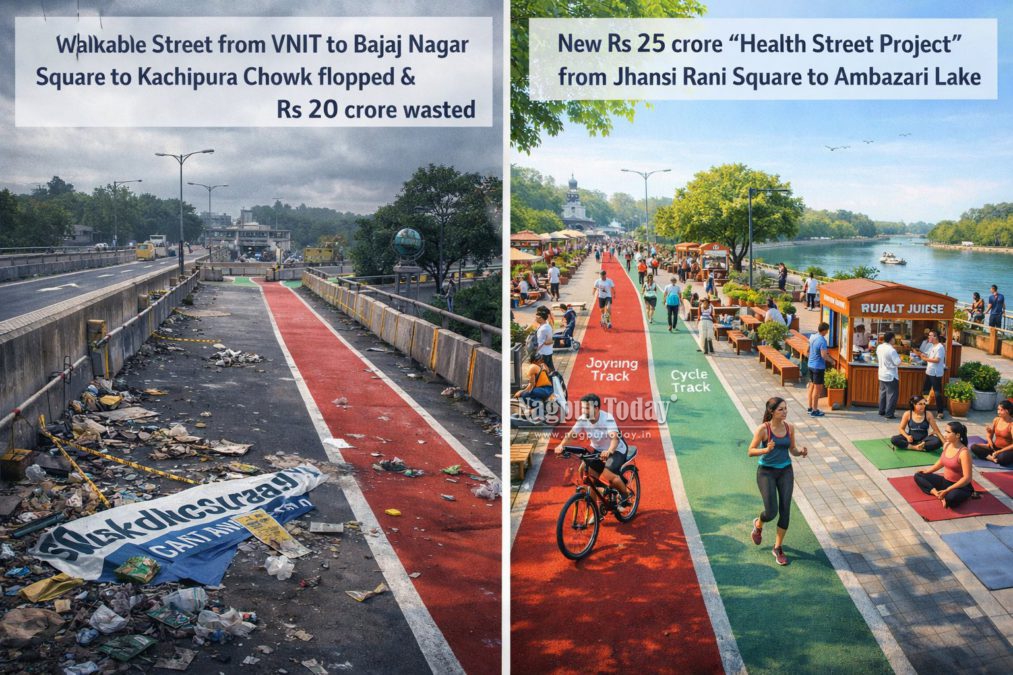
After spending nearly ₹20 crore on a “Walkable Street” pilot stretch from Abhyankar Nagar Square to Bajaj Nagar and Kachipura, the Nagpur Municipal Corporation (NMC) is now proposing another ₹25 crore “Healthy Street / Walkable Street” project from Jhansi Rani Square to Ambazari Lake.
But the real question is simple: Do we actually need another one?
Gold Rate
Mar 24,2026 - Time 10.30Hrs

What Was the Idea Behind Walkable Streets?
On paper, the concept makes sense.
Urban planners across the world push for:
- Safer pedestrian pathways
- Dedicated cycling tracks
- Reduced dependency on vehicles
- Better public spaces for social interaction
Nagpur’s pilot project followed similar Urban Street Design Guidelines—aiming to create a modern, people-friendly corridor.
What Went Wrong on Ground?
The reality, however, tells a different story.
1. Spending Where It Wasn’t Needed
The road was already in good condition. Instead of fixing broken infrastructure elsewhere, ₹20 crore was spent redesigning a functioning stretch-raising concerns about financial priorities.
2. Traffic Got Worse, Not Better
- Road width was reduced
- No alternate traffic planning was done
- Congestion increased instead of easing
In a city where vehicle numbers are rising rapidly, narrowing roads seems counterintuitive.
3. Zero Practical Support
Despite:
- Severe parking shortages
- Lack of public toilets
The project failed to address these basics.
From Public Space to Problem Zone
Perhaps the biggest concern isn’t design-it’s usage.
Instead of becoming a vibrant pedestrian hub, the stretch has reportedly turned into:
- Gathering spots for open drinking
- Drug consumption zones
- Encroached hawker areas
- Random roadside parking hubs
And the most critical observation:
Pedestrians and cyclists—the intended users-are largely missing.
Cycle Tracks: A Repeating Pattern?
This isn’t an isolated issue.
Cycle tracks developed on major roads like:
- West High Court Road
- Amravati Road
- Wardha Road
- Orange City Street Project
- Khamla Road
…have largely remained unused.
This raises a bigger concern:
Are we building infrastructure without understanding user behavior?
The New ₹25 Crore Proposal – Smart Move or Repeat Mistake?
The proposed “Healthy Street” from Jhansi Rani Square to Ambazari Lake will likely follow a similar design philosophy.
Supporters May Argue:
- It promotes sustainable mobility
- Improves urban aesthetics
- Aligns with global smart city goals
Critics Will Ask:
- Why replicate a model that hasn’t worked locally?
- Why ignore pressing needs like parking, road widening, and traffic flow?
- Who ensures these spaces don’t become anti-social hotspots again?
The Balanced Reality
Let’s be clear-walkable streets are not a bad idea.
But execution without:
- Proper enforcement
- Local behavior study
- Maintenance planning
- Security monitoring
…turns good ideas into expensive failures.
The Bigger Question Nagpur Must Answer
Before spending another ₹25 crore of public money, the city needs honest answers:
- Can Nagpur realistically support cycling culture in current conditions?
- Is traffic management being sacrificed for cosmetic urban design?
- Are past failures being audited—or ignored?
Nagpur doesn’t lack ideas-it lacks grounded execution.
If this new project addresses past mistakes, it could genuinely transform urban mobility.
If not, it risks becoming just another well-designed but poorly used ₹25 crore experiment.