

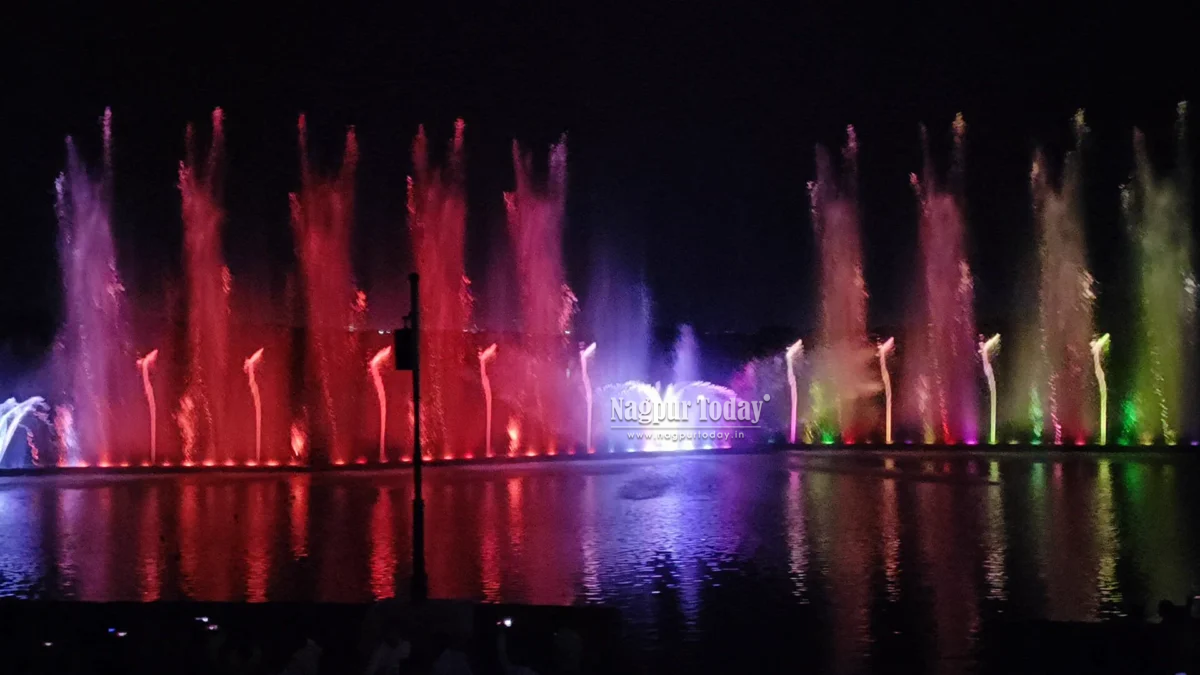
Nagpur: Futala’s spectacular musical fountain is preparing for its grand comeback, but the final finishing touch will be something visitors may not see, yet will unmistakably hear. Oscar-winning sound designer Resul Pookutty is set to visit Nagpur next week to undertake specialised audio calibration, ensuring that every spectator experiences the same crisp, immersive sound, irrespective of where they sit or move along the viewing gallery.
As the restoration enters its crucial technical phase, the emphasis has shifted from merely bringing the fountain back to life to creating a seamless audiovisual experience. The challenge is to make music, water choreography and lighting work in perfect synchronisation while delivering uniform sound quality across the sprawling open-air installation.
Emmy Award-winning cinematographer and Futala technical director Alphonse Roy said Pookutty’s assignment goes beyond conventional sound engineering. His task is to eliminate variations in audio levels across the viewing gallery, so that visitors do not experience music becoming louder or fainter as they move from one section to another.
Dolby algorithm reworked for Futala

Pookutty had travelled to Las Vegas to study sound engineering techniques used in large-scale entertainment installations. Based on those observations and Futala’s distinctive acoustic requirements, he subsequently approached Dolby for a specialised modification of its algorithm to suit the fountain’s open-air environment.
The objective is ambitious: consistent audio coverage across the entire viewing space without noticeable fluctuations in volume or clarity.
Unlike conventional auditoriums, Futala has neither enclosing walls nor a roof to contain sound. Wind movement, atmospheric conditions, speaker placement and the varying distance between sound sources and spectators make acoustic calibration considerably more complicated.
The sound system must therefore be engineered to overcome environmental limitations rather than depend on the natural acoustics of an enclosed venue.
Water, light and music enter synchronisation phase
Meanwhile, the international technical team has commenced programming the fountain’s multimedia systems following the beginning of official technical operations this month.
Once the programming exercise is completed, audio tuning will be followed by synchronisation of water jets, lighting effects and music. The entire process is expected to take approximately a month.
The programming phase is crucial because it determines how the fountain’s mechanical and electronic components respond to the audiovisual sequences. Every movement of water and every lighting transition must correspond precisely with the musical composition.
A brief display last Sunday, when water jets rose amid orange illumination for a few minutes, offered an encouraging glimpse of the restoration’s progress.
Belgian expert Basile de Schrynmakers, Nicholas and other members of the international technical team are currently in Nagpur, overseeing the final preparations.
MahaMetro officials are optimistic about achieving technical readiness by the first week of December. However, technical completion should not be confused with the commencement of public shows, which will depend on the necessary approvals and formal inauguration arrangements.
Beyond a fountain, an Immersive experience
For Futala, the restoration’s ultimate test will not simply be the height of its water jets or the brilliance of its lights. It will be whether the entire spectacle can hold together as one precisely engineered performance.
With Pookutty’s audio expertise being brought into the final phase, Futala is aiming to transform its musical fountain into an immersive experience where sound travels evenly, lights respond seamlessly and water dances in perfect rhythm.
The final countdown has thus begun, and this time, Nagpur’s landmark fountain is preparing not merely to dazzle the eyes, but to deliver an equally extraordinary experience to the ears.