

For some people, standing up from a chair can feel a lot easier, but the same for a person with Parkinson’s disease (PD) can feel impossible. They might start to feel their muscles turn stiff, their hands shaking, and their steps get shorter.
Parkinson’s disease is a brain condition that slowly changes the way a person moves. Medicine can help people get over it, but they are not the only solution available. A growing stack of research today points to something much simpler, and that’s regular movement.
Gold Rate
Sept 17,2026 - Time 10.30Hrs

This blog explains what happens in the brain when someone has Parkinson’s, how exercise can help improve it, and what some limitations are.

What Happens in the Brain During Parkinson’s Disease?
Dopamine cells living in deep brain areas, like the substantia nigra and ventral tegmental area, are responsible for a chemical called dopamine. It acts like a messenger and allows the neural signals to travel from the brain to the muscles smoothly.
When someone is diagnosed with Parkinson’s, their dopamine-making cells slowly start to die off. If the body has less dopamine, the messages the brain wants to send across the body become weaker and messier. This causes slow, stiff, or shaky movements, with the person losing balance.
There is no treatment available that can promise to bring those lost cells back, so most care aims to keep the remaining brain cells working well and to help the body cope. Movement and exercise fit right into both of these goals, which is why it has become such a big part of care.
How Does Movement and Exercise Make Such a Difference?
Exercise does far more than just build muscle. Research suggests it reaches the brain itself and changes how it works.
Building New Paths in the Brain
We all know the brain has the ability to rewire itself. Scientists call this “neuroplasticity”, which is just a big word used to explain the brain’s habit of forming new connections while strengthening the older ones. Regular movement positively affects the brain and pushes it to rewire connections. Some studies even suggest that regular exercise can also help protect dopamine cells from harm, though researchers are still testing how strong that effect really is.
Easing Everyday Symptoms
Exercise has also been linked to slowing the progression of motor symptoms and improving balance. Many people also experience clearer thinking, brighter mood, and deeper sleep. Regular activity does not promise recovery from the disease, but these small gains do add up and help the suffering person.
How Much Exercise Actually Helps?
Getting into a habit of consistently exercising every day matters more than the amount of time you exercise. In one large project that tracked people with Parkinson’s, those who did at least 2.5 hours of exercise a week reported a better quality of life than people who exercised less or just started later. So, starting sooner and doing it every day appeared to give significant results to participants.
There’s no single routine or number that can fit everyone. Age, other health problems, and how far the disease has progressed all shape what a safe routine looks like. A neurologist in Nagpur can help create a plan and set a target to push the PD patient without tiring them a lot. A physical therapist can then fine-tune the plan week by week.
Which Kinds of Movement Are Worth Trying?
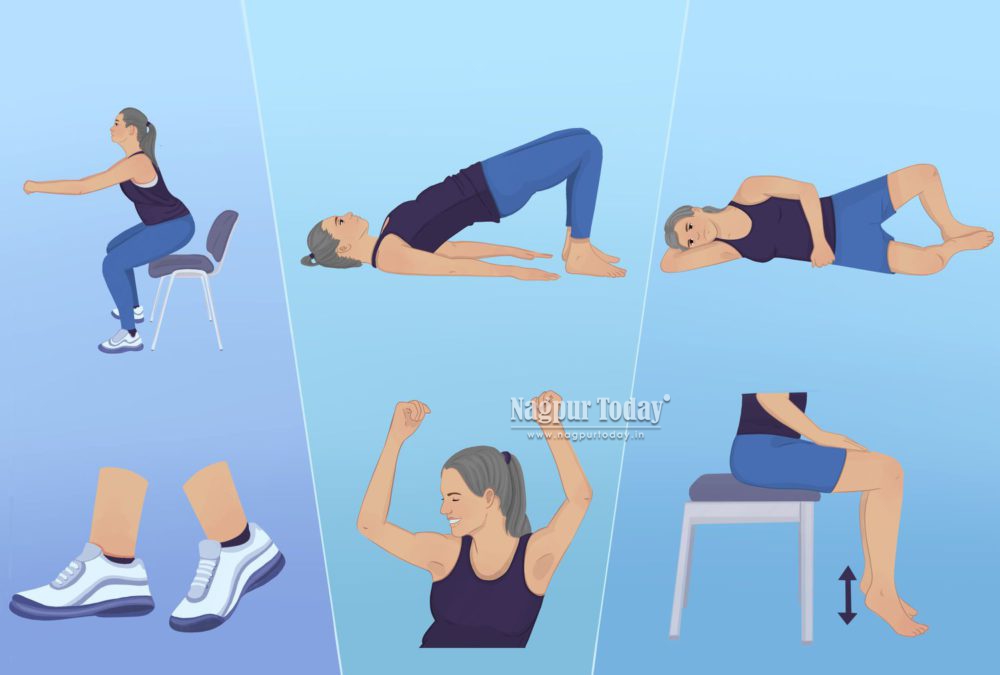
There isn’t a perfect exercise that works for everyone, so a mix of four types of exercises is usually recommended for Parkinson’s patients.
- The first is aerobic activity. This can include brisk walking, cycling, or swimming, or any other activity that gets the heart pumping and the breath moving. There is also great research done on higher-effort aerobic work, so PD patients can try that as well.
- The second is strength training, using light weights or a person’s own body. This helps avoid muscle loss and makes daily tasks like climbing stairs feel much easier.
- The third is balance and coordination training, which can include tai chi, dancing, or just stepping drills. This trains the brain to lower the chance of falls, which is one of the biggest risks with Parkinson’s.
- The last one is stretching and flexibility movement to loosen any tight muscles and help a person stand taller and move more freely.
It is important to follow a good routine that borrows from all four rather than leaning on just one.
Can Harder Exercise Slow the Disease?
Higher-effort exercise has become one of the most studied ideas in Parkinson’s care. A phase 3 trial known as SPARX3 studied these newly PD-diagnosed patients who were not on medication yet. Over six months, the group focused on doing high-intensity treadmill work, and the research found their symptoms stayed stable, while the comparison group that didn’t work out saw their symptoms worsen over time.
However, findings like these shouldn’t mean you should exercise harder without. It is quite important to build the habit of exercise first and then move to high-intensity workouts to avoid over-exertion and remain consistent. So the goal should be to push the body with care, to keep the symptoms steady.
When Exercise Is Not Enough on Its Own
Any movement while having Parkinson’s is helpful, yet it cannot completely replace medical treatment. For many people, medicine and exercise together cannot control the shaking and stiffness well enough. In those cases, a doctor may suggest deep brain stimulation surgery in Nagpur to help with the same. This procedure places thin wires inside the brain to help send gentle electrical pulses to improve movement.
This surgery is not a cure for PD and won’t suit everyone. A team of neurologists weighs the real risks by understanding what stage of the disease the patient is in and how their body is responding to medicine. Exercise stays part of the plan even after the surgery, since a stronger, steadier body helps a person recover and stay active.