

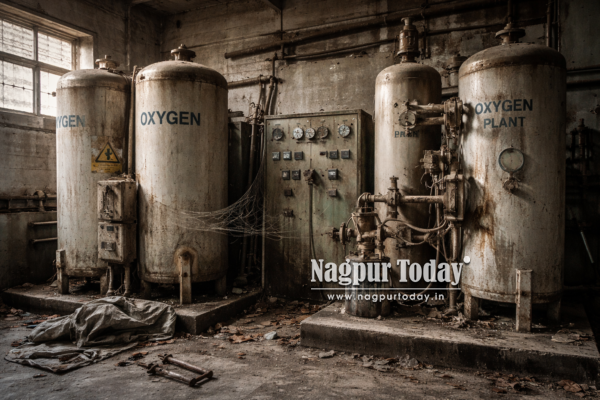
Nagpur: What was projected as a life-saving infrastructure push during the Covid-19 pandemic has today degenerated into a glaring symbol of administrative waste and apathy. Oxygen plants installed at huge public expense across Nagpur during the health crisis now lie unused, poorly maintained and on the verge of turning into scrap, raising serious questions about planning, foresight and accountability, a report in alocal Hindi daily said.
During the peak of the Covid pandemic, acute oxygen shortages left patients gasping for survival, with cylinders unavailable and hospitals struggling to cope. Ironically, at the time when oxygen was desperately needed, most government and private hospitals did not even have functional oxygen plants. It was only after patient numbers surged and panic set in that authorities rushed to install oxygen generation units.
Gold Rate
Mar 13 2026 - Time 11.45Hrs

According to the report, under this belated exercise, three additional oxygen plants were set up at Government Medical College and Hospital (GMCH), while similar plants were installed at AIIMS Nagpur, the Nagpur University’s administrative complex on Amravati Road, and a few private hospitals. However, by the time these plants became operational, the Covid wave had already begun to recede and oxygen demand sharply declined.
As a result, the newly installed plants were barely used. Today, they stand as “white elephants”—expensive assets that serve no purpose.
At GMCH, oxygen plants were installed behind the MARD hostel and the trauma centre during the pandemic. Prior to this, a liquid oxygen plant near the paying ward was already meeting the requirements of nearly 2,000 beds. Yet, driven by fear rather than need-based assessment, three additional air-based oxygen plants were installed. Each plant has a capacity of 500 kilowatts, but none saw meaningful use.
Since then, these plants have remained idle. With no regular maintenance, they are slowly deteriorating—occupying space, consuming resources, and reflecting a complete lack of post-pandemic planning. Lakhs of rupees spent from the public exchequer have effectively gone down the drain.
From emergency asset to scrap metal
Sources reveal that there was an initial proposal to use these oxygen plants even after the pandemic by supplying oxygen cylinders to other hospitals, ensuring that the infrastructure did not go waste. However, this plan never moved beyond paper. No administrative initiative, no follow-up, and no execution took place.
Experts warn that if these plants continue to remain neglected and unused, they will soon turn into junk. “Without periodic operation and maintenance, such equipment deteriorates rapidly. In a few years, they will be fit only for scrap,” said a senior official familiar with medical infrastructure management.
University plant gathering dust
A similar story has unfolded at Nagpur University. During the pandemic, a Covid hospital was set up on the first floor of the university’s new administrative building. Beds were installed and oxygen lines were laid to every bed. An oxygen plant was also set up at the premises.
However, not a single patient was admitted there. Today, the oxygen panels remain fixed to the walls, while the plant below gathers dust. With no perceived requirement, even routine maintenance has been abandoned. Despite this, the Nagpur Municipal Corporation has taken no concrete steps to either repurpose or dismantle the facility.
CSR funds, poor quality, zero utility
It is learnt that several of these oxygen plants were installed in government institutions using Corporate Social Responsibility (CSR) funds. All plants were designed to generate oxygen from air. While production began initially, oxygen generation was later stopped due to reduced demand.
Adding to the concern, sources claim that the quality of oxygen produced by some of these plants was substandard, making it unsuitable for medical use. This further sealed their fate as idle installations.
What remains today is an uncomfortable truth: a crisis-triggered spending spree, executed without long-term planning, has left behind crores worth of infrastructure rotting in silence. As memories of the pandemic fade, the unused oxygen plants stand as mute reminders of how emergency decisions, when unchecked by accountability, can quickly become monuments of waste.