

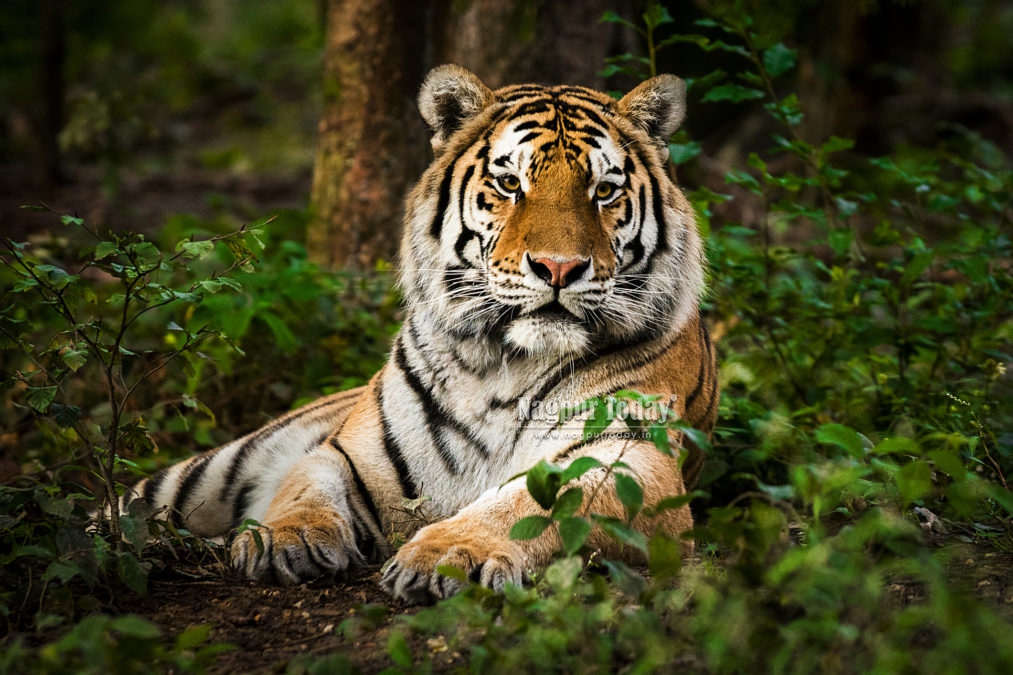
New Delhi/Chandrapur: Maharashtra’s Chandrapur district, known for its rich tiger habitat in the Vidarbha region, has been selected as the venue for a major national-level Tiger Conservation Programme to be organised by the Ministry of Environment, Forest and Climate Change as part of a nationwide series of thematic wildlife conservation events.
The programme will highlight India’s growing global leadership in big cat conservation and promote the objectives of the International Big Cat Alliance, an initiative launched under India’s leadership following Prime Minister Narendra Modi’s call for international cooperation in wildlife protection.
According to officials, the thematic events will focus on India’s five major wild big cat species — Tiger, Asiatic Lion, Leopard, Snow Leopard and Cheetah — while showcasing conservation achievements, challenges and collaborative efforts undertaken by the Central and State Governments.
Among the key programmes planned across the country, the Tiger Conservation Programme will be hosted in Chandrapur under the theme “Flagship of India’s Forest Conservation.”

Officials said the Chandrapur event will highlight India’s remarkable success in increasing tiger numbers through sustained conservation measures under Project Tiger and the National Tiger Conservation Authority.
India currently houses more than 70 percent of the world’s wild tiger population and is widely recognised as a global model for tiger conservation.
The event will also showcase Maharashtra’s focused conservation efforts in the Vidarbha landscape, particularly in Chandrapur and surrounding forest regions, where authorities have worked extensively to improve wildlife corridor connectivity and reduce incidents of human-tiger conflict.
Officials stated that several important conservation initiatives will be highlighted during the programme, including expansion and strengthening of tiger reserves, landscape-level habitat protection, anti-poaching measures and deployment of Special Tiger Protection Forces.
The use of advanced technologies such as camera trapping systems, M-STrIPES monitoring and AI-enabled wildlife surveillance will also be presented as part of India’s modern conservation strategy.
Authorities further said the programme will focus on eco-development initiatives, voluntary relocation of villages from core tiger habitats and efforts to generate livelihood opportunities for local communities through wildlife tourism and conservation-linked employment.
The Chandrapur event is expected to draw wildlife experts, forest officials, policymakers and conservationists from across the country, placing the Vidarbha region once again at the centre of India’s wildlife conservation movement.
Apart from Chandrapur, other thematic conservation events will be organised in Gir (Gujarat) for Asiatic Lion conservation, Bhopal (Madhya Pradesh) for Cheetah conservation, Bhubaneswar (Odisha) for Leopard conservation and Gangtok (Sikkim) for Snow Leopard conservation.
Officials said the pre-summit programmes are aimed at spreading awareness, strengthening stakeholder participation and showcasing India’s conservation success stories on the global stage.