
Nagpur: The Chamber of Associations of Maharashtra Industry & Trade (CAMIT) has welcomed the recent announcement of a trade understanding between India and the United States, under which the United States has reduced reciprocal tariffs on Indian exports from around 25% to 18%. The move is expected to significantly enhance the competitiveness of Indian products in the US market and strengthen bilateral economic relations.
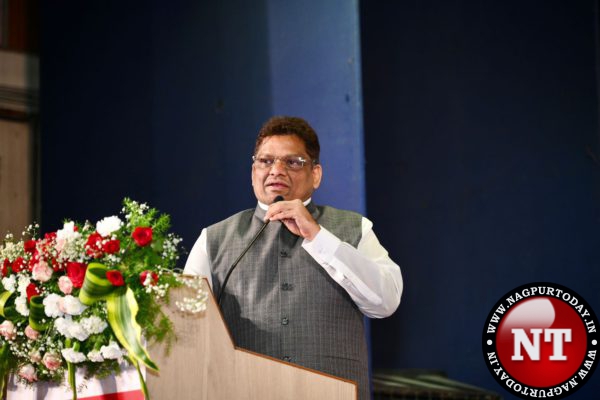
CAMIT President Dr. Dipen Agrawal stated:
“The reduction of US tariffs on Indian goods to 18% is a landmark development for Indian trade and industry. It provides a competitive edge to Indian exporters by lowering costs in one of the world’s largest markets, thereby strengthening India’s global trade footprint and supporting the objectives of ‘Make in India’ and export-led growth.”
Gold Rate
Apr 09,2026 - Time 10.30Hrs

Under the revised tariff structure, Indian exports will now face a comparatively lower duty burden than several competing exporting nations, including Bangladesh, Vietnam, Pakistan and other Asian economies. This enhanced price competitiveness is expected to benefit key export sectors such as textiles, apparel, chemicals, gems & jewellery, seafood, marine products and engineered goods.
Dr. Dipen Agrawal further added:
“This tariff rationalisation not only corrects earlier cost disadvantages but also aligns with the Government of India’s long-standing focus on boosting manufacturing, employment generation and export diversification. Improved access to the US market will allow Indian exporters to expand volumes and move up the value chain, positively impacting industrial growth and job creation.”
In addition to improving export prospects, the revised tariff framework is expected to encourage greater trade flows, attract foreign investment into Indian manufacturing, and deepen India–US economic cooperation.
Concerns and Challenges for Domestic Industry
CAMIT, however, cautioned that the emerging understanding on zero-duty access for certain US products into India could pose challenges for domestic industry if not managed prudently.
Dr. Agrawal observed:
“While tariff relaxation opens new opportunities for Indian exports, zero-duty imports from the United States could exert competitive pressure on domestic manufacturers, especially in capital goods, machinery, electronics, chemicals and technology-intensive sectors.”
CAMIT highlighted the following potential challenges:
* Increased competition for Indian manufacturers from lower-cost US imports
* Risk to emerging and infant industries that are still scaling up
* Possible widening of the trade deficit if import growth outpaces exports
* Disruption of local supply chains due to cheaper imported components
* Need for rapid modernization and technology upgradation by Indian firms
Dr. Agrawal emphasized: “Indian industry must focus on productivity, quality, innovation and scale to withstand intensified competition. At the same time, policy safeguards should ensure that vital domestic sectors are not adversely impacted.”
Way Forward , CAMIT urged industry stakeholders to leverage the tariff reduction by strengthening supply chains, enhancing product quality and expanding value-added manufacturing for global markets. The organization also called for a calibrated and balanced trade approach that promotes exports while safeguarding domestic manufacturing interests.
“Trade facilitation must go hand in hand with industrial resilience. CAMIT looks forward to working closely with the Government to ensure that the benefits of this agreement translate into sustainable growth for trade, industry and employment,” Dr. Agrawal said.
The Chamber of Associations of Maharashtra Industry & Trade (CAMIT) is an apex body representing a wide spectrum of trade and industry associations across Maharashtra. CAMIT works towards policy advocacy, ease of doing business, export promotion and sustainable economic development.