

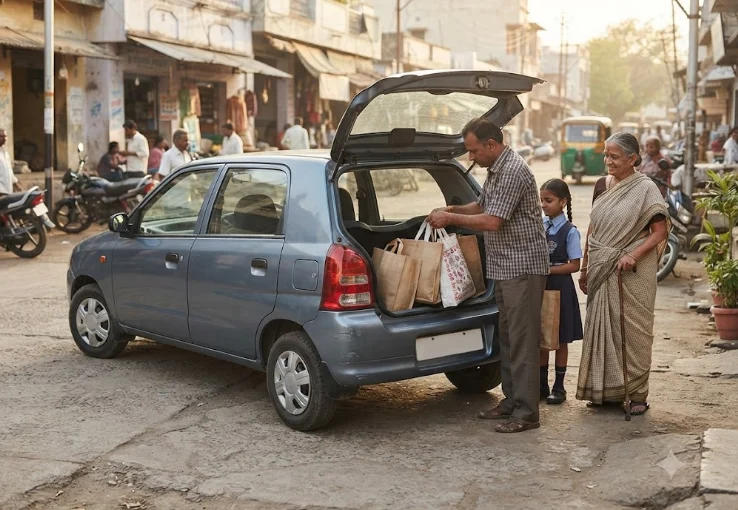
A twelve-year-old hatchback parked outside a housing society in Pune still starts on the first crank, manages the daily school run effortlessly, and costs comparatively little to insure. Across Indian cities, vehicles that have long since been discontinued from active showrooms are often doing the heaviest lifting in daily urban mobility.
Understanding the gap between what the broader market considers highly desirable and what actually keeps moving reliably over potholed roads while managing steep fuel bills is crucial. This understanding matters significantly when a subsequent purchase has to stretch across a tight household budget.
The Engineering Reason Old Cars Keep Going
Longevity in many older Indian cars is not accidental; it is fundamentally baked into their core design. These vehicles typically feature simple naturally aspirated engines and suspension setups engineered to tolerate genuine daily abuse rather than just the polished surfaces of a test track. Furthermore, having fewer electronic control units meant there were fewer expensive digital failure points waiting to surface, particularly a decade after purchase, long after the original manufacturer warranty periods have expired.

Consider the small capacity petrol engines that powered an entire generation of popular hatchbacks. Many utilised robust timing chains, operated with modest compression ratios, and completely lacked a turbocharger.
Anyone researching old Alto K10 variants and features will likely notice how little mechanical complexity sits under that bonnet. There are fewer sensors, fewer actuators, and generally fewer components capable of triggering a warning light at the 90,000-kilometre mark. A key aspect of this longevity is that this simplicity was a deliberate engineering choice tailored for emerging markets, rather than merely a cost-cutting measure.
Widespread parts availability solidifies this advantage. When a vehicle sells in massive numbers over multiple years, the aftermarket ecosystem continues producing clutch plates, bearings, and suspension bushes long after the official assembly line stops running. Routine repairs stay highly affordable because the supply chain remains deep and highly competitive.
Running Costs Are Where the Real Argument Sits
Depreciation has already done its worst on a vehicle that is a decade old, which changes the ownership maths entirely. The sharpest value drop consistently happens in the first three to five years of a car’s life.
A buyer picking up the same vehicle much later absorbs almost none of that initial financial loss. If you sell the car after another three years of use, the gap between what you paid and what you recover is often surprisingly modest. On well-kept models with a loyal resale market behind them, this depreciation cost can sometimes be negligible.
Insurance premiums logically follow this same depreciation curve. Premiums for comprehensive cover track the Insured Declared Value (IDV), which falls steadily alongside the vehicle’s age. Older small cars generally sit at the very bottom end of annual premium costs, and many long-term owners eventually drop to third-party cover once the repair economics stop justifying a comprehensive policy.
Fuel efficiency also holds up significantly better than most buyers expect, provided the mechanical basics are not neglected.
Buyers comparing used Alto cars and their running costs typically find routine servicing bills running at a fraction of what a newer, feature-heavy car demands. Local independent garages charge considerably less for labour, and no proprietary diagnostic software is usually required for standard mechanical work.
Where Older Cars Stop Making Sense
It is important to acknowledge that older cars predate the stringent structural safety standards that newer models must meet today. Crash protection is one specific area where good mechanical maintenance cannot compensate for outdated architectural age. Families driving long highway distances regularly should weigh this factor honestly.
Emission regulations present another hard constraint. Several major cities now place strict age limits on petrol and diesel cars, meaning a vehicle bought cheaply today may have a shorter usable life in that specific region than its price tag implies. It is vital to check the registration date and local transport rules before concluding a purchase.
Comfort and convenience can also be a genuine trade-off. Automatic climate control, integrated reverse cameras, and modern touchscreen infotainment were rarely standard on budget cars from a decade ago. While some can be retrofitted, aftermarket additions rarely feel fully integrated.
None of these factors completely kill the case for older vehicles; they simply define where they fit best. For short urban commutes, acting as a second vehicle in a busy household, training learner drivers, or for buyers who prioritise reliable transport over a status signal, a well-kept older hatchback remains one of the most practical and financially sound choices on Indian roads today.