

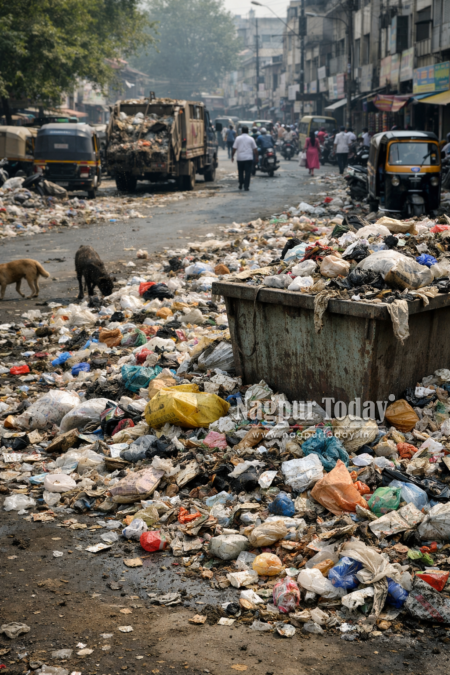
Nagpur: In a stinging indictment of civic collapse, the Nagpur Bench of the Bombay High Court on Thursday tore into the Nagpur Municipal Corporation (NMC) over its glaring failure to keep the city clean, bluntly remarking that “Swachh Nagpur, Sundar Nagpur has remained nothing more than a hollow slogan.” The court took serious cognisance of media reports that laid bare the city’s garbage-strewn reality, exposing years of neglect masked by cosmetic claims.
Shocked by visuals of waste-clogged neighbourhoods, the bench ordered registration of a Public Interest Litigation (PIL) on the sanitation crisis and indicated that citizens may soon be allowed to lodge zone-wise complaints through dedicated WhatsApp numbers. Justices Anil Kilor and Raj Wakhode appointed Yashovardhan Sambare to draft the PIL and granted two weeks for its formal filing, signalling that judicial patience has worn thin.
Gold Rate
Mar 25,2026 - Time 11.05Hrs

The media report that triggered the court’s intervention painted a damning picture: overflowing garbage heaps, stench-filled streets and unattended waste in areas such as Mahal, Ramnagar, Trimurti Nagar, Dhantoli and several other localities, directly contradicting NMC’s tall claims of cleanliness. A city-wide round-up covering Ramdaspeth, Ganeshpeth, Sitabuldi, Subhash Nagar, IT Park Road, Bharat Nagar, Sakkardara, Chitnispura and beyond revealed that the filth was “not accidental, but the result of sustained and systemic neglect,” the court observed, concluding that the situation demanded immediate judicial scrutiny.
What makes the failure more glaring is the staggering public expenditure involved. The NMC spends over Rs 8 crore every month, nearly Rs 100 crore annually, on garbage collection and transportation through two private contractors. Yet, streets continue to resemble dumping grounds, raising uncomfortable questions about accountability, monitoring and value for taxpayers’ money.
Even as civic officials claim inspections are underway for Swachh Survekshan 2025, boasting of wall paintings, debris removal, park maintenance and door-to-door waste collection, the ground reality tells a different story. Busy roads and densely populated neighbourhoods remain choked with waste, exposing the disconnect between official paperwork and public suffering.
With Nagpur’s population crossing 35 lakh and nearly 5.75 lakh households generating waste daily, the city requires at least 550 garbage collection vehicles each day. Fewer than 450 are currently available, and nearly 10% remain off-road due to breakdowns, residents allege. The result is erratic doorstep collection, missed pickups and garbage piling up in plain sight.
The administration insists that 1,300 to 1,400 tonnes of waste are processed daily and that segregation at source is mandatory. It has also promised that the infamous Bhandewadi dumping yard will soon show no visible heaps. For now, however, the High Court noted that the gulf between official claims and lived reality is impossible to ignore, it is written across Nagpur’s streets.
Adding to the grim picture is a damning reflection of civic indiscipline. In 2025 alone, Nagpurians paid a staggering Rs 5.51 crore in fines for blatant violations of basic civic norms. The NMC’s Nuisance Detection Squad (NDS) booked 45,176 cases, exposing how carelessness, entitlement and habitual lawlessness have become routine rather than exceptional.
Official data shows violations spanning 30 categories, including littering, spitting, use of banned single-use plastic, illegal dumping of construction and demolition waste, improper disposal of biomedical waste and unauthorised public structures, collectively underscoring that Nagpur’s sanitation crisis is as much about administrative failure as it is about collapsing civic responsibility.
With the High Court now stepping in, the message is unambiguous: Slogans will no longer substitute governance, and neglect, whether by authorities or citizens, will no longer escape scrutiny.