

Nagpur Today Explains | Understanding India’s Electoral System
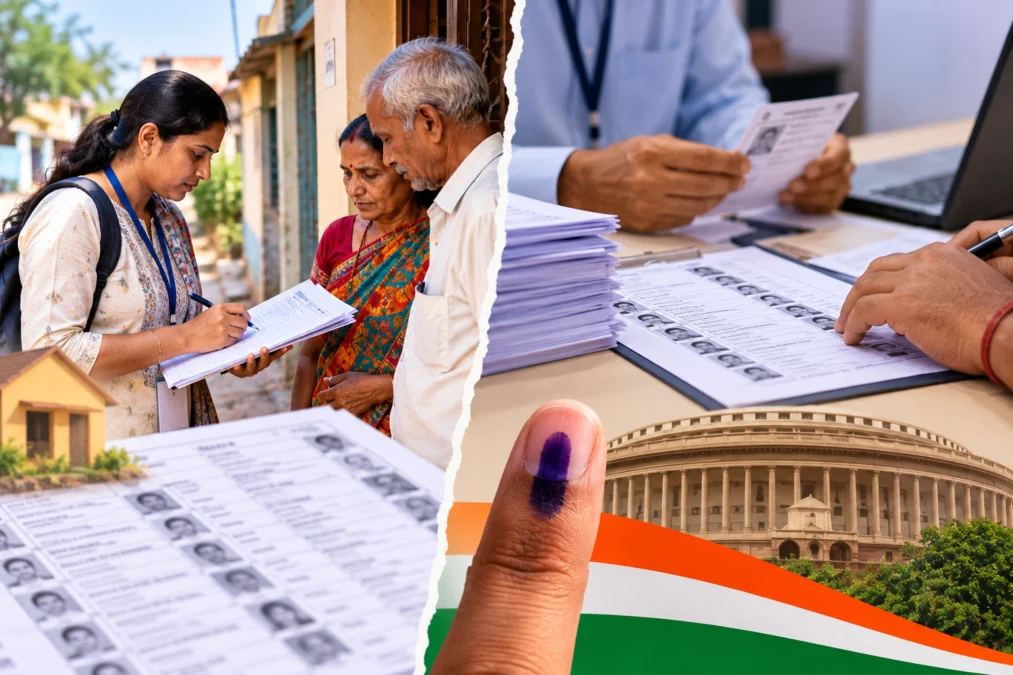 Nagpur: The Election Commission of India periodically revises electoral rolls to ensure that voter lists are accurate and eligible citizens can exercise their right to vote. Two terms frequently used in this process are Special Intensive Revision (SIR) and Special Summary Revision (SSR).
Although both aim to improve the accuracy of electoral rolls, they differ significantly in their scope, verification process and the work required from voters.
With voter list revisions becoming an important public issue, understanding the difference between SIR and SSR can help citizens know what to expect and how to protect their right to vote.
What Is SSR (Special Summary Revision)?
The Special Summary Revision is a routine process for updating the existing electoral roll. It allows eligible citizens to register as voters and existing voters to correct or update their details.

During SSR, the Election Commission publishes electoral roll drafts and invites claims and objections within a specified period.
The process generally focuses on:
- Adding new voters: Eligible citizens who have reached the qualifying age can apply for registration.
- Correcting voter details: Errors in names, addresses and other particulars can be corrected.
- Removing ineligible entries: Duplicate registrations, entries of deceased voters and other ineligible entries can be identified and addressed according to the prescribed procedure.
- Updating voter records: Voters who have shifted residence can apply for the necessary changes.
The existing electoral roll serves as the starting point, and claims and objections are processed under the applicable rules.
What Is SIR (Special Intensive Revision)?
The Special Intensive Revision is a more comprehensive exercise undertaken to prepare or thoroughly verify electoral rolls.
Unlike the summary revision, SIR can involve extensive verification of voter eligibility and electoral records. Depending on the Election Commission’s specific instructions, the exercise may include house-to-house enumeration, prescribed forms and additional documentation where required.
The main objectives include:
- Verifying voter records more comprehensively.
- Identifying duplicate, shifted, deceased or otherwise ineligible entries.
- Ensuring that eligible citizens are included in the electoral roll.
- Improving the overall accuracy and integrity of the voter list.
The exact procedure, documents required and verification criteria depend on the instructions issued for the particular SIR exercise.
SIR vs SSR: The Key Differences
| Feature | SSR | SIR |
|---|---|---|
| Full form | Special Summary Revision | Special Intensive Revision |
| Nature | Routine electoral roll revision | Comprehensive electoral roll revision |
| Scope | Updates the existing voter list | More extensive examination and verification of electoral records |
| Verification | Claims, objections and prescribed checks | Intensive enumeration and verification as specified in the applicable instructions |
| Voter participation | Applications for registration, correction and other changes | Voters may need to participate in the prescribed enumeration and verification process |
| Documentation | Documents required for the relevant application | Requirements depend on the applicable SIR instructions and individual circumstances |
Does SIR Mean Existing Voters Will Lose Their Voting Rights?
No. The purpose of SIR is to verify and improve electoral rolls; it does not automatically mean that every existing voter will be removed.
However, if a voter’s eligibility or particulars require verification, the voter may need to respond to notices or provide information under the applicable procedure.
Any deletion must follow the prescribed legal process. Citizens should not assume that their names have been removed simply because an intensive revision is underway.
Voters should check the official electoral roll, respond to relevant notices and retain acknowledgements for applications or documents submitted.
What Should Voters Do During an Electoral Roll Revision?
Whether the Election Commission conducts an SSR or an SIR, citizens should take a few basic steps:
- Check whether their names appear on the current electoral roll.
- Verify that their name, address and other details are correct.
- Apply through the prescribed process if registration or correction is needed.
- Respond to official notices and follow the instructions issued for the specific revision.
- Check the final electoral roll after the revision is completed.
Voters can consult the Election Commission of India’s official website at https://www.eci.gov.in/ or the National Voters’ Services Portal at https://voters.eci.gov.in/ for official information and voter services.
The Bottom Line
SSR is primarily a routine mechanism for adding eligible voters, correcting details and processing claims and objections. SIR is a more intensive exercise intended to examine and verify electoral records comprehensively.
Both processes serve the same broad objective: maintaining accurate electoral rolls while ensuring that eligible citizens can exercise their democratic rights.
For voters, the most important step is simple: stay informed, verify your registration and follow the official instructions applicable to your area.
Note :
The Election Commission of India (ECI) announced a Special Summary Revision (SSR) of electoral rolls for 14 states and 3 Union Territories (totaling 17 jurisdictions) with January 1, 2027, as the qualifying date.
The 17 States and Union Territories Covered:
• States (14):
1. Assam
2. Bihar
3. Chhattisgarh
4. Goa
5. Gujarat
6. Kerala
7. Madhya Pradesh
8. Manipur
9. Punjab
10. Rajasthan
11. Tamil Nadu
12. Uttar Pradesh
13. Uttarakhand
14. West Bengal
• Union Territories (3):
15. Andaman and Nicobar Islands
16. Lakshadweep
17. Puducherry