

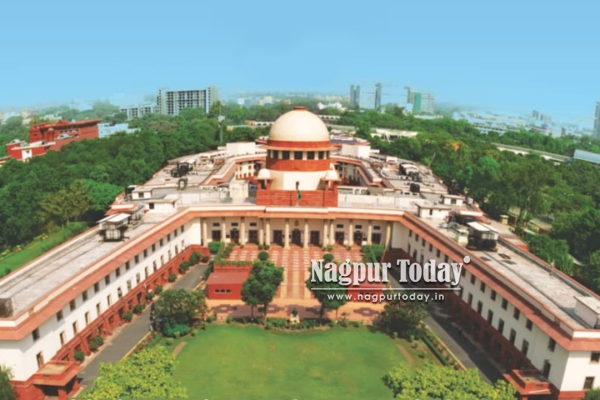
Nagpur: A Right to Information (RTI) query filed by a Nagpur-based lawyer has brought fresh clarity, and renewed debate, over the long-pending demand for regional benches of the Supreme Court of India.
Advocate Sundeep R. Badana had sought details under the Right to Information Act, 2005 regarding discussions and correspondence related to the establishment of regional or “cassation” benches of the apex court under Article 130 of the Constitution.
Gold Rate
June 30,2026 - Time 10.30Hrs

In its official response dated April 13, 2026, the Supreme Court Registry informed that a Full Court meeting on the issue was held on February 18, 2010. During that meeting, the judges considered the Law Commission of India’s 229th Report, which had recommended dividing the Supreme Court into a Constitution Bench in Delhi and cassation benches in different regions.
However, as per the RTI reply, the Full Court unanimously rejected the proposal, stating that there was “no justification” to deviate from its earlier stance. The Registry further clarified that no official correspondence has been sent to the Ministry of Law and Justice regarding the establishment of regional benches since 2014.

The disclosure has once again spotlighted the long-standing demand for a Supreme Court bench outside Delhi, particularly in Nagpur. Advocate Badana had earlier submitted a detailed representation to Chief Justice of India Bhushan Gavai, proposing structural judicial reforms and suggesting Nagpur as a potential location for a western cassation bench. However, the CJI reportedly stated that no such representation had been formally received.
The demand for a bench in Nagpur is not new. Prominent leaders including former Union Minister Hansraj Ahir, former MP Vilas Muttemwar, and former MP Vijay Darda have, in the past, advocated for such a move, citing the city’s central location and its importance as Maharashtra’s second capital.
Legal experts argue that decentralising the Supreme Court could improve access to justice, especially for litigants from distant regions who face logistical and financial challenges in approaching Delhi. In his representation, Badana highlighted what he described as a “dual crisis,” a mounting backlog of over 85,000 cases and a perceived geographical imbalance in access to the apex court.
While the RTI response provides a definitive position taken by the Supreme Court in 2010 and the absence of recent correspondence, it has also reignited discussions on judicial accessibility and the need for structural reforms in India’s highest court.


NMC Commissioner Pulls Up Officials Over Waterlogging

सोलर प्लांट के बावजूद भारी बिजली बिल #maharashtranews #smartmeter #electricity #bills #newsupdate

ट्यूशन फीस बढ़ोतरी के खिलाफ कांग्रेस आंदोलन #maharashtranews #tuitionfees #congress #andolan

महिला को एमडी ड्रग्स के झूठे केस में फंसाने की साजिश नाकाम...

एमआईडीसी में युवक की बेरहमी से हत्या #nagpurnews #crime #murdernews #newsupdate

सिर्फ एक धक्का... फिर चला चाकू #nagpurnews #crime #accusedarrested #murdernews