
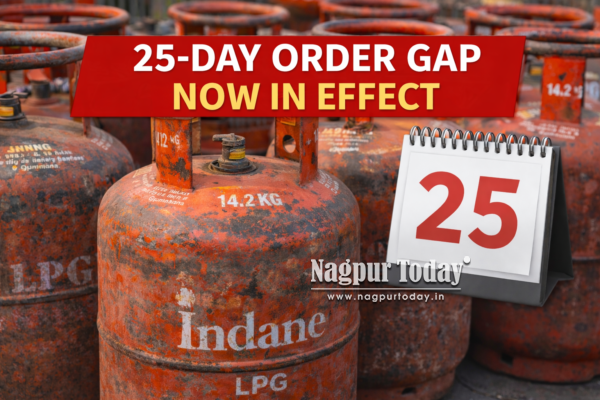
Nagpur: In a move aimed at preventing hoarding and panic buying, Oil Marketing Companies (OMCs) have introduced a mandatory 25-day gap between LPG cylinder bookings, restricting consumers from placing a fresh booking before 25 days from their previous order.
Officials clarified that there is no nationwide rationing of domestic LPG cylinders, but the new guideline has been introduced to ensure a balanced and uninterrupted distribution of cooking gas, especially during periods of high demand. Under the revised system, consumers will continue to receive cylinders regularly, but they must wait for at least 25 days after their last booking before making another request.
Gold Rate
Mar 25,2026 - Time 11.05Hrs

Sources in the petroleum sector said the measure is intended to prevent stockpiling and ensure equitable supply across regions.
The development comes at a time when LPG prices have also been increased, further adding to the financial pressure on households. The price of the 14.2-kg domestic LPG cylinder has been raised by ₹60, taking the cost in Nagpur to Rs 964.50, up from the earlier Rs 904.50. The revised rates came into effect from March 7.
Commercial users have also been hit by the price revision. The 19-kg commercial LPG cylinder has become costlier by Rs 115, impacting restaurants, hotels and other food businesses that rely heavily on LPG for daily operations.
However, the government has maintained relief for beneficiaries under the Pradhan Mantri Ujjwala Yojana, who will continue to receive a subsidy of Rs 300 on up to 12 LPG refills annually, providing some support to economically weaker households.
Officials further clarified that there is no restriction on the supply of commercial LPG cylinders, assuring uninterrupted availability for hotels, eateries and other commercial establishments.
Industry insiders attribute the latest price hike largely to rising global energy costs amid escalating geopolitical tensions in West Asia. The situation intensified following military strikes by the United States and Israel on Iran, which have heightened instability in the region.
The crisis has disrupted tanker movement through the strategically vital Strait of Hormuz, a major global route for oil and gas shipments, triggering a spike in international fuel prices and indirectly impacting LPG rates in India.