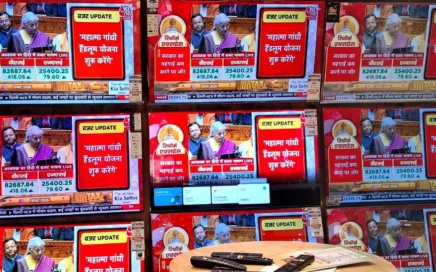
New Delhi: Finance Minister Nirmala Sitharaman today presented the Union Budget 2026, marking her ninth consecutive Budget-a first in India’s parliamentary history.
Ahead of the Budget presentation, Sitharaman followed tradition by visiting Kartavya Bhavan and calling on President Droupadi Murmu.
During her speech in Parliament, the Finance Minister outlined a broad reform agenda focused on economic growth, investment, infrastructure, and social development. However, on the much-watched personal income tax front, she did not announce any changes to income tax slabs or rates under either the old or the new regime.
Gold Rate
Mar 25,2026 - Time 11.05Hrs

Instead, the key relief for taxpayers came in the form of compliance flexibility. The government proposed extending the revised ITR (Income Tax Return) filing deadline to March 31, with payment of a nominal fee, giving individuals more time to correct or update their returns.
With no slab restructuring this year, taxpayers will continue under the existing frameworks.
Income Tax Slabs: Old vs New Regime (Unchanged in Budget 2026)
Old Tax Regime
- Income up to ₹2,50,000 – Nil
- ₹2,50,001 to ₹5,00,000 – 5%
- ₹5,00,001 to ₹10,00,000 – 20%
- Income above ₹10,00,000 – 30%
New Tax Regime
- Income up to ₹4 lakh – Nil
- ₹4 lakh to ₹8 lakh – 5%
- ₹8 lakh to ₹12 lakh – 10%
- ₹12 lakh to ₹16 lakh – 15%
- ₹16 lakh to ₹20 lakh – 20%
- ₹20 lakh to ₹24 lakh – 25%
- Income above ₹24 lakh – 30%
Bottom line
While Budget 2026 brings sweeping announcements across infrastructure, healthcare, manufacturing, and technology, personal income tax remains status quo. The government has chosen stability over slab changes this year—offering procedural relief through extended ITR timelines, but leaving take-home pay mathematically untouched.