

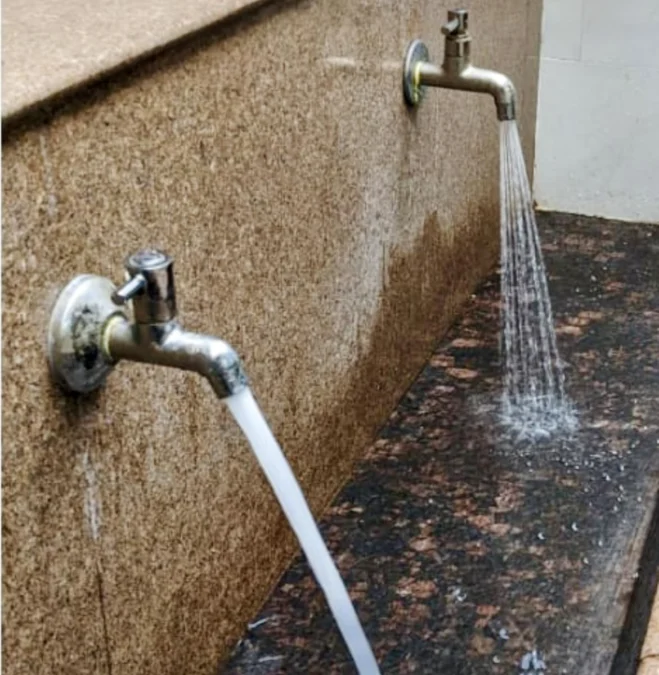
Nagpur: Waste potable water at your own risk! The Nagpur Municipal Corporation (NMC) is preparing to impose fines of up to Rs 5,000 on those found using treated drinking water to wash vehicles, clean roads, water gardens or undertake construction activities, as the civic administration tightens its grip on water wastage amid mounting fears of a severe shortage in the coming months.
With reservoirs supplying Nagpur holding just 746 million cubic metres of water, or 58% of their capacity, following inadequate rainfall, the civic body is moving to curb reckless consumption and reduce dependence on reservoir supplies. Zonal Assistant Commissioners and the Nuisance Detection Squad (NDS) will be tasked with identifying violations and enforcing the proposed penalties.
Mayor Neeta Thakre, who chaired a review meeting on water conservation, stressed the need for immediate intervention to prevent the situation from worsening. “The focus will be on reducing dependence on reservoir water and curbing wastage,” she said.
Ruling party leader Narendra Borkar said the NMC would maintain the present supply of 740 million litres per day (MLD) for now. However, the administration is planning a multi-pronged conservation drive to stretch available resources and ensure that potable water is not squandered on activities that can be supported by alternative supplies.

400 public wells to be revived
Under its six-point water conservation programme, the NMC plans to clean 400 public wells and install solar-powered pumps with assistance from the Maharashtra Energy Development Agency (MEDA). The initiative is intended to tap alternative water sources for non-drinking purposes and ease pressure on the city’s reservoirs.
The civic body will also develop mini water supply schemes to provide water for activities such as vehicle washing and gardening, which do not require treated drinking water.
Groundwater recharge structures will be created under the guidance of the Groundwater Surveys and Development Agency (GSDA). The administration will also explore the rejuvenation of existing open wells and borewells to improve groundwater availability.
Treated sewage water for construction, gardens
In another major intervention, the NMC proposes to establish decentralised sewage treatment plants (STPs) at suitable locations. The treated wastewater will be used for watering gardens, maintaining road median plantations and construction activities, reducing the demand for potable water.
The proposed measures are aimed at ending the indiscriminate use of treated drinking water for non-essential purposes and establishing alternative supply arrangements wherever feasible.
8,000 illegal connections on NMC radar
The civic administration is also preparing to regularise around 8,000 illegal water connections within a month through a special drive. Camps will be organised at zonal offices to help consumers complete the required formalities.
However, unauthorised connections that remain unregularised will face disconnection. The NMC has also warned of possible registration of FIRs in cases involving tampering with or removal of water meters, signalling stricter action against consumers attempting to evade the system.
72 hours to fix pipeline leakages
Taking a tough stand on water losses within the distribution network, Thakre directed the Waterworks Department to ensure that pipeline leakages are attended to within 72 hours. The deadline is intended to prevent valuable treated water from being lost through avoidable delays in repairs.
The review meeting was attended by Deputy Mayor Leela Hathibed, Standing Committee Chairperson Shivani Dani-Wakhare, Waterworks Committee Chairperson Divya Dhurde, Additional Municipal Commissioners Muruganantham M and Milind Meshram, and Superintending Engineer Shweta Banerjee, among others.
NMC’S SIX-POINT WATER CONSERVATION PLAN
• Rs 5,000 penalty: Proposed fine for using potable water to wash vehicles, clean roads, water gardens or carry out construction.
• 400 public wells: Cleaning and installation of solar-powered pumps to support non-potable water requirements.
• Groundwater recharge: New recharge structures and revival of existing wells and borewells.
• Wastewater reuse: Decentralised STPs to supply treated water for gardens, road medians and construction activities.
• 8,000 illegal connections: Special one-month drive for regularisation, followed by disconnection of unauthorised connections.
• 72-hour deadline: Pipeline leakages to be attended to within three days.