

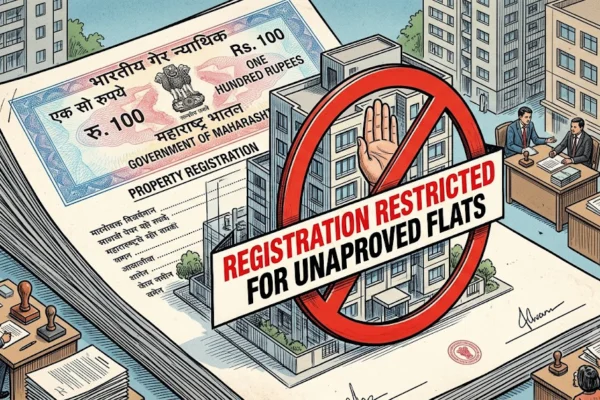
 Nagpur: In a major move to curb fraudulent property transactions and protect homebuyers from illegal construction practices, the Maharashtra Government has empowered sub-registrars to refuse registration of property documents if mandatory permissions and supporting papers are missing or a flat’s recorded area exceeds the limits approved in the sanctioned building plan.
The stringent directions, issued through a Revenue Department circular on October 12, apply across the State to agreements for first sales, sale deeds, apartment deeds and transfer documents relating to units in construction projects.
The government’s intervention follows complaints of buildings being constructed without requisite permissions and flats being sold with areas exceeding those approved by the competent authorities, leaving buyers exposed to financial losses and legal complications.
The decision follows a meeting held on September 22, 2026, under the chairmanship of Revenue Minister Chandrashekhar Bawankule to address irregularities in property transactions and tighten registration procedures.
Registration officials get greater scrutiny powers

The latest circular incorporates recommendations submitted by the Registration Department to strengthen scrutiny of property documents following the Mundhwa land scam.
Joint Inspector General of Registration Rajendra Muthe said the new instructions were broadly in line with the department’s proposals to prevent fraudulent registrations.
“Earlier, sub-registrars could not refuse to register a document. Now, with this circular, they can check the documents and refuse the registration. These checks are important to prevent fraudulent practices,” Muthe said.
The instructions require registration officials to verify the prescribed permissions and supporting documents rather than proceed with registration when essential records are missing or discrepancies are detected.
Different document requirements for MahaRERA and exempt projects
The circular lays down separate requirements for projects that must be registered with the Maharashtra Real Estate Regulatory Authority (MahaRERA) under Section 3 of the Real Estate (Regulation and Development) Act, 2016, and those exempt from such registration.
For projects requiring MahaRERA registration, the prescribed documents must include the authority’s registration certificate or an occupancy certificate, along with the sanctioned building plan specifying the area of the concerned unit.
For projects exempt from MahaRERA registration, the documents must include construction permission or a commencement certificate issued by the competent authority, the sanctioned building plan showing the unit’s area, a zone certificate and a measurement or survey plan.
These requirements are intended to establish whether the property has the necessary approvals and whether the unit described in the transaction documents corresponds with the officially sanctioned plan.
Excess area means rejection, even if other papers are in order
A key provision of the circular makes it mandatory for sub-registrars to refuse registration if the area mentioned in a property document exceeds the area shown in the sanctioned building plan.
The restriction applies even when the other prescribed documents have been submitted. This makes the approved plan a crucial benchmark for verifying the size of a flat being sold or transferred.
The move is expected to tighten checks on transactions involving unauthorised construction, discrepancies in flat measurements and the sale of areas beyond approved limits.
Transparency and strict compliance stressed
Welcoming the move, activist Joshi said documentary scrutiny was essential to prevent fraudulent registrations and maintain transparency across registration offices. He also stressed that sub-registrars must strictly implement the new guidelines.
The circular marks a shift towards stricter verification at the registration stage, with officials expected to scrutinise the legality and approved dimensions of properties before recording transactions.
For prospective homebuyers, the new requirements underline the importance of checking sanctioned building plans, statutory permissions and the actual area specified in sale documents before completing a property purchase. The effectiveness of the crackdown will depend on consistent enforcement across registration offices throughout Maharashtra.