

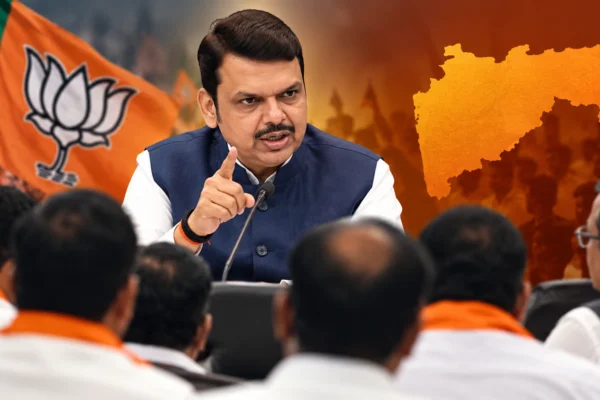
 Pune/Nagpur: Maharashtra Chief Minister Devendra Fadnavis’s recent warning to BJP leaders in Pune carries a message that extends far beyond the city. By stressing that party positions must be earned through work rather than lobbying or personal proximity to senior leaders, Fadnavis has signalled a clear expectation of accountability across the BJP organisation in Maharashtra.
The message is straightforward: responsibility must come before ambition, and performance must matter more than political influence.
During a meeting with party leaders in Pune on October 14, Fadnavis reportedly expressed displeasure over the pursuit of positions and emphasised that elected representatives and office-bearers must demonstrate their contribution before seeking organisational or government posts.
While the meeting focused on Pune, the underlying principle is relevant to BJP leaders across Maharashtra, including those in Nagpur, Mumbai, Nashik, Chhatrapati Sambhajinagar and other districts.
Beyond Pune: A Message on Political Accountability
Competition for positions is common in political organisations. However, when the pursuit of posts overtakes grassroots work, voter outreach and organisational responsibilities, it can weaken the connection between a party and its supporters.

Fadnavis’s emphasis on performance assessments and accountability addresses this challenge directly. His approach signals that holding a position should not be treated as a reward in itself, but as a responsibility that demands visible work and results.
For BJP leaders across Maharashtra, the implication is clear: public engagement, organisational contribution and the ability to deliver on assigned responsibilities must take priority over personal ambitions.
Performance Report Cards Could Change the Equation
The reported proposal to assess the performance of MLAs, corporators and office-bearers before considering them for positions could bring greater structure to internal evaluations.
If implemented consistently, such assessments could help distinguish leaders who remain active at the grassroots level from those who focus primarily on securing influential posts.
For a party with an extensive state-level organisation, a transparent performance-review mechanism could also strengthen internal discipline and make leadership decisions more accountable.
The effectiveness of this approach, however, will depend on how performance is measured and whether the same standards are applied across districts and levels of leadership.
Voter Registration: The Ground-Level Test
Concerns over voter registration for the upcoming Graduate and Teachers’ Constituency elections add a practical dimension to the Chief Minister’s message.
Electoral preparation requires more than meetings and assurances. It depends on sustained fieldwork, coordination among local units and the ability of party workers to reach eligible voters.
The episode underlines a larger point: organisational strength is built through consistent work on the ground, not merely through political visibility.
Why Fadnavis’s Message Matters Across Maharashtra
Fadnavis’s reported insistence on performance before positions reinforces an important principle of leadership: those entrusted with responsibility must demonstrate what they have contributed.
The significance of the warning lies not simply in its stern tone, but in the standard it seeks to establish. If applied consistently, it could encourage stronger grassroots engagement, greater organisational discipline and a more results-oriented approach within the party.
For BJP leaders across Maharashtra, the takeaway is unmistakable: positions may bring authority, but sustained work is what justifies them.
Whether this message translates into a statewide system of performance-based evaluations remains to be seen. Its impact will ultimately be judged by the actions that follow the warning.